
The Galapagos Islands have always been one of the bucket list destinations for many travelers. Not only are the volcanic islands the home of many photogenic and endemic animals such as the land tortoise, but it played a pivotal role in the elaboration of Charles Darwin’s theory of evolution by natural selection. It is also a UNESCO World heritage site, and is part of Ecuador’s National park system.
In late May we landed in Quito, the capital of Ecuador, in the prelude for that trip.
Quito is the second highest capital in the world, coming in at 2850 meters, and in some ways it is probably more interesting to me as an Opie and Poaceae scholar than the Galapagos islands themselves. Whereas the Galapagos has a limited number of grass endemics and are populated mostly by aggressive introduced exotics, the highlands in Ecuador feature native Chusquea bamboos and the cogon grass “look-alike” Jarava ichu, also a native.
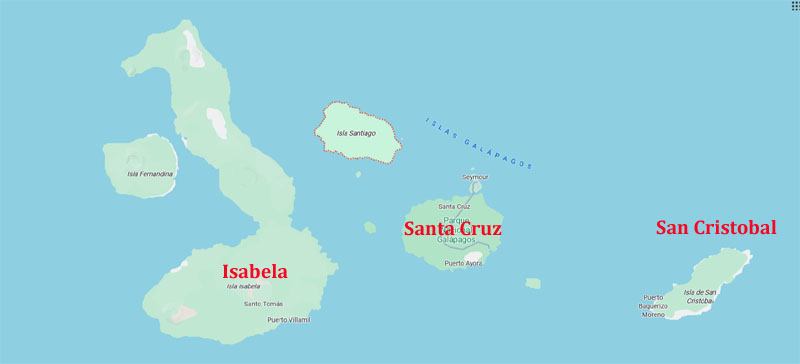
We were supposed to stay for one night near the Quito airport before flying out to San Cristobal Island in the Galapagos the next day. But due to delays in our plane we never got out of Quito airport, and after spending 24 hours on 4 plane rides ended up in the island of San Cristobal island in the Galapagos.
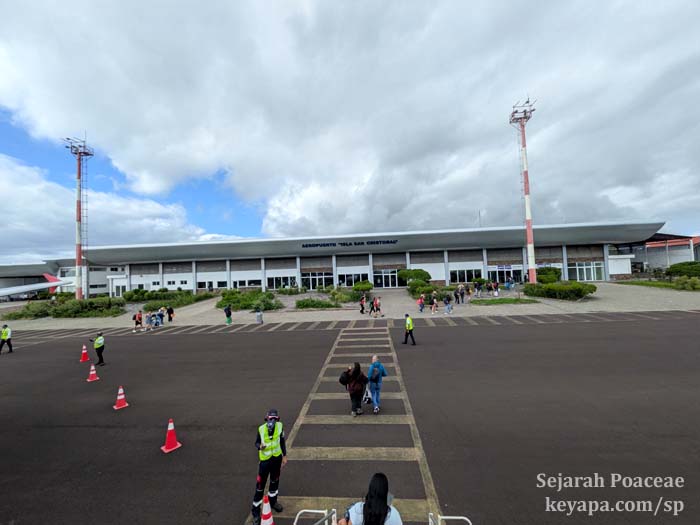
The San Cristobal airport was rudimentary, and with no gates we actually had to walk down steps to get to the tarmac, and thence to the single airport terminal, which consisted of a single building.
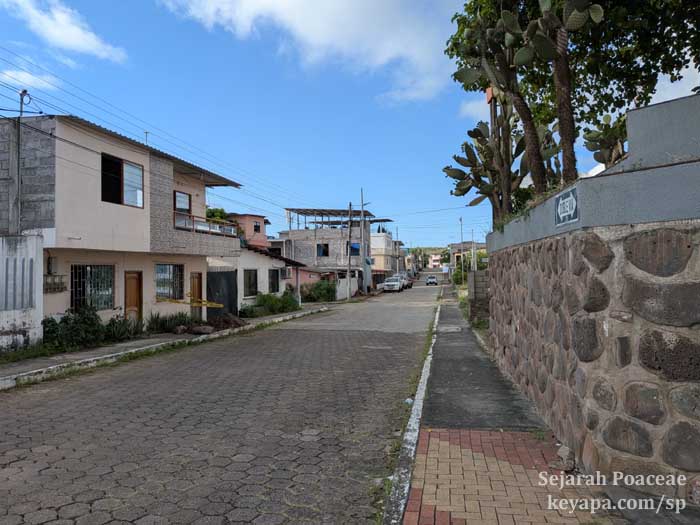
The entire population of the island barely goes above 7000, and so the town itself is extremely small, with concrete homes typical of many tropical countries. The streets were clean and relatively free of litter, and as befits an area lying within a national park, recycling bins stood next to trash bins all over.
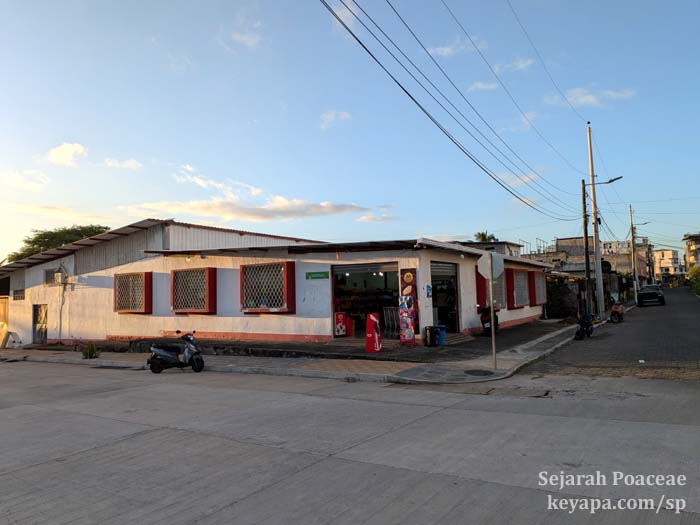
The first thing we did after securing our lodging was to go out for groceries, and although we found a surprisingly large number of mercado (stores) within walking distance, they were all relatively small.
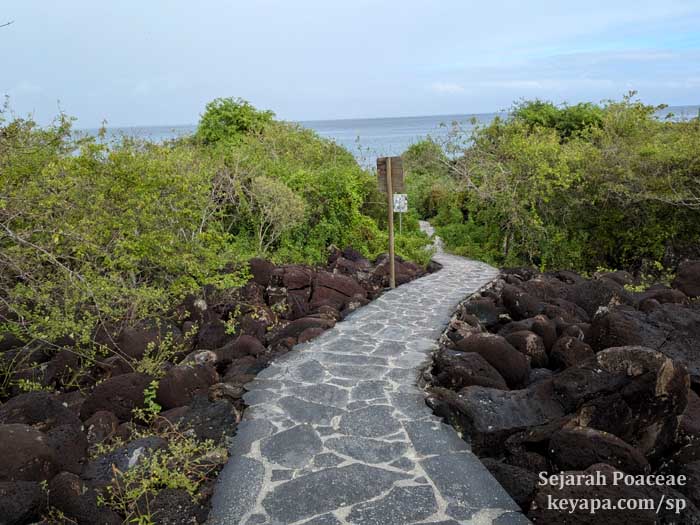
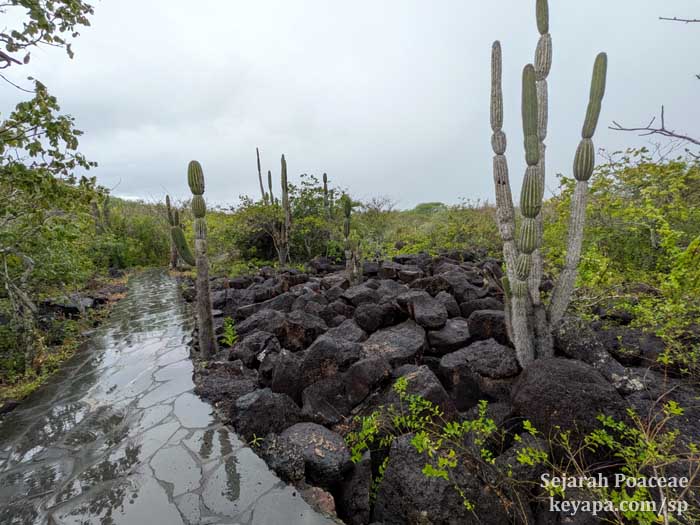
The next day we ventured out in the early morning hours to hike around the area. Amazingly, the trails to the various playa (beaches) and other touristy destinations within walking distance were all paved with beautiful, volcanic rock. It was obvious that the local people had placed great value in maintaining the beauty of their surroundings.
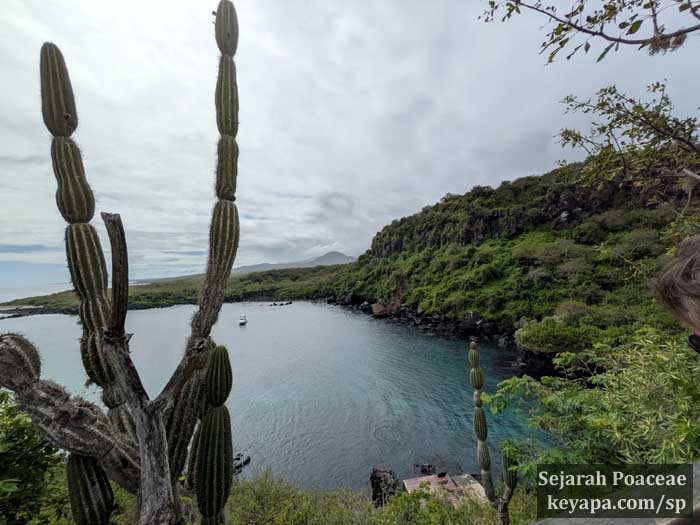
On that first morning we hiked to Playa Mann, Punta Carola, and Mirador Cerro Tijeretas. We also visited the San Cristóbal Gianni Arismendy Environmental Interpretation Center, which had very interesting exhibits on the the entire Galapagos Islands, including the fact that freshwater scarcity is one of the major reasons life in the area is hard, with most everything being imported from the mainland.
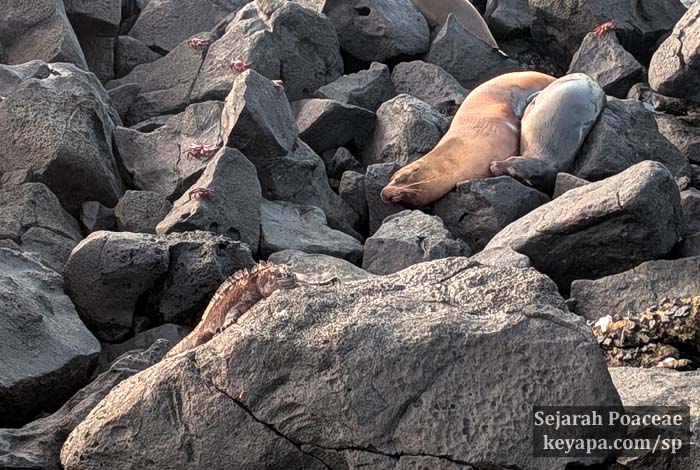
We even encountered marine iguanas in Playa Mann, but the most exciting thing was that we found sea lions were everywhere in the beaches! They lounged on the sand and rocks, or were playing in the waves. Some young ones were even suckling! It was just an incredible experience, especially since they did not seem bothered at all by our presence, allowing us to take pics even at the suggested minimum distance of 2 meters.
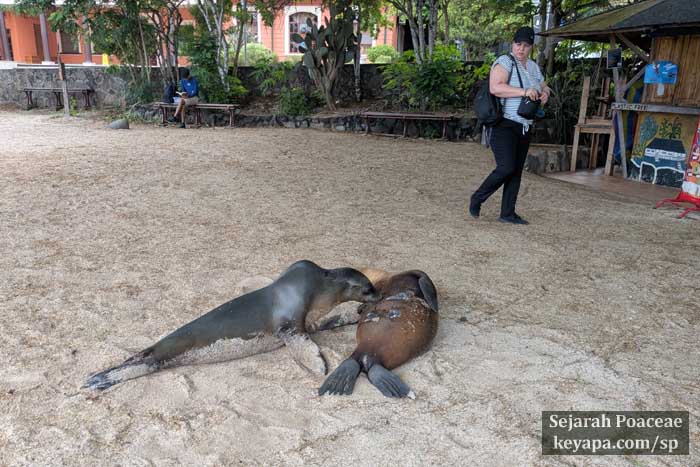
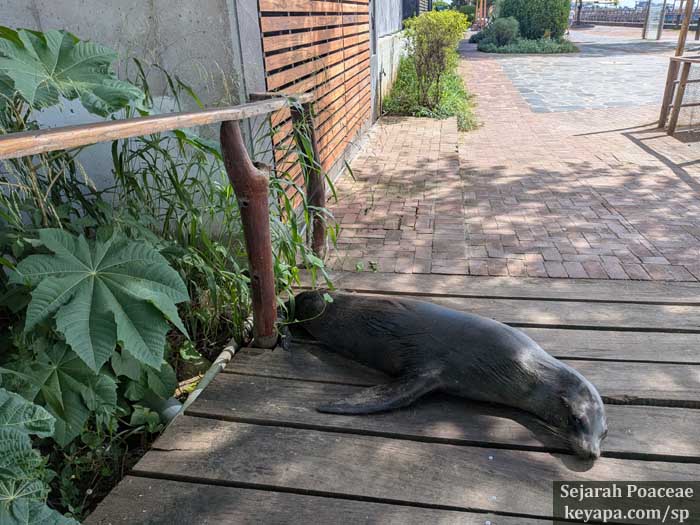
In fact, most times they seemed almost bored at our antics, except for one notable occasion, when a sea lion crossed a bridge and drove me away from a spot next to a grass that I was examining. It came at me from behind, and I thought at first that it was a dog behind me. Imagine my surprise when I turned around and found out it was a large sea lion! Obviously, I gave it the spot, and it proceeded to make itself comfortable and to sleep on the bridge, heedless of the bicycles and foot traffic that swirled around it.
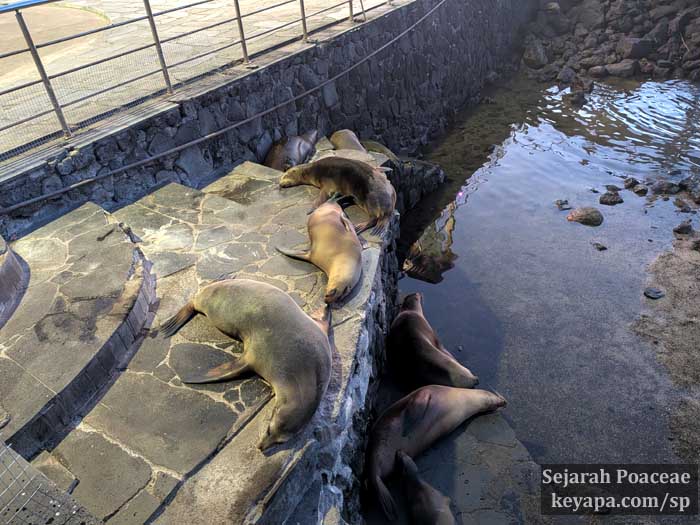
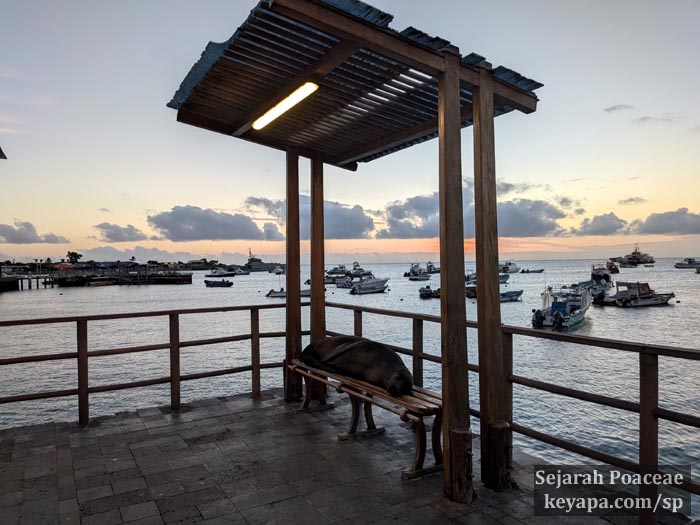
In fact, it seems the sea lions are a daily part of life in the town, and at sunset they were all over the rocks and pier steps in front of the town center.
We even found one large specimen that had somehow managed to climb onto the pier and had appropriated an entire bench for itself!
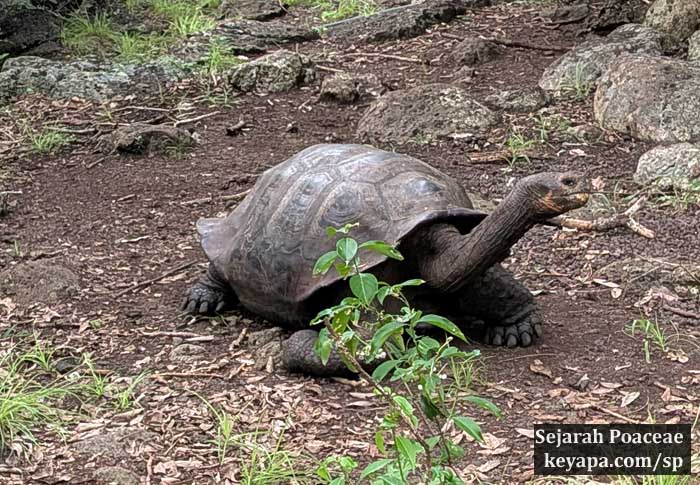
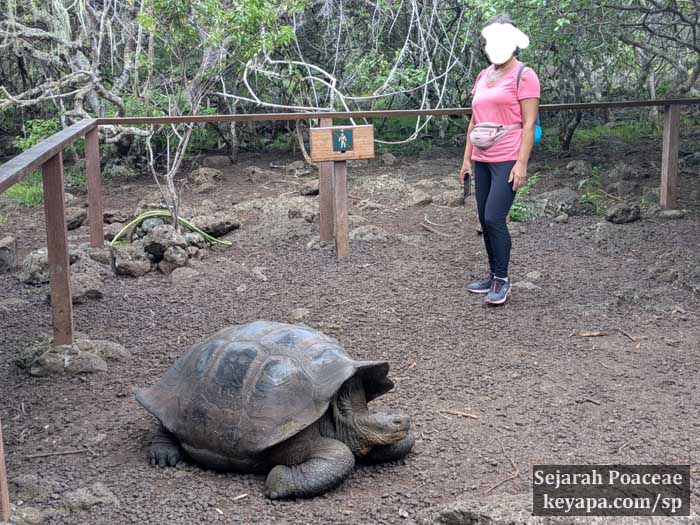
But the animal highlight of the island is probably still our encounter with the giant tortoises at the Galapaguera de Cerro Colorado Tortoise Reserve. These lumbering giants were just simply amazing.
Beyond the animals, most of the grasses I encountered were what I have come to think of as globe-trotters, species that have been able to colonize many locations throughout the world, mainly through the activities of human beings. In some of the hiking paths, I saw evidence that the government was at least trying to curb their presence in more “natural” areas.
Chloris barbata was probably the most encountered grass species during the day, with a Cenchrus species (Cenchus echinatus?) coming in second. The various Digitaria spp (crabgrass) and Eragrostis spp rounded out the smaller group of invasive grasses.
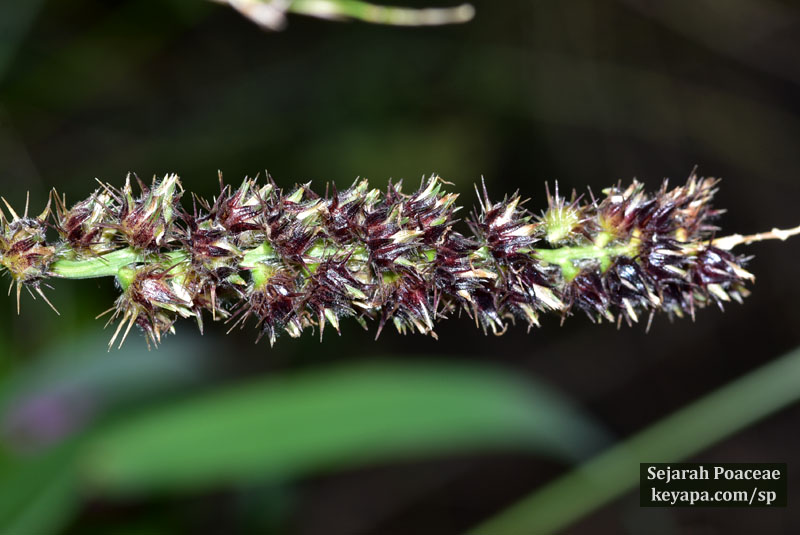
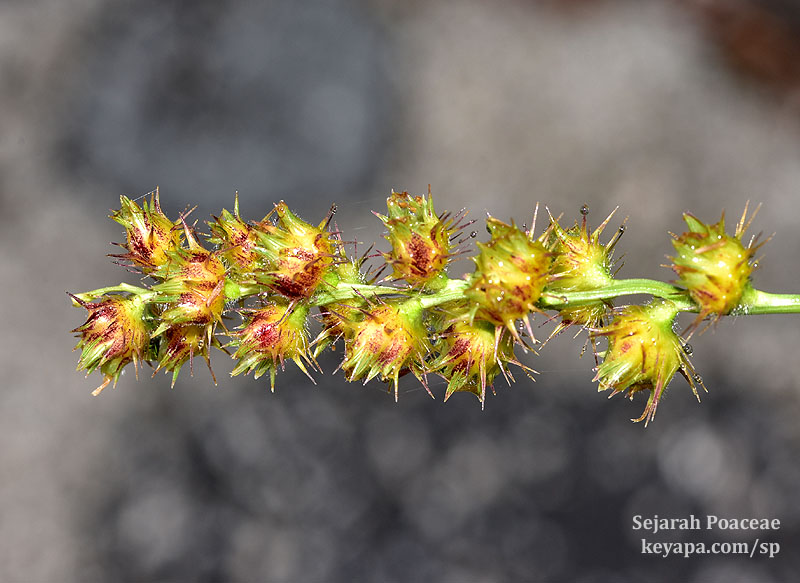
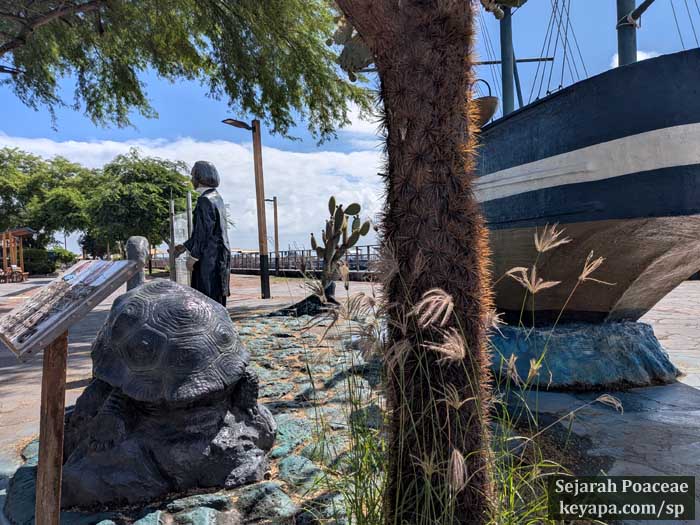
At various parts of the town and hike, it was obvious that the locals placed great value in Charles Darwin. They had a statue of him, the HMS Beagle, and tortoises and marine iguanas at the bay area of the town. But even here C. barbata made itself at home, sitting side by side with the memorial to Darwin.
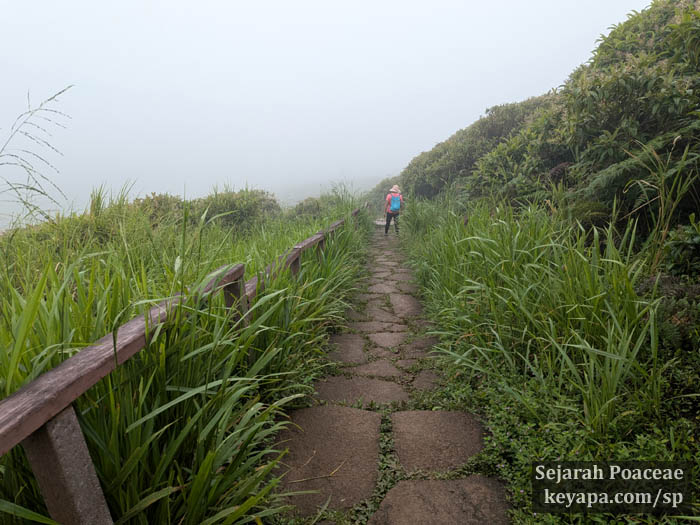
Megathyrsus maximus was also a dominant part of the landscape, with roads going towards the Galapaguera de Cerro Colorado (the tortoise center) flanked on either side by rows of the invasive. It also flanked the hiking path towards Laguna El Junco, the largest freshwater lake in the Galapagos, in San Cristobal island.
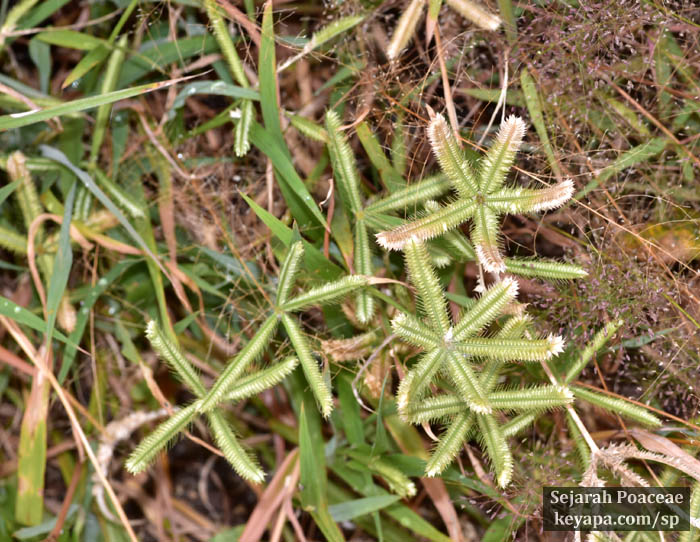
Some of the lesser invasives that I found included Dactyloctenium aegyptium and Eleusine indica, both of which I found once in awhile in the town thoroughfares.
Saying all that, I did find some grasses that were interesting.
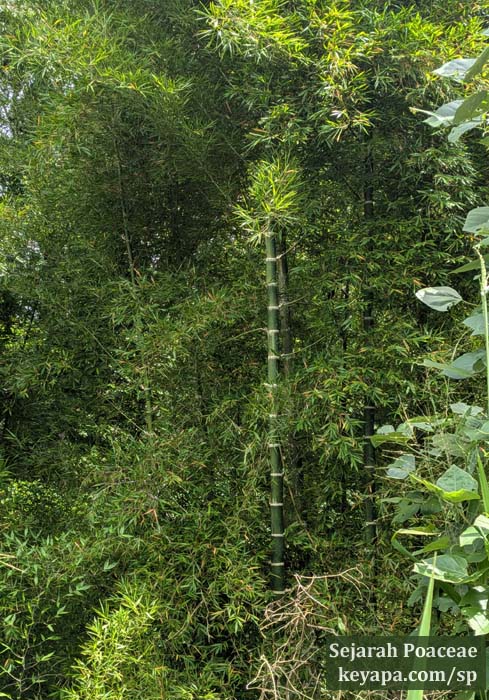
For example, on the way back from Laguna El Junco, the largest freshwater lake in the Galapagos, we chanced upon a specimen of Guadua angustifolia (of subfamily Bambusoideae) that was set back from the narrow roadside. This bamboo is called caña brava in the islands, and is used as a giant timber bamboo in the tropical Americas. It can be tagged by the white nodes that mark its culm, as well as the menacing thorns that rise out of its nodes. It was first recorded in 1974, and was intentionally introduced into the islands.
I also encountered what seems to be Echinochloa colona (of the subfamily Panicoideae), which is commonly called by various names, such as jungle rice, wild rice, deccan grass, jharua or awnless barnyard grass. This is a species with an attractive inflorescence, a native of tropical Asia, but one which has become invasive in certain areas of the world. It was first noticed in the Galapagos in 1835, possibly as an accidental contaminant.
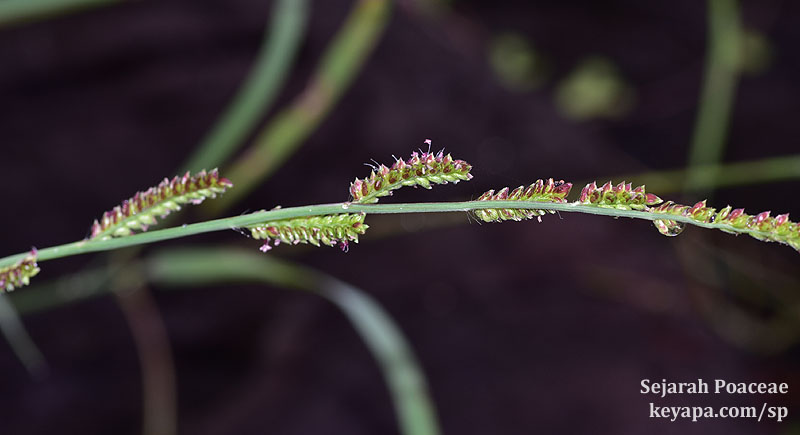
Near a rocky cliff I found several specimens of a grass I had not seen before, which I later tagged as Eragrostis ciliaris. It is native to the Galapagos, and is from the subfamily Chloridoideae.
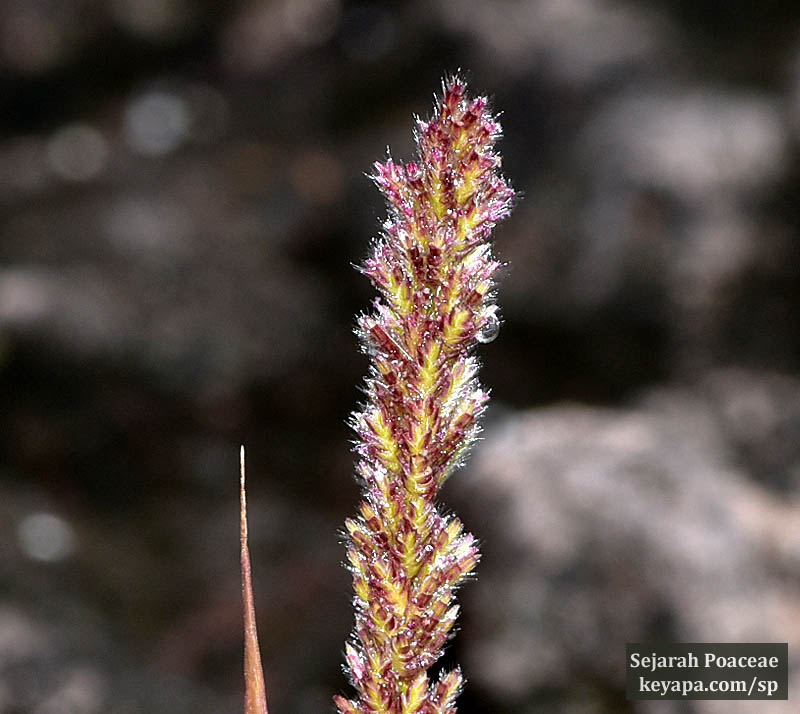
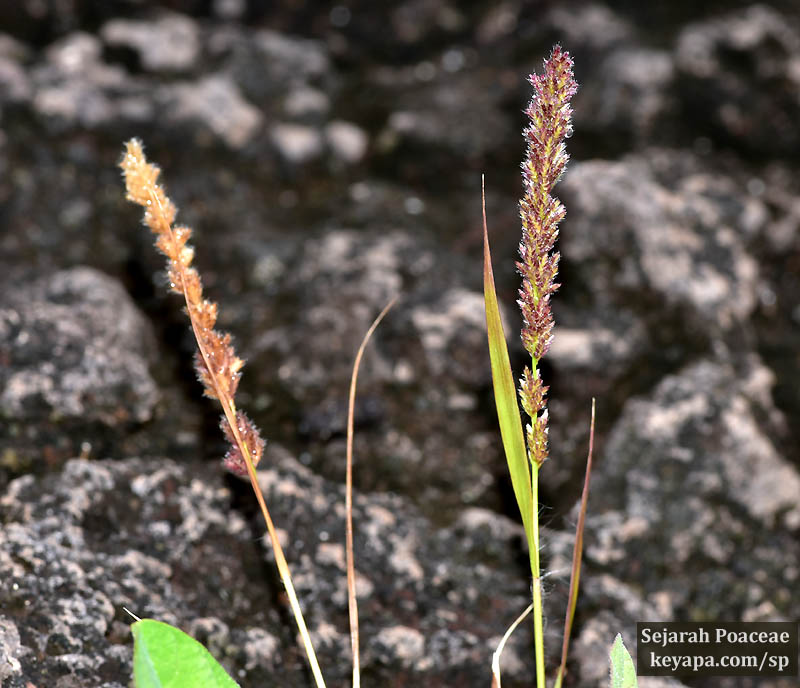
The time we spent at San Cristobal Island in the Galapagos was one of a kind. The animals like the sea lions, and especially the Giant Tortoises, made the journey unforgettable. But for opies like myself, the time spent keeping an eye out for the grasses in this treasured destination made it even better.


Leave a Reply