
We took a 2 hour ferry to the town of Puerto Ayora, on the main island of Santa Cruz.
The town itself was quite a bit more urbanized than the main town in San Cristobal, with a very busy bay area and downtown. In addition to actual high rise buildings, businesses such as restaurants and tour companies that catered to the tourist crowd lined the streets. This is no surprise, given that the population of the island is more than double that of San Cristobal, with about 18,000 people calling it home.
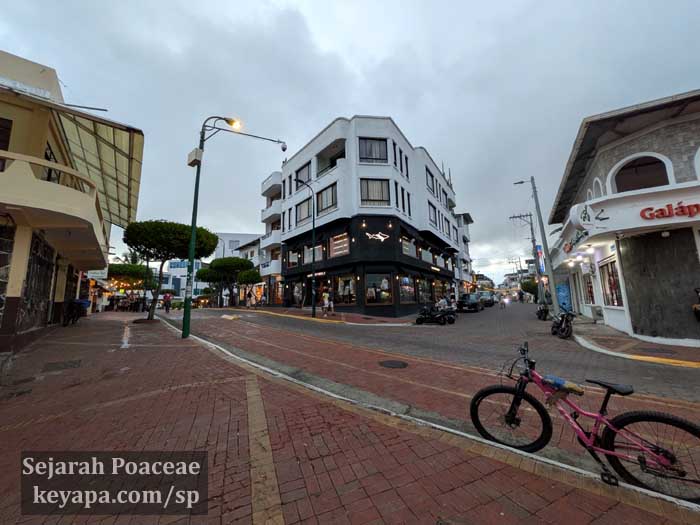
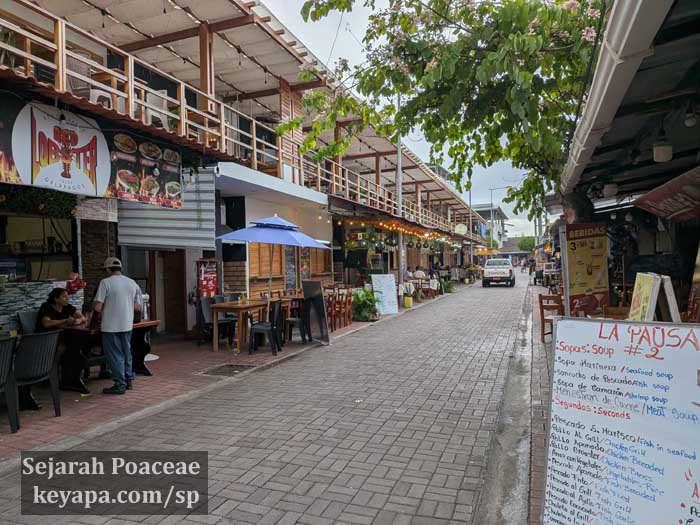
The streets at times teemed with pedestrians, the shop keepers egging would be customers into their shops.
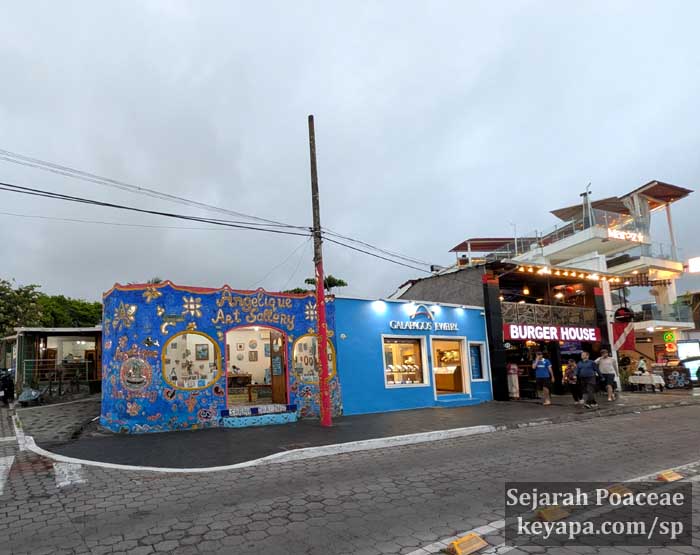
The town even had art galleries in some of the side streets, something that one associates with much more populous locations that can support their wares.
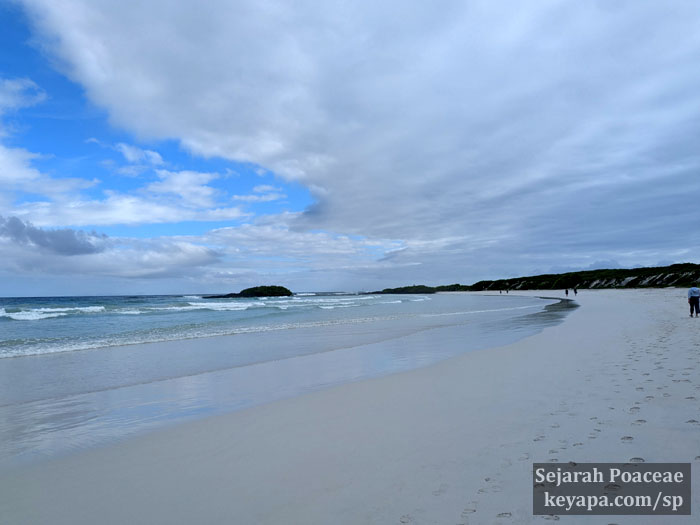
But beyond the bustling town limits we still found many places of breath-taking beauty. The beaches were pristine and mostly empty of human beings.
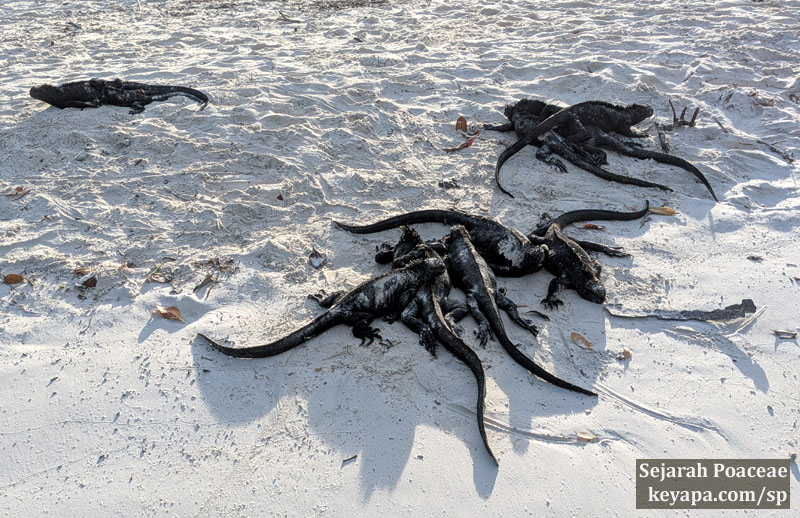
In terms of the fauna, whereas the town of Puerto Baquerizo Moreno in San Cristobal was a haven for sea lions, the town of Puerto Ayora had a lot less of these mammals, but a lot more marine iguanas. These chill reptiles were all over the place, sunning themselves complacently as pedestrians walked unhurriedly around them.
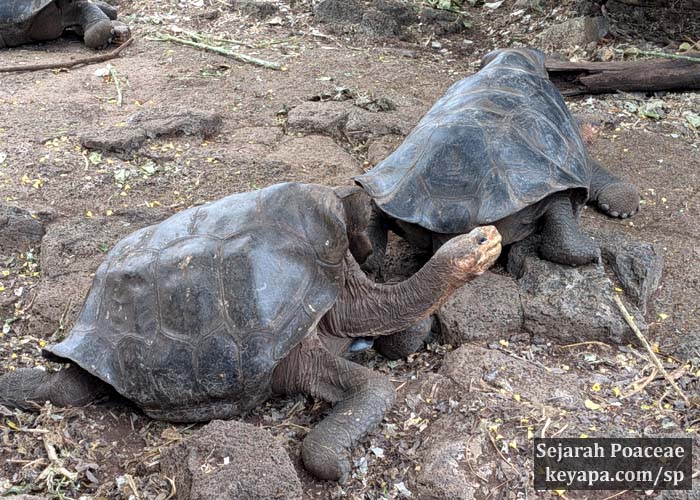
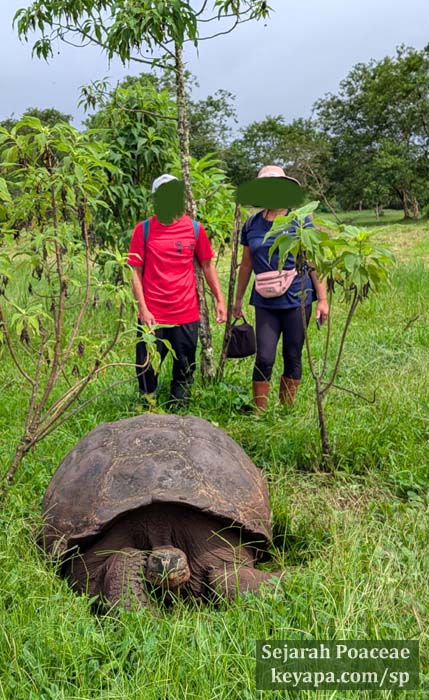
In addition, Santa Cruz had many different Giant Tortoise reserves, where we spent a lot of time marveling at these gentle giants. In particular, the Charles Darwin Research Station within Puerto Ayora was a fantastic destination, especially since it was within walking distance of our lodgings.
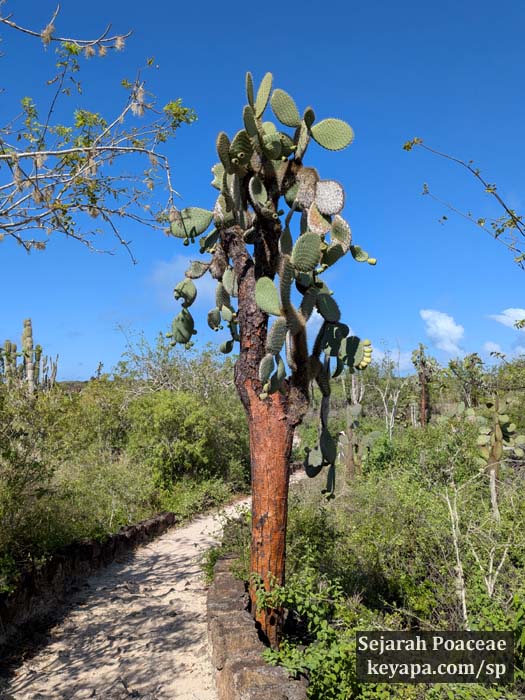
Another giant of the island were the endemic Opuntia cacti that grew to prodigious sizes and had trunks that seemed to be coniferous bark.
The grasses that we encountered in the island were a mixture of the cosmopolitan exotics and natives, with some species seemingly becoming quite invasive.
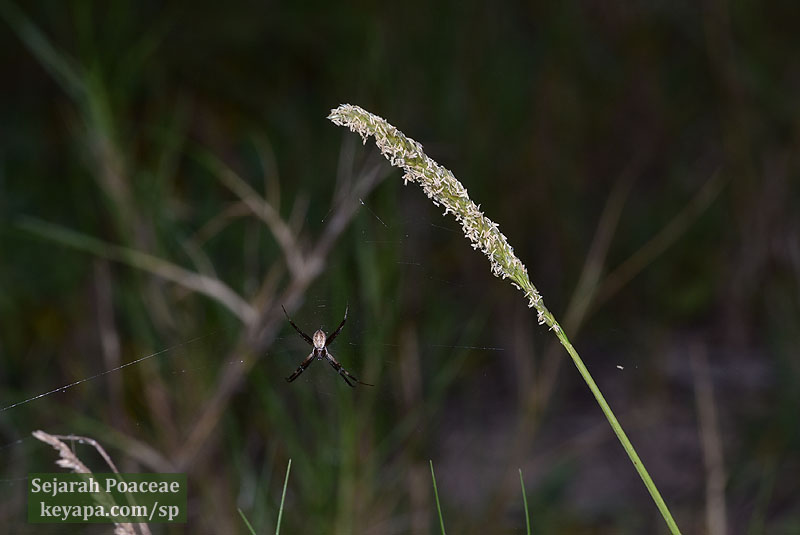
Probably one of the most common species along the many beaches was Sporobolus virginicus, which is native to the island. Common local names for this species include hierba de orilla, pasto de playa, paja de playa, and matojo de playa.
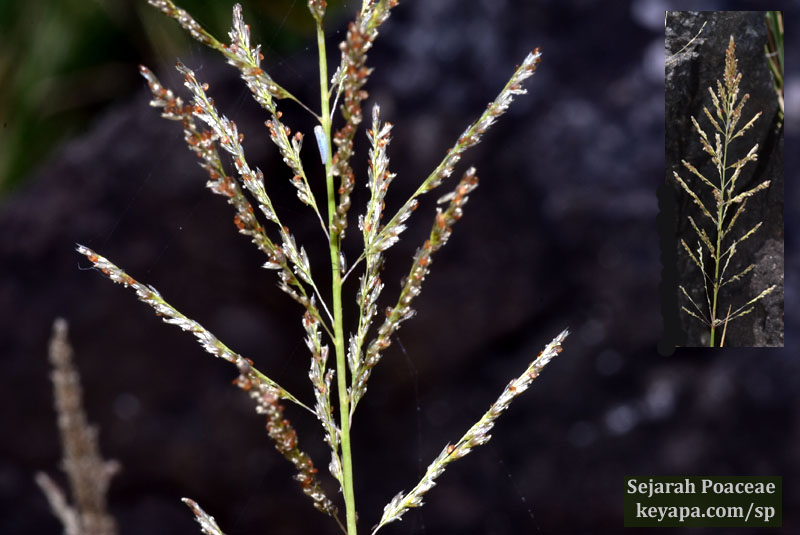
Another less common member of the same genus was Sporobolus pyramidatus. This is also a native to the islands, and I sometimes found specimens next to their more common relations. Local common names include pasto niño and yerba de sal. Both are from the subfamily Chloridoideae.
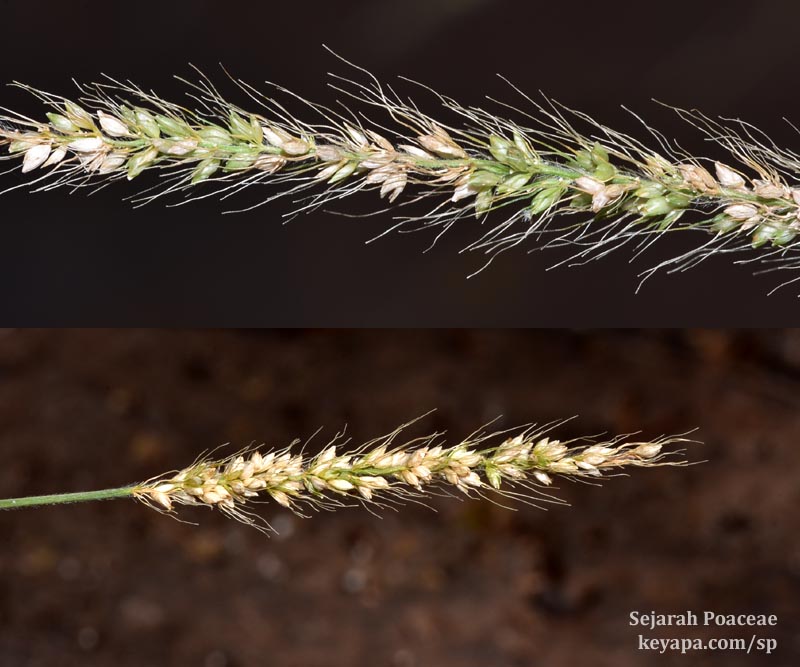
I also sometimes encountered a larger species that I tagged as Setaria setosa (subfamily Panicoideae). This species is also a native, and has a somewhat distinctive inflorescence. It is called pasto by the locals.
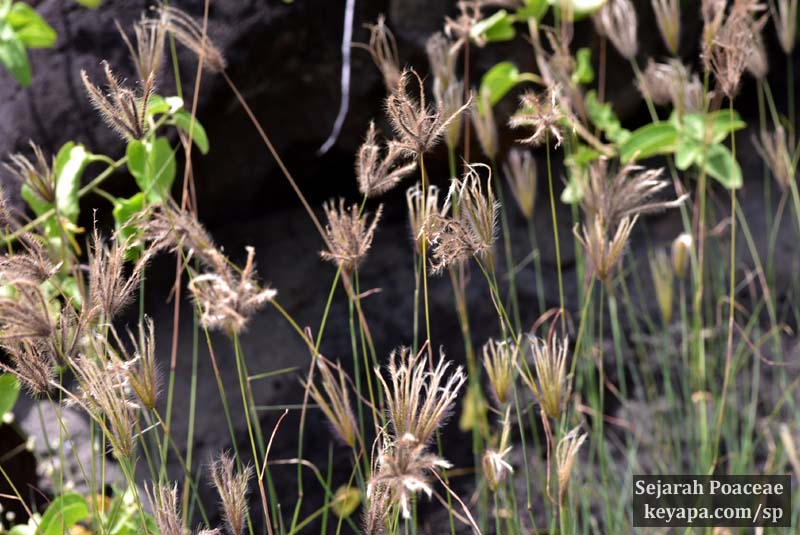
In addition to the natives, there were also the usual exotics, including the almost ubiquitous Chloris barbata. The related Chloris virgata was also in abundance, although there is some question about whether it’s a native or an introduced species in the Galapagos. Both are from the subfamily Chloridoideae.
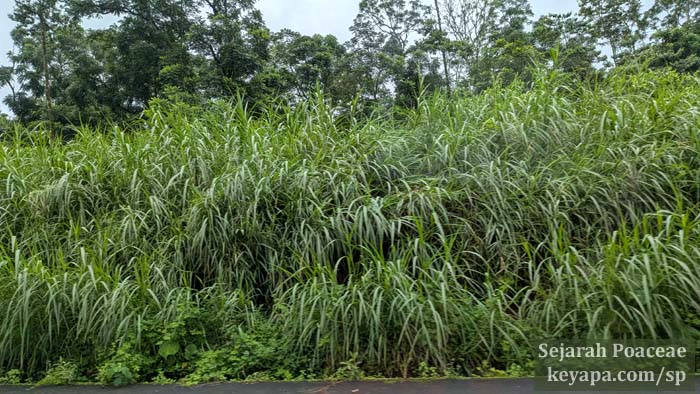
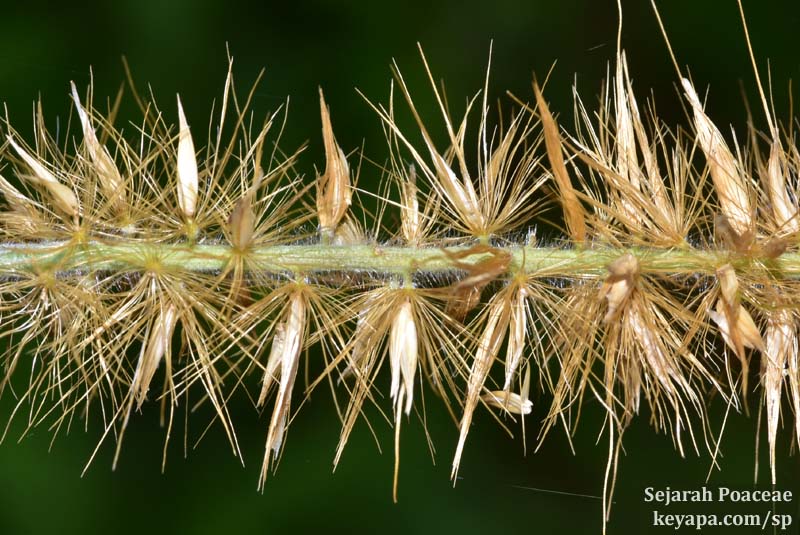
The much larger Cenchrus purpureus is unquestionably of alien origin, and it is without a doubt one of the most problematic invasives.
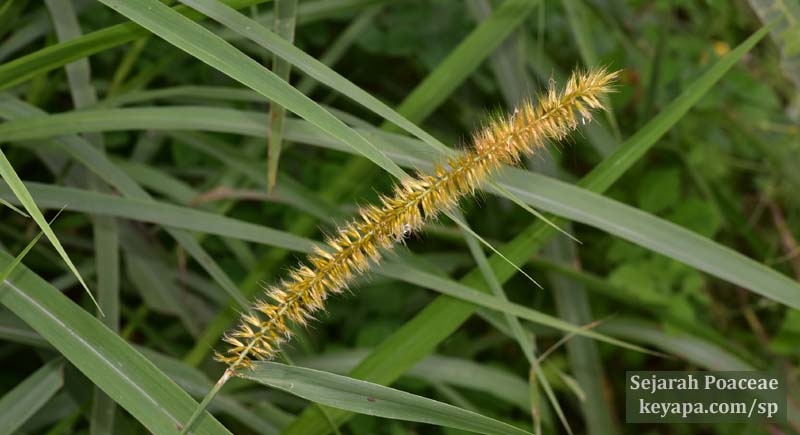
This C4 species is from the subfamily Panicoideae, and it frequently lined the roads in dense masses, crowding out all the usual native undergrowth species. It was deliberately introduced in the 1950s by the agricultural/horticultural industries and it has become naturalized and possibly a threat to some of the native plants.
After three days in Santa Cruz we prepared to travel by ferry to the next island. Although the town of Puerto Ayora may have been a bit too developed, we enjoyed our stay there immensely and deeply respected the ability of the locals to continue to try to preserve their natural environment.


Leave a Reply