
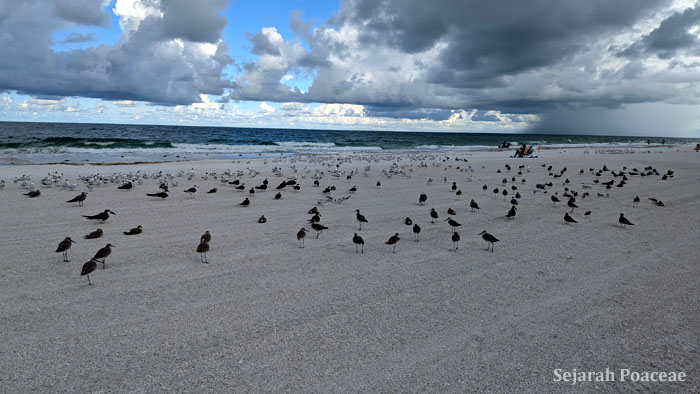
We spent the labor day weekend at a cottage right at the beach in Anna Maria Island in Florida, and I had an enjoyable time just reacquainting myself with some of the common grasses that populate the Florida coastline.
Anna Maria Island (or AMI, as some of the local businesses like to say) itself is a beautiful barrier island that had been hit by multiple hurricanes. Some of the restaurants and stores and hotels have been closed since the most recent disasters, and even the Anna Maria pier was under construction due to lasting damages. The island is a warning nod to climate change, and sad to say things will most likely only get worse over the coming decades.
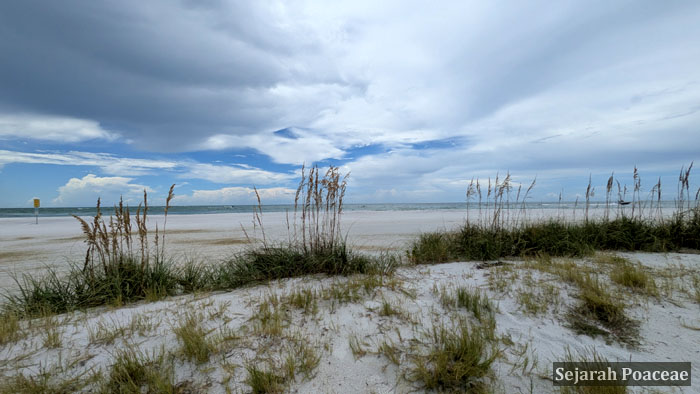
The dominant dune grass was Uniola paniculata (commonly called Sea Oats by the locals). This distinctive and rather tall plant formed walls that insulated the encroaching hotels and condos from the turquoise waters of the Gulf of Mexico. All the specimens I saw had browned inflorescence, a testament to the fact it’s now late summer and going into autumn.
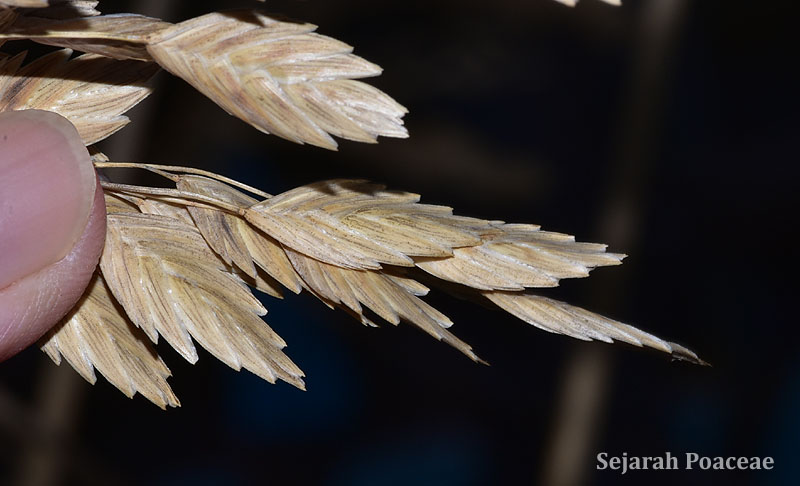
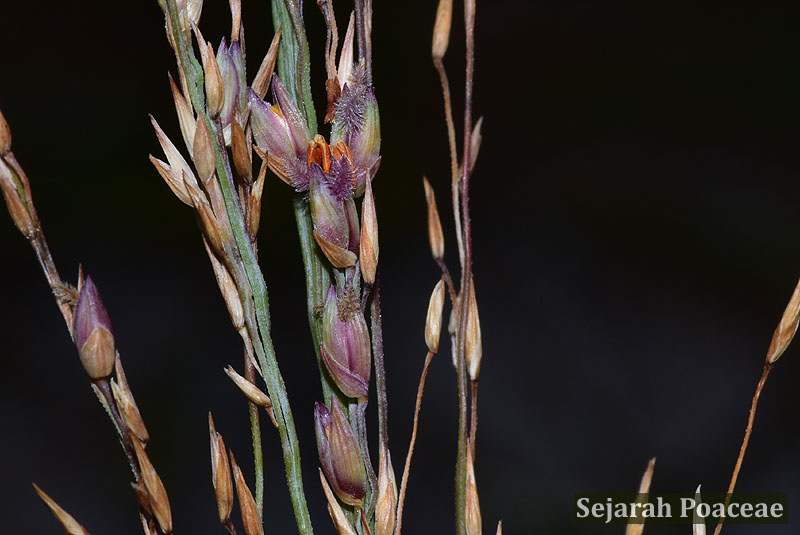
Scattered among the U. paniculata were some clusters of Panicum amarum, also known as Coastal Panic Grass. In flower, the two species are quite easy to tell apart due to the appearance of the spikelets. Whereas the former has attractive and distinctive spikelets reminiscent of Chasmanthium latifolium, P. amarum has the usual Panicum ones.
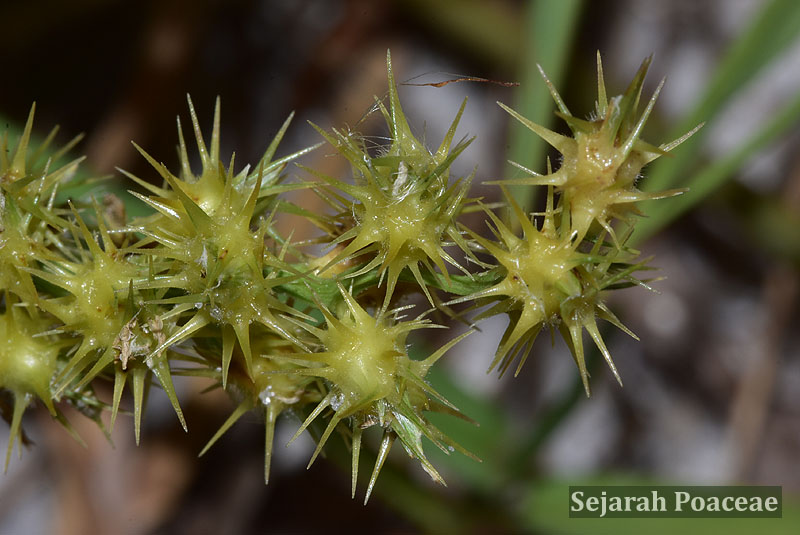
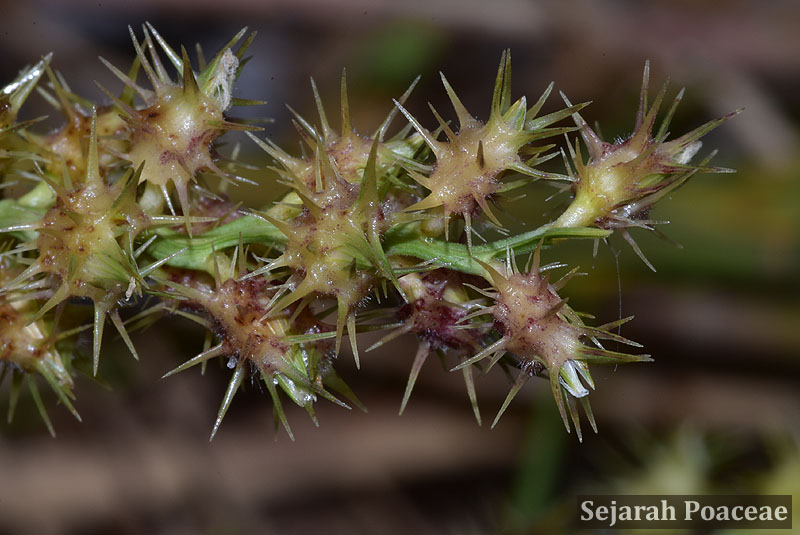
I also found large colonies of sandburs, likely Cenchrus spinifex. These were low growing weed-like grasses that sprawled on the sand and thrust their spiny flowerheads around like deadly-looking weaponry. Interestingly, I saw a lot more of these plants than I have in many other beaches.
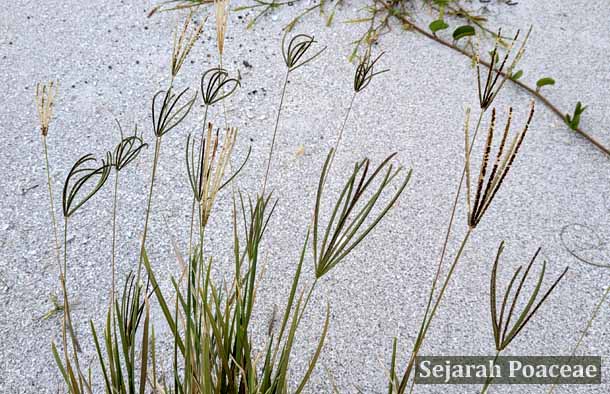
Near some of the hotels, I discovered clusters of Cynodon dactylon (locally known as Bermudagrass) in the sand. These probably started out as turf in the nearby homes, but have expanded into the dunes. The ability of this species to exist in so many different environments is always a surprise to me, and I have seen them not only in Florida beaches, but even in remote beaches in the Peruvian coastal deserts.
In the more pristine areas I found my old buddy Sporobolus virginicus. It seems that no matter what beach I find myself in, I’ll probably stumble upon a few specimens of this cosmopolitan traveler.
Finally, I did see one example of another vagabond that actually might be a native here in Florida. Eustachys petraea is a Chloris barbata look-alike that nevertheless can be separated from its more notorious cousin by the fact that it does not have long obvious awns on its inflorescence.
Our three day stay in Anna Maria Island was not long, but the time I stayed there did bring back some fond memories of travels to more exotic locales when I found grass species that were common even in those faraway places. I guess the wide distribution of grasses can have its unexpected positives, as the avid grass scholar will almost always see some friendly “faces” no matter where they end up.
Leave a Reply