
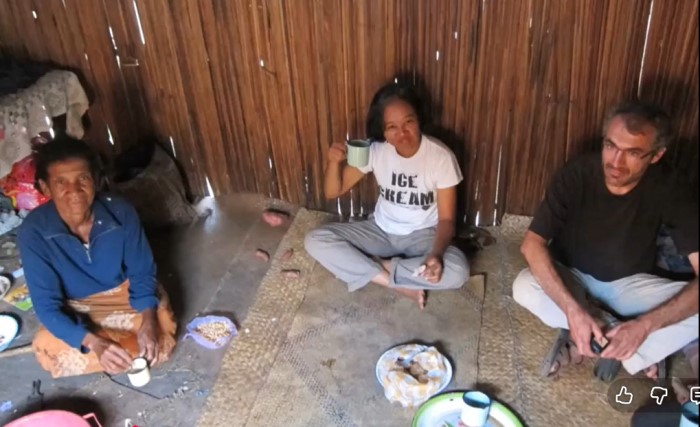
Note: Images from video by grasstube below.
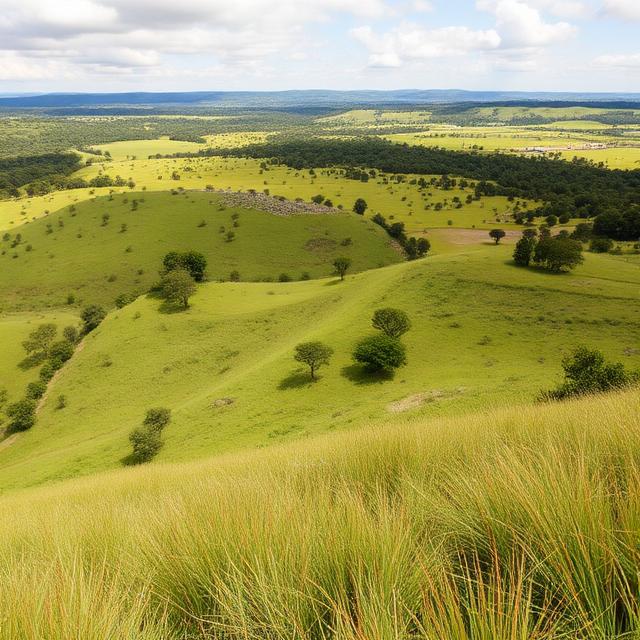
Awhile back we touched on grassland research in Madagascar, where entrenched colonial mindsets in the local government and populace has threatened the existence of extant grasslands in the country’s interior highlands and western parts. As in many tropical areas, people have the idea that grasslands are only secondary degraded forests, and thus must be “reforested”.
This detrimental mindset has been propagated as well by ill-advised foreigners (and their media such as films and books), who believe that Madagascar in its original and pure sense is all wet exotic rainforests, with cute lemurs being threatened and eradicated by the activities of men.
But the reality is that about 80% of the island is covered by grassy habitats (Silander et al, 2024), and research has shown that most of these grasslands are ancient and old growth (Bond et al, 2008; Solofondranohatra et al, 2020).
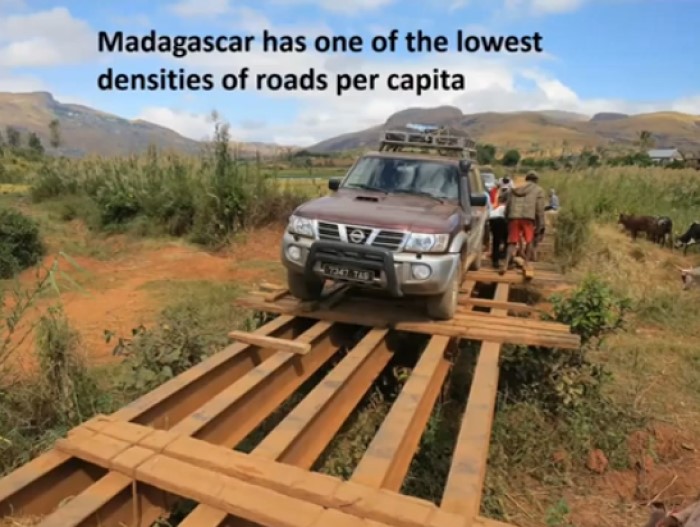
Because Madagascar is a very poor country, such a mindset is not only detrimental in the ecological sense, but will also negatively affect the livelihoods of millions of rural people, who depend on the grasslands to support their herds of herbivores.
Into this milieu, a group of intrepid local and international grass researchers began a decade or so back to push back against the false narratives that had been woven against the grasslands and grasses in the country. They did this by methodically building their case with a series of comprehensive studies that spanned years and involved many local and foreign scientists.
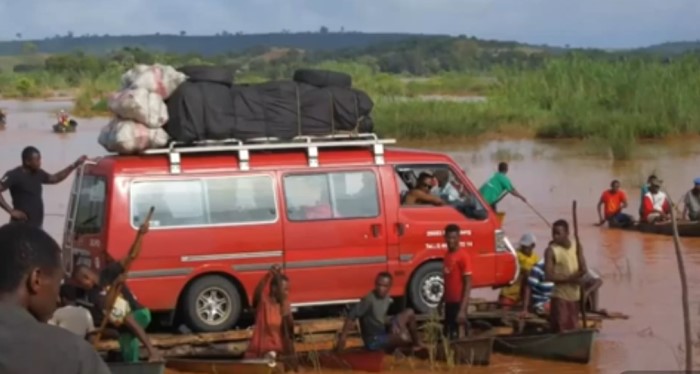
(1) They began by constructing check lists of grasses in Madagascar, traveling around the country in their search for grass species samples, a project that was severely hindered by the lack of infrastructure and the threat of bandits (see video below).
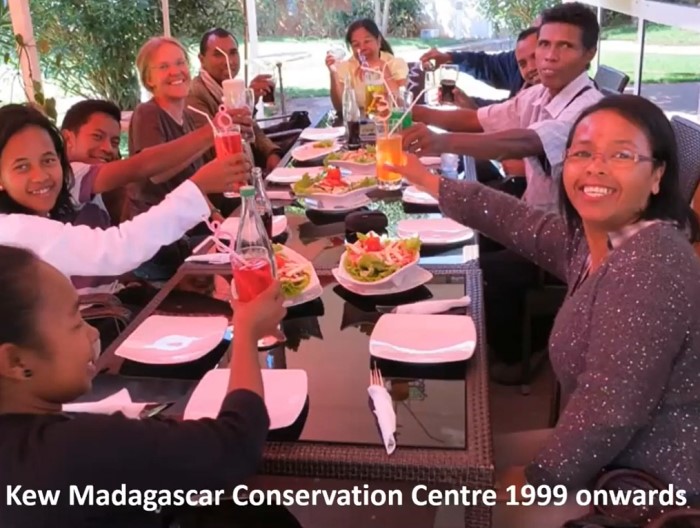
(2) They did DNA studies that delineated the lineages of the endemic species and their evolutionary trees. In the process, they discovered that C4 grasses had colonized Madagascar during the ancient global expansion of that group 3-8 millions of years ago, before the arrival of man, and were therefore not recent arrivals that had been deliberately or accidentally introduced (Hackel et al, 2018).
(3) Madagascar has been touted as an exceptional land whose high endemic biodiversity has been severely degraded by massive anthropogenic fires. But when they did comparisons of fire regimes in Madagascar to fire regimes in other similar tropical countries, they found that the island had comparable rates of fire (Phelps et al, 2022).
(4) They tackled the idea that grasslands in Madagascar were composed mostly of imported species that invaded burnt areas after anthropogenic fires. When they compared the prevalence of endemic grasses in Madagascar to those in other continents, they found that the percentages were similar (Vorontsova et al, 2016).
(5) The group questioned the use of certain terminology that caused confusion, and added to the detriment of grasslands and grasses. For example, the word “woodland” can be used for both grassy biomes and forests. In Madagascar, they established that Tapia (Uapaca bojeri) “woodlands” are not degraded forests, but are actually fire-adapted savannas, given that these share grass community composition with savannas (and not tree composition with forests) and have a continuous layer of C4 grasses surrounding Tapia trees (Solofondranohatra et al, 2018).
(6) Finally, in a seminal paper, they revealed that the grasses in Madagascar could be separated into fire and grazer associated assemblages, with the phenotypes of the species dependent on whether they are part of one of the assemblages or the other. The existence of grazer assemblages must have evolved before the advent of humanity in the island, when many large grazers still existed. This strongly supports the notion that the grasslands in Madagascar are ancient and old growth, instead of being ones that were created by human activity (Solofondranohatra et al, 2020).
Due to their work and the work of other researchers, the International Union for Conservation of Nature (IUCN) recognized pyric tussock savannas in the Global System Typology as a natural vegetation type in Madagascar and other locations globally. The various studies above that they pioneered also ignited debate about afforestation efforts in Madagascar, and has helped blunt the notion that grasslands in that country are secondarily derived due to human destructive activities.
Even today, these intrepid researchers continue to push the idea of the existence and value of old growth grasslands in Madagascar. For example, they are in the process of delineating the open canopy areas in the country in the hopes of producing maps that will enable decision makers to determine where tree plantings should be initiated, and where they should not.
One can only hope for the continued success of these rebel warriors of science who pit themselves against the old colonial stereotypes about grasslands that still plague many countries.
Below: Youtube video showing some of the challenges faced by grass botanists in Madagascar, where poor infrastructure and crime are rampant.
Literature Cited
Bond, W. J., Silander, J. A., Ranaivonasy, J., & Ratsirarson, J. (2008). The antiquity of Madagascar’s grasslands and the rise of C4 grassy biomes. Journal of Biogeography, 35, 1743–1758. https://doi.org/10.1111/j.1365-2699.2008.01923.x
Hackel J, Vorontsova MS, Nanjarisoa OP, et al. (2018). Grass diversification in Madagascar: In situ radiation of two large C3 shade clades and support for a Miocene to Pliocene origin of C4 grassy biomes. J Biogeogr. 45:750–761. https://doi.org/10.1111/jbi.13147
Kull 2002. The ‘degraded’ tapia woodlands of highland Madagascar: rural economy, fire
ecology, and forest conservation. Journal of Cultural Geography 19 (2): 95-128.
Phelps, L. N., Andela, N., Gravey, M., Davis, D. S., Kull, C. A., Douglass, K., & Lehmann, C. E. (2022). Madagascar’s fire regimes challenge global assumptions about landscape degradation. Global Change Biology, 28, 6944–6960. https://doi.org/10.1111/gcb.16206
Silander, J. A.Jr., Bond, W. J., & Ratsirarson, J. (2024). The grassy ecosystems of Madagascar in context: Ecology, evolution, and conservation. Plants, People, Planet, 6(1), 94–115. https://doi.org/10.1002/ppp3.10417
Solofondranohatra CL, Vorontsova MS, Hackel J, Besnard G, Cable S, Williams J, Jeannoda V and Lehmann CER (2018) Grass Functional Traits Differentiate Forest and Savanna in the Madagascar Central Highlands. Front. Ecol. Evol. 6:184. doi: 10.3389/fevo.2018.00184
Solofondranohatra CL, Vorontsova MS, Hempson GP, Hackel J, Cable S, Vololoniaina J, Lehmann CER. 2020 Fire and grazing determined grasslands of central Madagascar represent ancient assemblages. Proc. R. Soc. B 287: 20200598. http://dx.doi.org/10.1098/rspb.2020.0598
Vorontsova MS, Guillaume Besnard, Félix Forest, Panagiota Malakasi, Justin Moat, W. Derek Clayton, Sarah Z. Ficinski, George M. Savva, Olinirina P. Nanjarisoa, Jacqueline Razanatsoa, Fetra O. Randriatsara, John M. Kimeu, W. R. Quentin Luke, Canisius Kayombo, H. Peter Linder (2016). Madagascar’s grasses and grasslands: anthropogenic or natural?. Proc Biol Sci 1 January 283 (1823): 20152262. https://doi.org/10.1098/rspb.2015.2262

Leave a Reply