
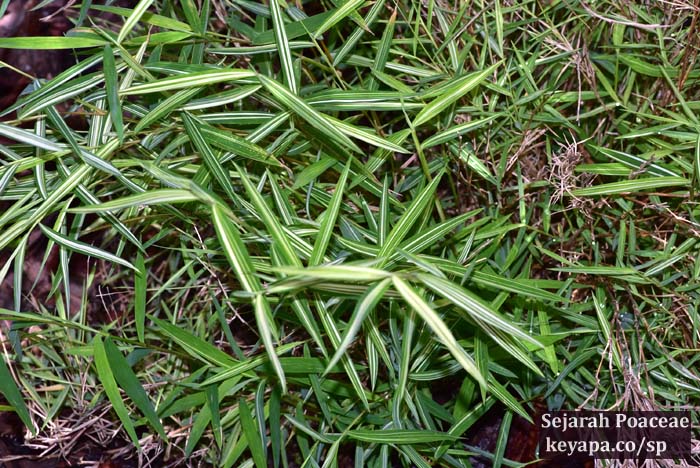
During the last week, I was lucky to find strong flowering in two separate but related grasses in the subfamily Panicoideae.
I am quite familiar with Paspalum notatum, which is locally called Bahia Grass and is used as turf grass quite a bit in the community where I live. I am also aware of various other members of the genus that I have found during my hikes. These grasses have a very distinctive inflorescence on the whole, something which I find satisfying because of my unfortunate lack of identification skills.
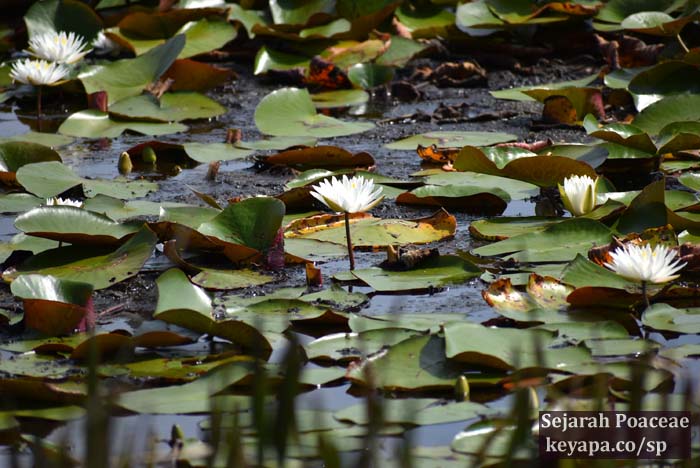
The Paspalum species that I encountered during a trip to a blueberry picking farm in Central Florida was far and away the largest species that I had ever encountered from this genus. There was a small lake on one side of the farm, and it was covered in water lilies, many of which sported white flowers. There was a time when I used to grow water lilies in large barrels in NJ, and I still have a love for the plants.
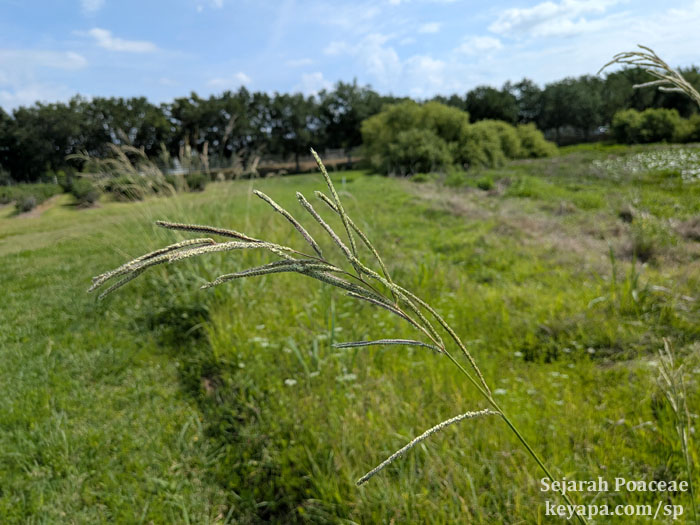
I tagged the grass as Paspalum urvillei (locally known as Vasey grass). The culms were clustered together in large groups in a broken ring around the small lake. and many sported inflorescence in various stages of development, pushing their overall heights above 1.5 meters.
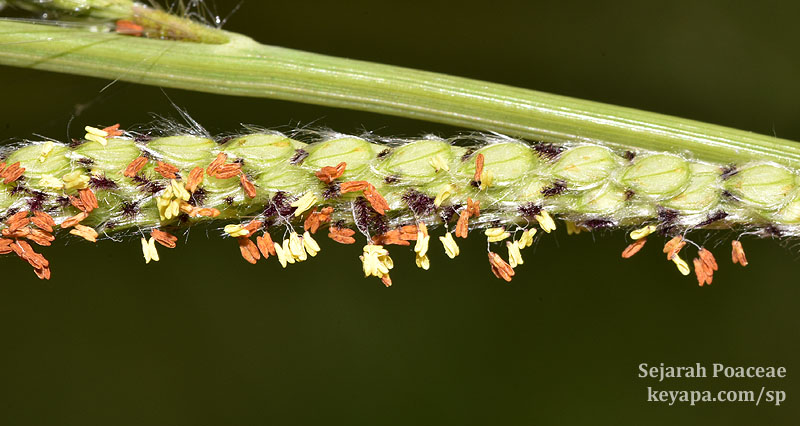
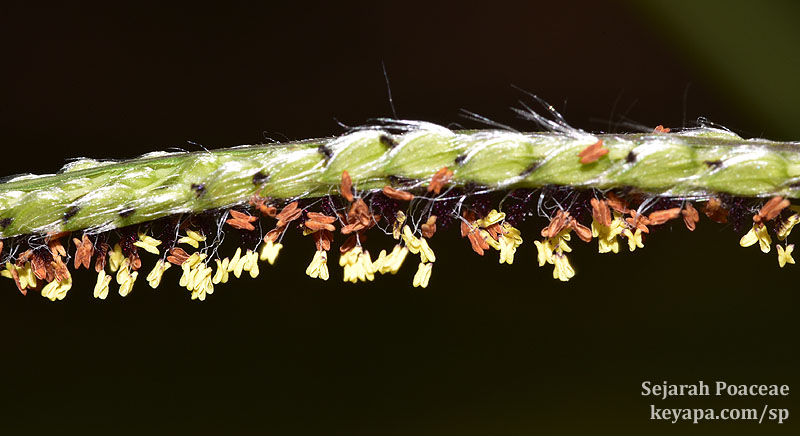
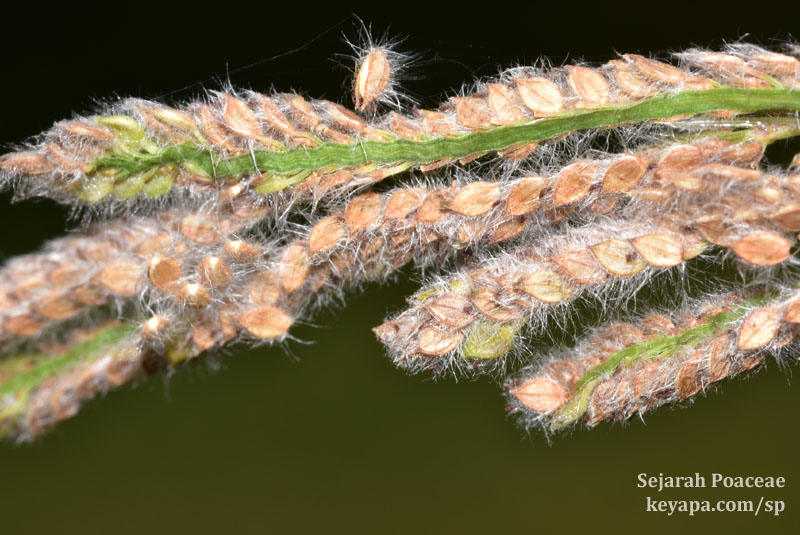
Some of the flowerheads had intact stamens and stigmas, with some having both yellow and orange stamens (along with the purple caterpillar-like stigmas). Others had already gone to seed, and the diaspores were in the midst of parting from the mother plant and making their way into the big wide world.
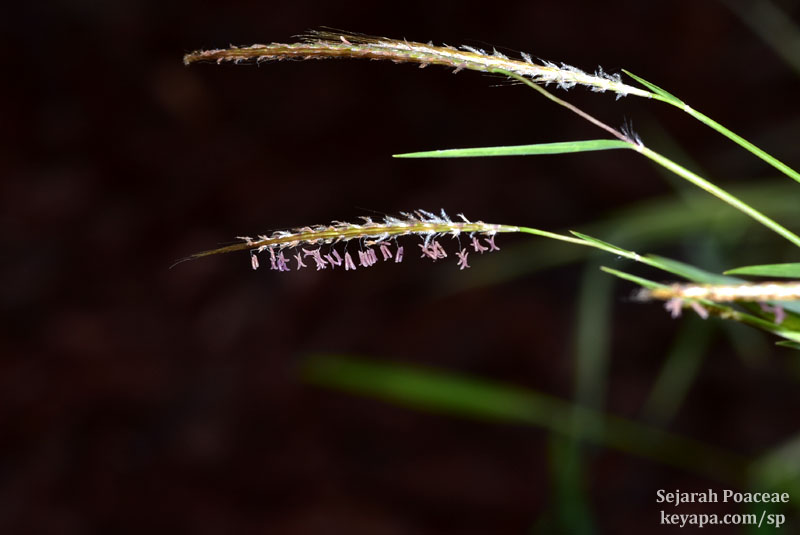
The second species that made my week was one that I had planted closer to home. Pogonatherum is a genus that is also part of the Panicoideae subfamily, but the Pogonatherum paniceum that grew under one of my palms is in every other way quite different from the Paspalum.
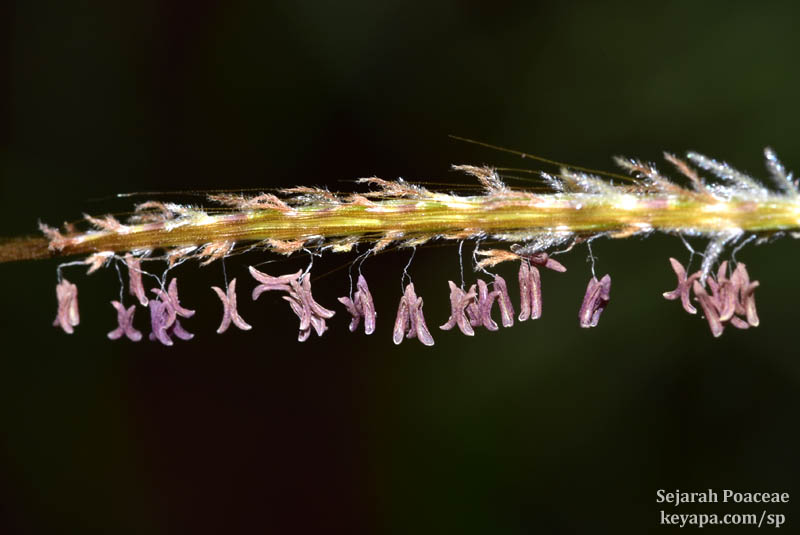
It is much shorter, perhaps 0.25 of a meter, and its leaves are beautifully variegated. It looks like a miniature bamboo, and its common name is “Baby Panda” or “Baby Bamboo”. Whereas Paspalum urvillei is a native of South America, P. paniceum hails from farther away, from subtropical and tropical Asia. Also unlike the much larger Paspalum, the inflorescence of this grass is quite small, less than a cm in length. However, both are C4 bunch grasses, and thus are able to withstand hot, arid weather.
One notable thing I realized about Pogonatherum paniceum though is that it prefers its soil moist, and dry spells will immediately brown the leaves. The first mistake I made was planting it in an unprotected location that was exposed to the sun for most of the day. Once I had transferred it to a shaded location, it bloomed and its leaves kept their full color.
Spring is in full swing here in Central Florida, and some of the grasses are already well into their flowering seasons. Unfortunately, we’ll be heading off to much farther locations by end of next week, and I’ll miss some of the many floral spring celebrations.
Leave a Reply