
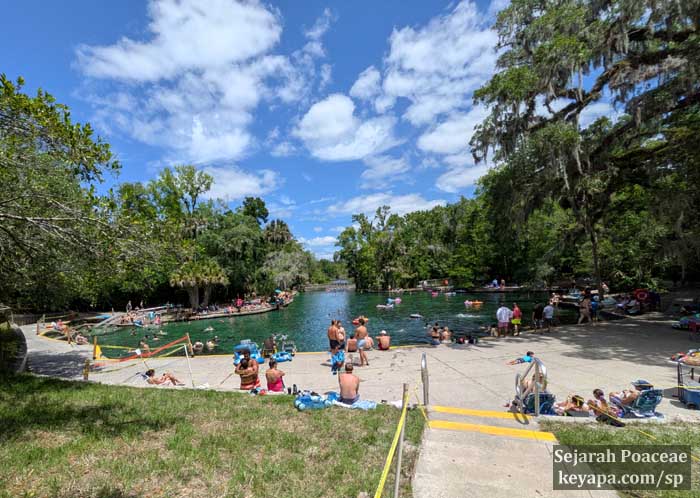
We did a long 12 km hike around Wekiwa Springs State Park last weekend, and I managed to observe some interesting native grasses in their early spring season gear.
Wekiwa Springs State Park lies north of Orlando, and is visited by many who would like to bathe in the crystal clear waters of the natural spring that lies near the entrance of the park. But the park also boasts amazing hiking paths that wind their way through the scrub, sandhills, and hardwood hammock ecosystems that occupy much of the rest of the location.
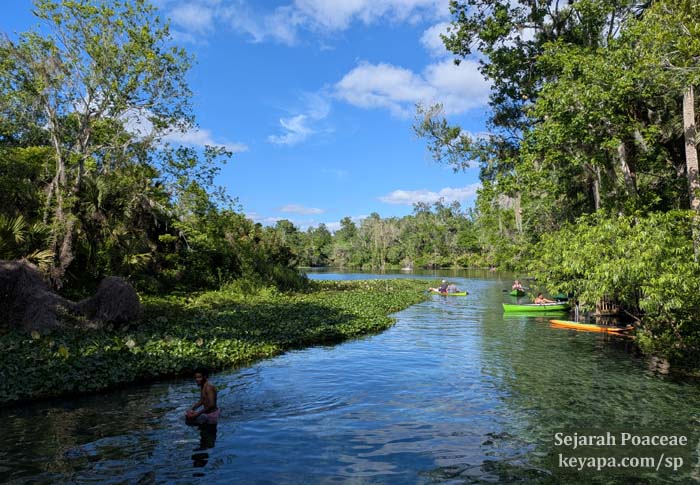
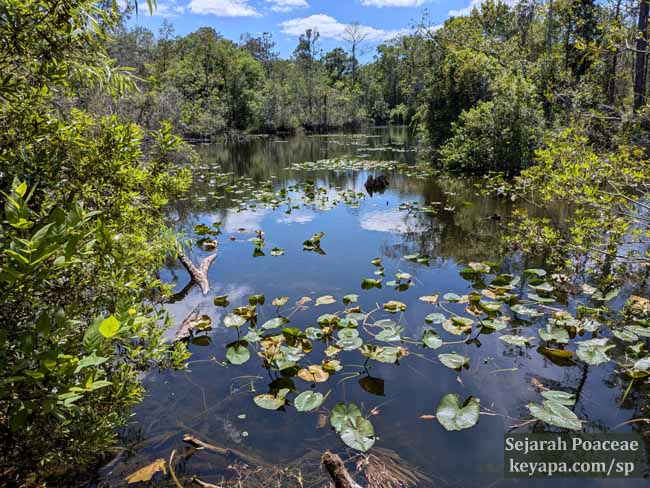
We spent perhaps 4 hours going from lake to lake. We first went to Sand Lake, a very picturesque body of water that nevertheless was off limits to swimmers. A big sign warning of alligators stood next to the lake, but we were entranced nevertheless as we used one of the picnic benches and gazed at the water lilies that were beginning to push out yellow flowers in anticipation of another Summer.
The next lake we visited was the much larger Prevalt Lake, which was less developed, with only a single small path that made its way near to the shores. But as if to make up for this lack of development, next to it was a youth camp, with many building and outside lecture benches. The park hosts multiple campsites, although the one we hiked through was unused at the time, the buildings and outside lecture sites with their wooden benches deserted and empty.
During the long hike, I found some interesting natives that I had not seen or rarely seen before. The most amazing thing to me was how there were native bamboos hiding in plain sight literally next to the masses of people who swam and sunbathed and picnicked around the natural spring.
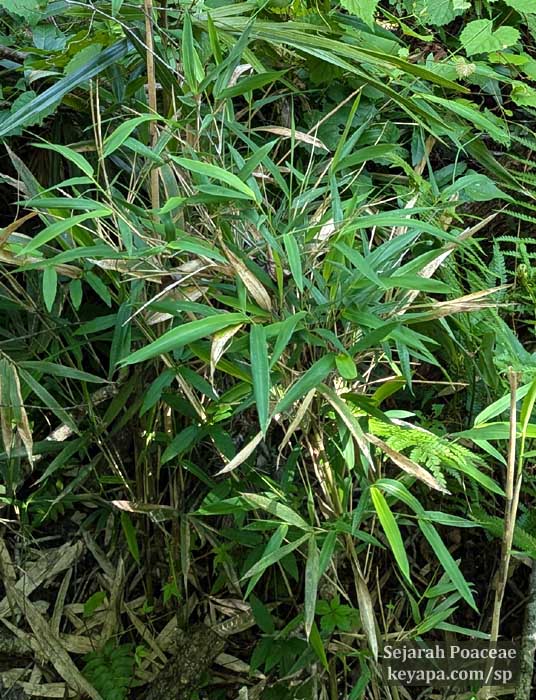
Arundinaria tecta is called “switch cane” in the local area, and it once was much more prevalent in the country. It is an inhabitant of shade, and thus I only found clusters of it when we were walking through the forested parts of the park. The reason that none of the hundreds of people around it seemed to pay attention to the bamboo in their midst is that it is a fairly innocuous species when compared to the towering exotic woody bamboos from Asia and other parts of the world. The specimens that I saw in the busy main spring were all a meter or less in height, with thin culms a cm or less in diameter. Farther away I did see specimens that exceeded two meters or more, but they were the exception and not the rule.
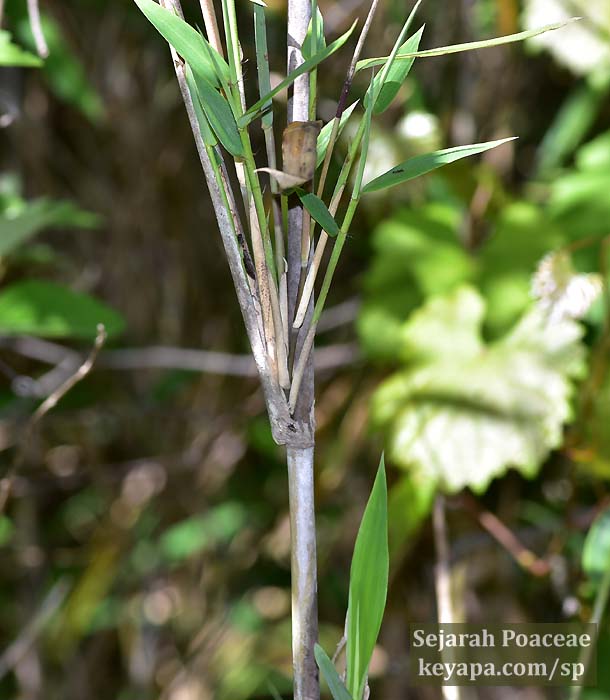
Nevertheless, their presence in the park was a big part of the enjoyment I felt as we hiked. In fact, I had trained my search image well enough by the end of the hike that I was consistently making out specimens even in the midst of a confused tangle of other flora as we walked quickly past. If you ever visit that park, it would be a shame if you didn’t look around and admire a member of a genus that is the only native temperate woody bamboo in North America.
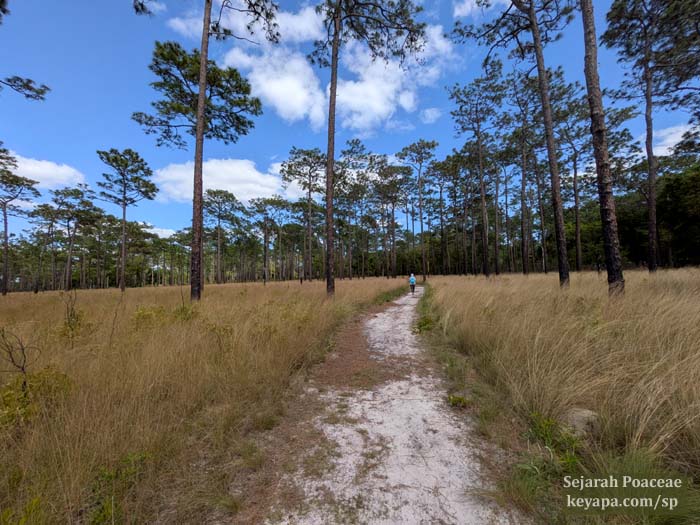
Beyond the bamboos, many of the open habitats in the park, and especially the areas closest to one of the camps, had a dense undergrowth of grasses. Although most of the grasses were still the brown remnants of last year, and thus unidentifiable to me, I could tell that these were mostly not the tall Anatherum spp of last week’s Lake Kissimmee State Park. They were all rounded and much shorter species that were probably an amalgamation of Poaceae, including the iconic Aristida sp (wiregrass).
In the midst of them all, I discovery a species that was just as satisfying as finding Arundinaria tecta in the park. Unlike many of the other grasses, this endemic native already had inflorescence pushing up into the breeze, and it was beautiful.
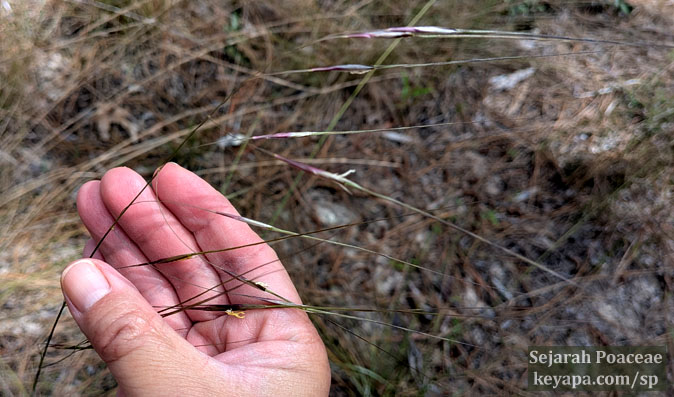
There are two species from the genus Piptochaetium in Florida. They both have very long awns, and look remarkably like another grass genus, Stipa. Piptochaetium avenaceum (Blackseed Needlegrass) is more widespread in the continental USA, but Piptochaetium avenacioides (Florida Speargrass) is an endemic native, found only in the state. I’ve always loved the long-awned grass species, and these were no exception.
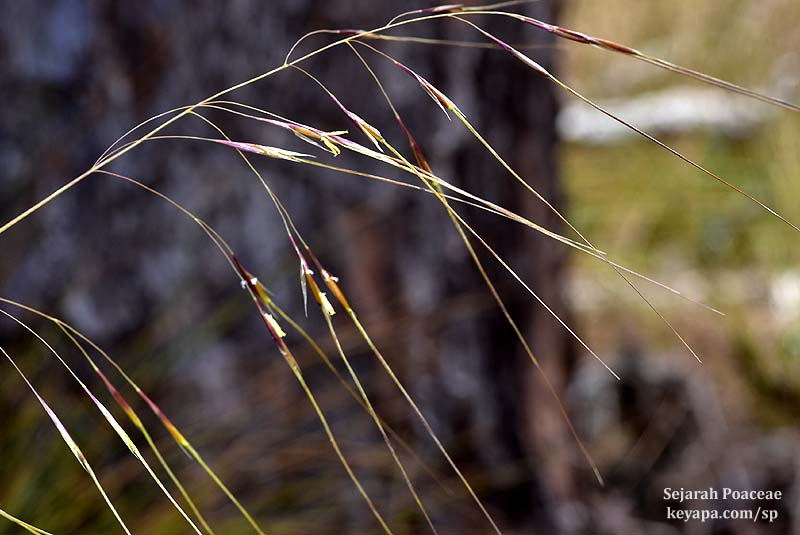
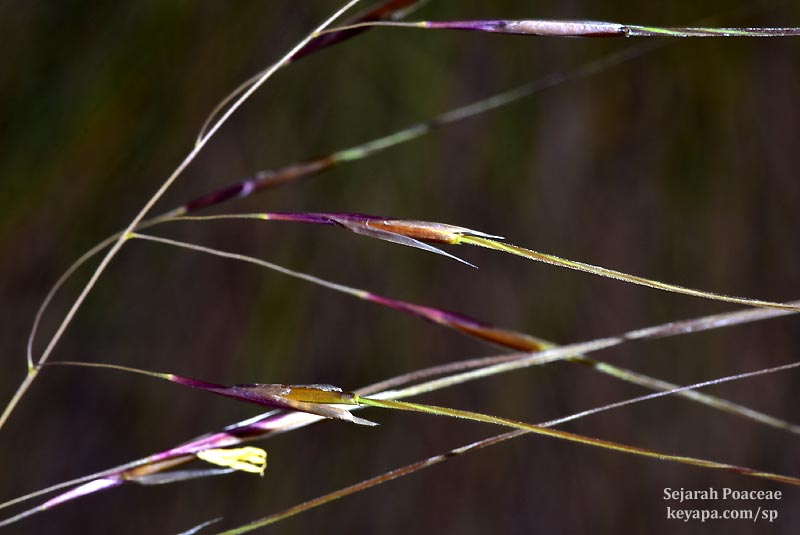
Although they both are similar morphologically, the Florida endemic is larger in size, and it is possible that this is the species that I found during the hike (although more careful measurements would need to be made). It is found in dry woods and sandhills, and is ranked as a vulnerable species due to various factors, including development and fire suppression in its habitat.
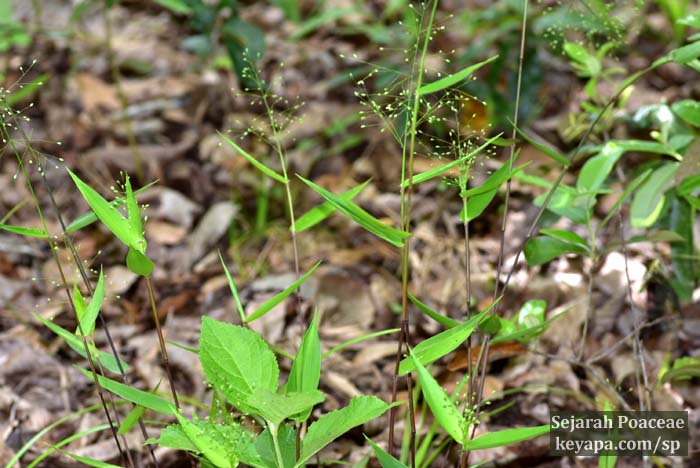
Another grass species that I encountered frequently during the day was from one of my favorite genera, the Dichanthelium. Even while walking along a fire lane from the parking lot to the spring, I found many specimens of Dichanthelium commutatum springing up with inflorescence along the sides of the path. Like many of its ilk, it is an inhabitant of the shade, and it invariably petered out as we walked out into the more open areas of the park.
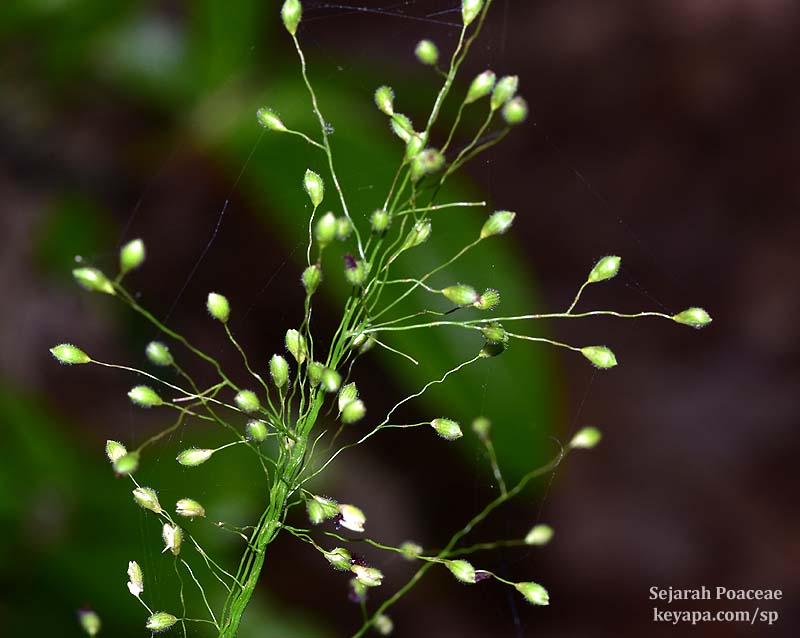
I also unfortunately saw evidence of Imperata cylindrica (cogon grass) sporadically during the hike, although at least one cluster had been treated and was browning. Left unchecked, this invasive and very aggressive species would likely spread like wildfire and in time choke out many other species.
When we finally limped back to our car for the long ride back home, we were somewhat tired but happy to have completed our arduous hike. Hiking in Florida is best done during the cooler seasons, avoiding the high heat and humidity of summer. Fall season is best for seeing the grasses in flower in all their majestic glory, but spring season can be just as rewarding.
Leave a Reply