
An arctic blast brought freezing temperatures to Central Florida the last couple weeks. For three consecutive nights, temperatures dropped below freezing.
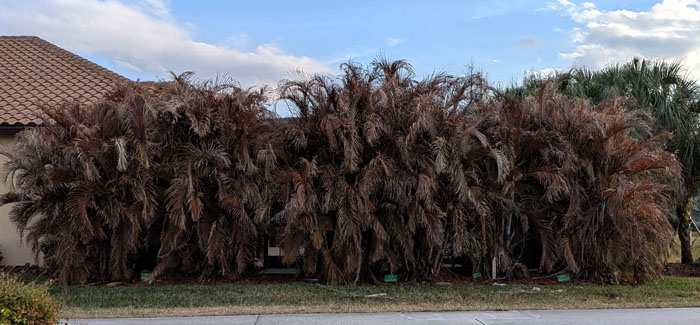
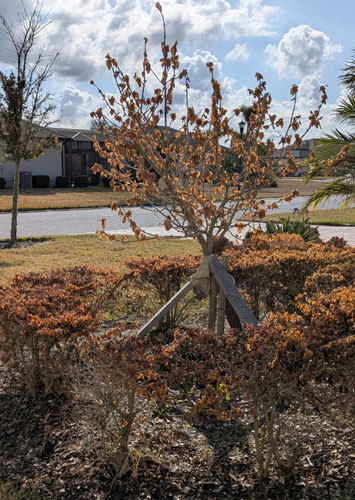
In the aftermath of these disastrous weather events, whole swathes of herbaceous ornamentals, trees, and shrubs were left seemingly dead, their leaves turned a crinkly brown.
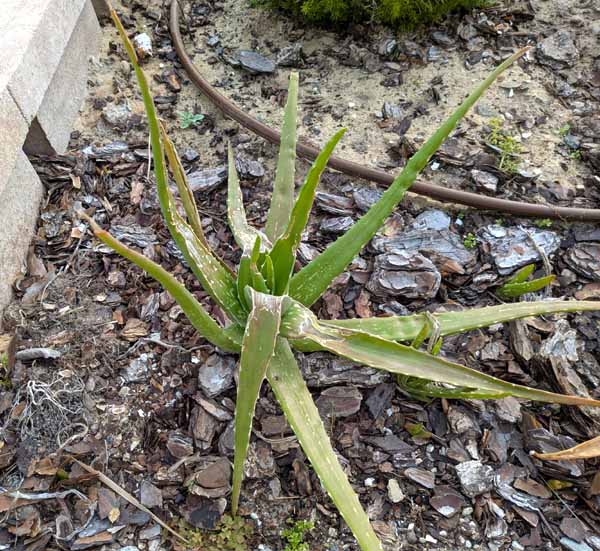
Even the succulents were affected, with the big bloated leaves of Aloe vera becoming soft and then withering days after the cold had long since passed.
The grasses too, were affected, although their vulnerability varied from one species to the next. None of them seemed to have been permanently harmed by the cold spell, but some turned a slight brown.
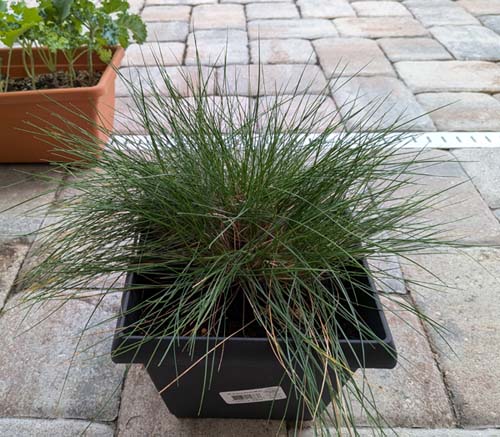
The cold-hardy Festuca glauca had no problems at all. In fact, this species, which I grew from seed last Spring and has been struggling in the Florida weather, probably welcomed the cold!
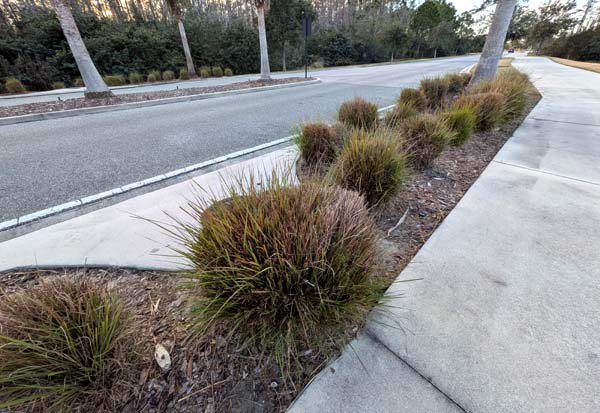
The Muhlenbergia ornamentals in our yard remained green, and so too did the robust Trypsacum dactyloides ornamentals in the community. The Imperata cylindrica (cogon grass) clusters that I checked also seemed to not have been overtly bothered. These species can exist farther up north, and they shrugged off the cold with nary a problem.
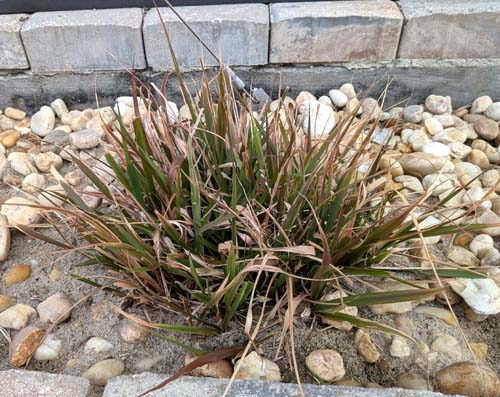
Another ornamental that I grew from seed last Spring, Eragrostis spectabilis, also passed through the arctic blast unaffected by the bitter cold. I should note that the brown leaves from many of the grasses were there even before the cold spell, and are probably usual during this winter season.
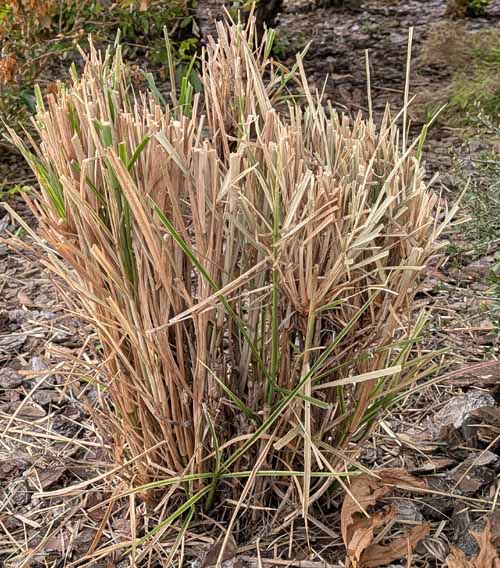
Other than some of the turf grasses, the species that seemed most affected by the cold were the Cenchrus setaceus ornamentals, whose leaves were almost all brown (although it should be pointed out that this species typically browns very easily, and so I cannot be sure about the extent of additional browning that happened due to the arctic blast). However, green blades still rose up among the dried ones.
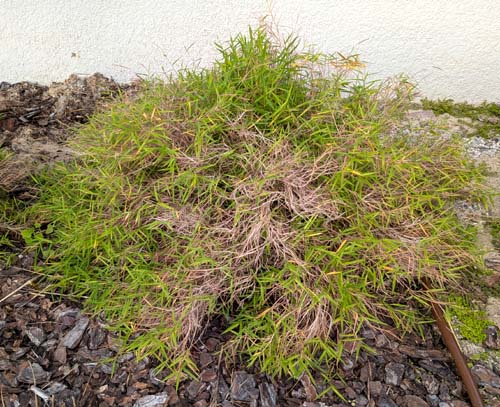
Another grass that did not seem at all affected was the Pogonatherum paniceum that I had placed under one of my palms. This was another species that was wilting under the bright sunlight and heat of the Florida climes, so perhaps this brief cold spell was a refreshing change for it.
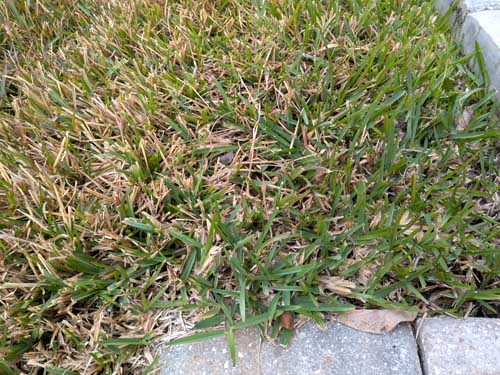
The turf grasses in the neighborhood almost all browned slightly. In the case of Stenotaphrum secundatum, most of the area inhabited by this common lawn grass turned light brown, but among them there were still lots of green blades.
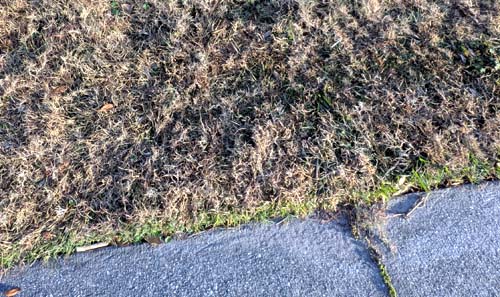
The Cynodon dactylon (Bermuda grass) fared less well, with almost all the patches that I saw of this grass having tuned a light brown.
Beyond the immediate neighborhood, the bamboos seemed to be affected dramatically based on the species.
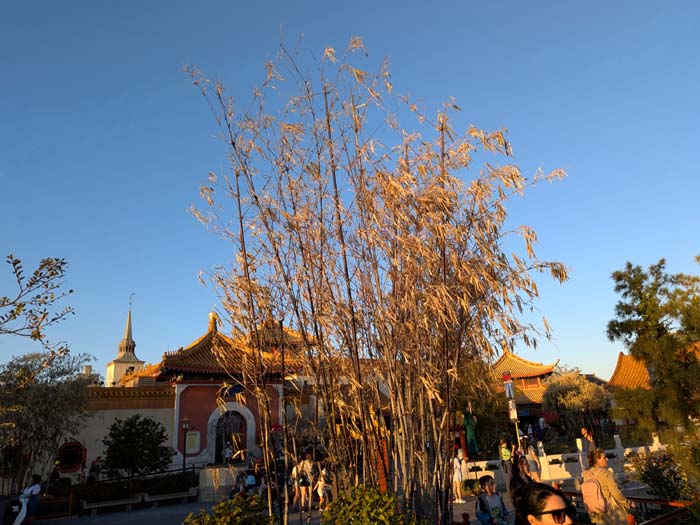
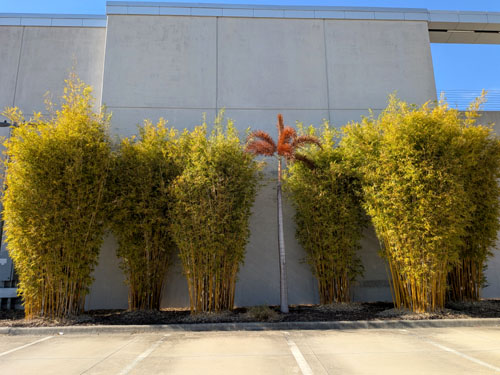
During a trip to Disney World last week, we found bamboo in the Chinese area of Epcot that were completely brown and seemingly lifeless. But just 30 minutes away north, rows of magnificent bamboos in a Lexus service center displayed absolutely no signs of browning.
The arctic blast that rolled over the area caused widespread damage to many plants. In the few years that I’ve been here, I’ve never seen such devastation among the mostly subtropical and tropical flora. But the grasses seemed to pass through the event more or less in good condition, a testament again to the robust nature of the members of this plant family.
Leave a Reply