

The island of Palawan is a tropical paradise that lies between the Philippines and Malaysia. It is a large tourist destination, but one that has maintained its natural beauty even with the onslaught of tourists.
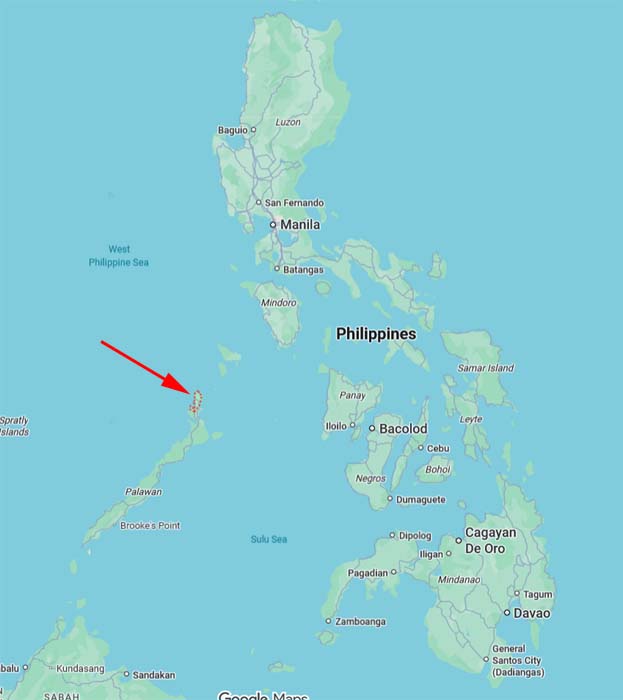
The flight from Manila was a short 1.5 hour hop, but it was interesting because we went via a propeller driven airplane.

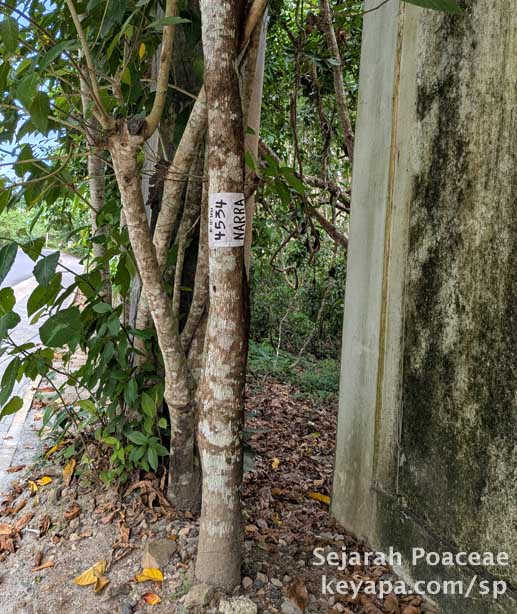
We stayed at a resort called Seda Lio, in the city of El Nido. It was back-ended by a long relatively deserted private beach which had beautiful towering cliffs in the distance. The resort is part of a massive development in the area that aims to maintain the natural beauty of the original landscape, and I noticed as I walked in the street that many of the trees had their names labeled on cards that were taped to the side of the trunks, putting to shame even some botanical gardens that shunned labeling of their collections.
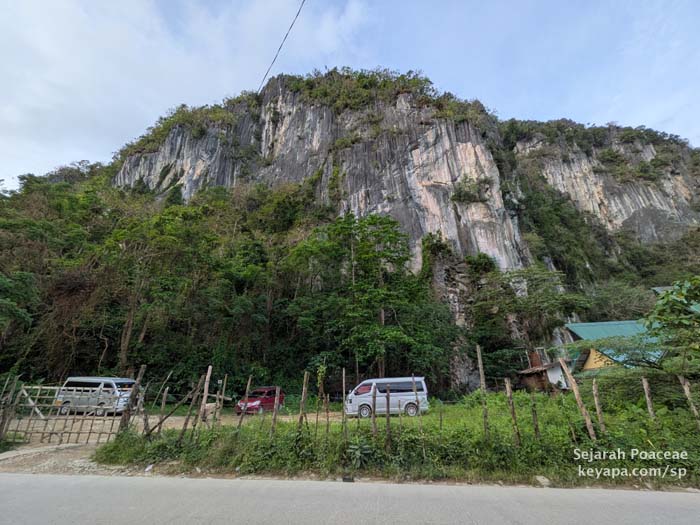
The town itself was quite small, but behind it loomed a majestic range of mountains that dwarfed the human structures below it.
The center of local town life in this rather religious country is of course the churches, and the one we visited at 6 am in the morning was decorated and lit by holiday decorations. It looked almost ethereal!

Ecologically, the island is tropical land that features various forested habitats, including lowland evergreen rainforests, mangroves, and montane forests. Grasses are not the dominant form of plant life here, but of course as I walked the streets I saw many instances of the usual bunch of weedy cosmopolitan species. These included Chloris barbata, Paspalum conjugatum (?), and Imperata cylindrica.
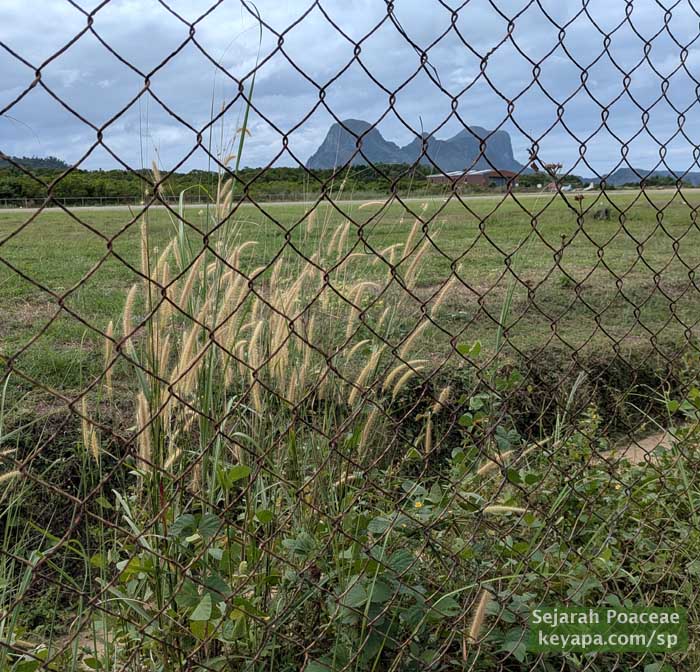
One of the more noticeable species that seemed like a weed, but which was in fact native to the area, is Cenchrus setosus. I found it in disturbed areas, such as drainage culverts along the roads, with the most interesting sighting being behind the fence at the local airport. This species, with its narrow leaves, was obviously adapted to high light conditions. But many of the other grass species I found during my explorations were typical denizens of more shaded areas (due to the abundance of tree-dominated habitats).
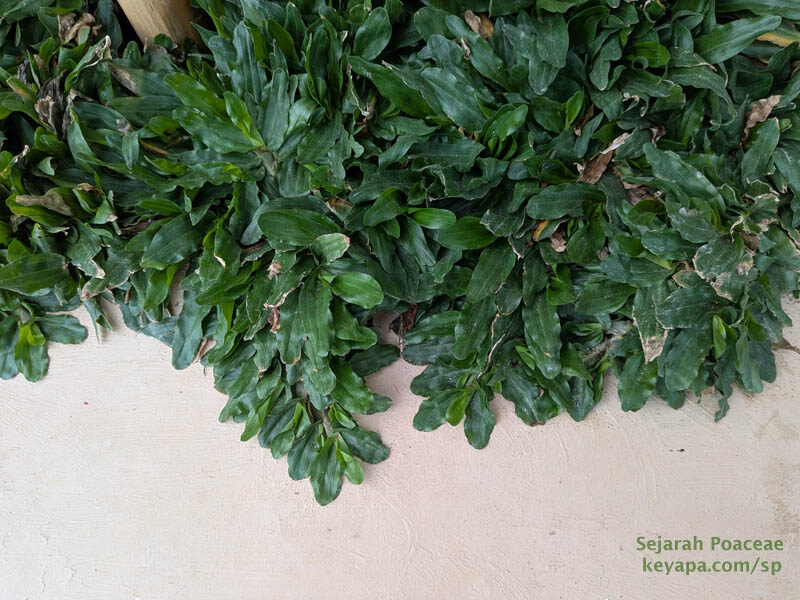
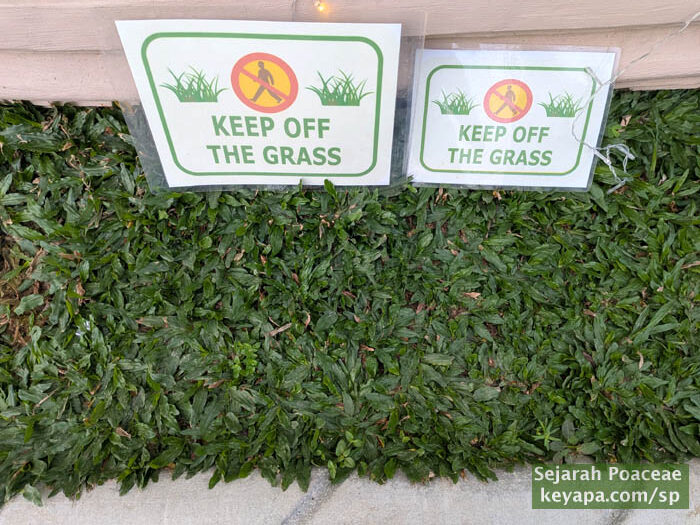
For example, quite a few of the lawns in town, including those in the church, were composed of the species Axonopus compressus, which has the ability to withstand some shade. I was even amused at a Keep off the Grass sign that featured diagrams of grasses that looked nothing like the short, fat, crinkly-leaved species.
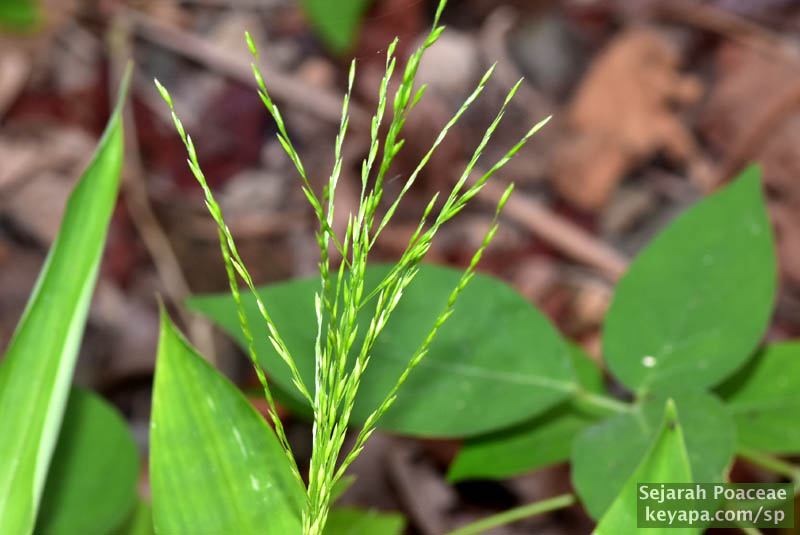
The more natural areas also had their fair share of interesting grasses that were shade-adapted. Close to the resort, along a nature walk, I found what at first I thought to be a Dichanthelium spp, but a close examination of the accompanying inflorescence allowed me to determine that it was in fact from a genus that I had never seen before.
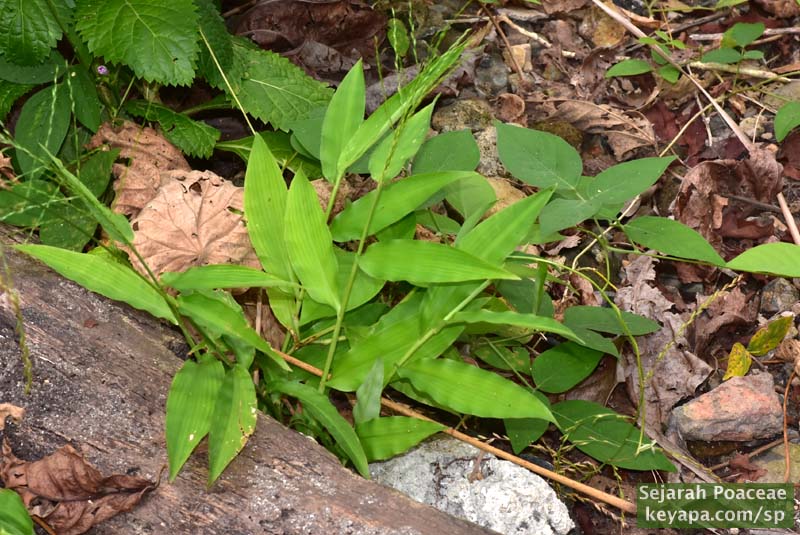
Centotheca lappacea is typically found in tropical rainforests and has broad leaves and distinctive inflorescences. It can spread via stolons and also through the use of its bristly spikelets.
It seems it also has medicinal uses in the localities were it is native, including postpartum care (vaginal healing, muscle tightening) and sometimes for diabetes.
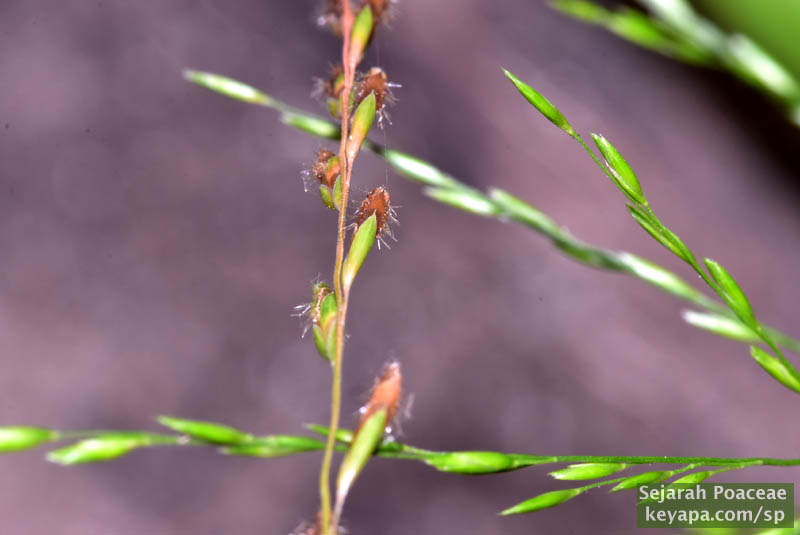
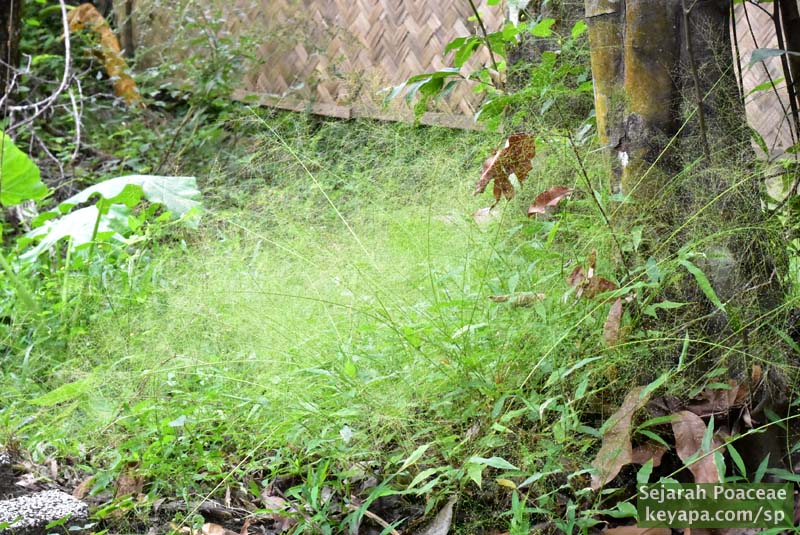
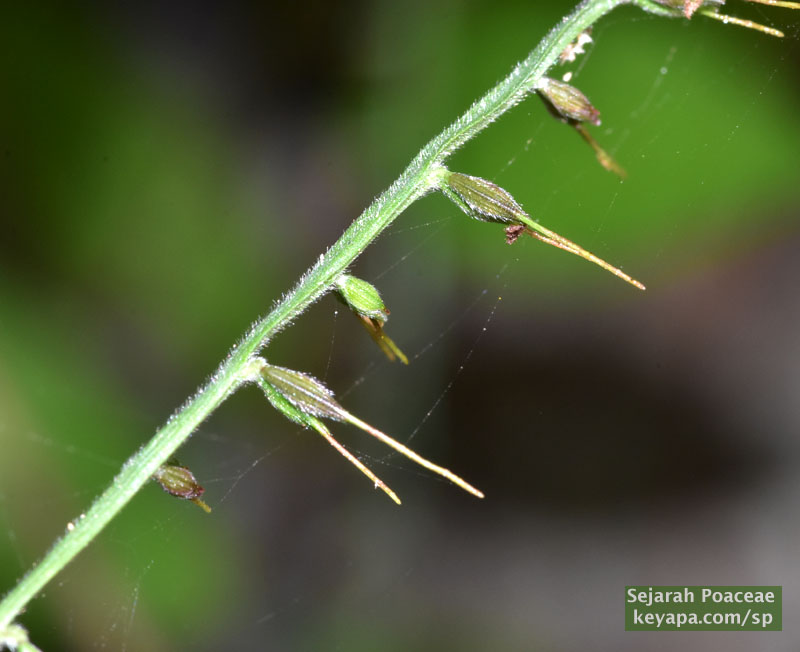
But what really took my interest was a nearby a grass that stood out, and which I first noticed as mist-like areas in the bare ground below widely-spaced trees. When I came close to one, I realized that the “mist” was really the massed inflorescence of a grass.
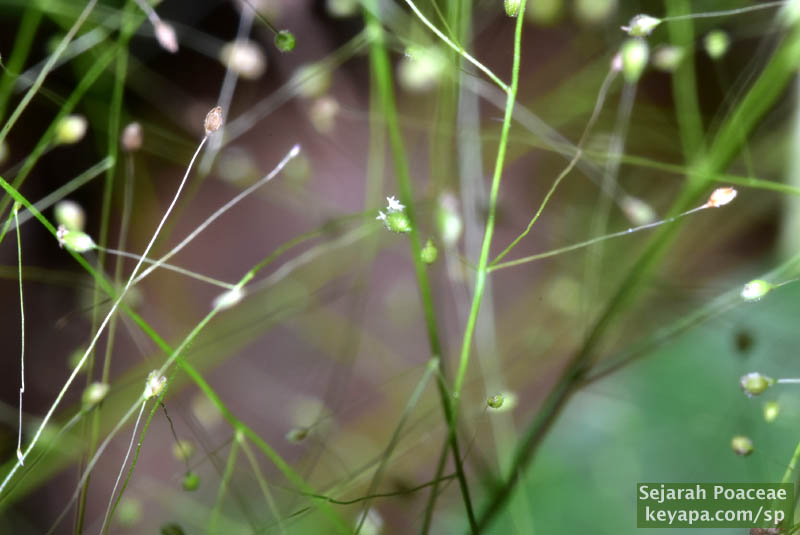
I used macro on it and saw that the spikelets and the surrounding structures reminded me of a Panicum or Dichanthelium spp, although quick searches using iNaturalist and Google image did not narrow down the identification. This was too bad, because this species would make a fantastic ornamental.
I had better luck with the next shade-tolerant grass though, which bore the familiar lanceolate and wavy leaves of Oplismenus spp that are also present in the USA.
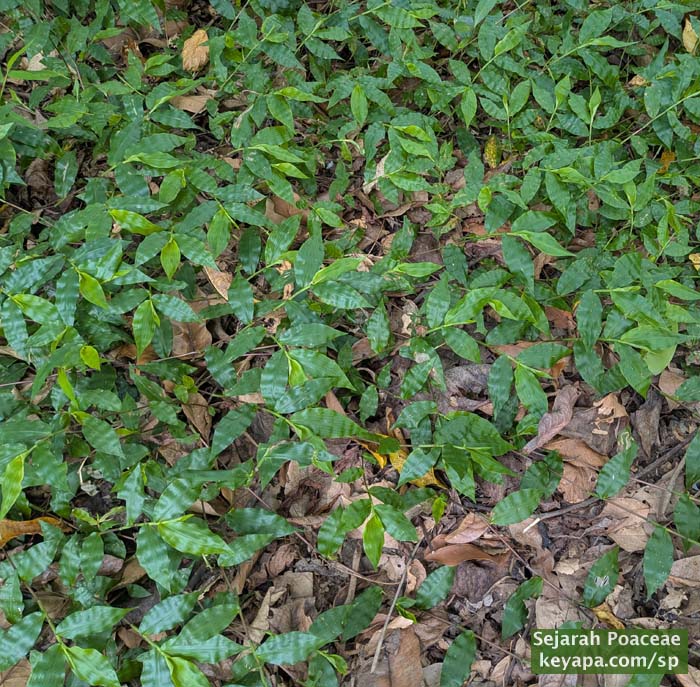
I tagged it as Oplismenus compositus for now, based on an identification made by iNaturalist and a quick check of Co’s Digital Flora of the Philippines. This grass formed large sprawling clusters under some of the trees, which is typical for the genus.
Finally, the place was awash with bamboos, both those that seemed to be in cultivation, as well as wild specimens. In particular, I loved some large natural bamboos that were found looming over the sidewalks as I rode a tricycle from the town center to the resort.
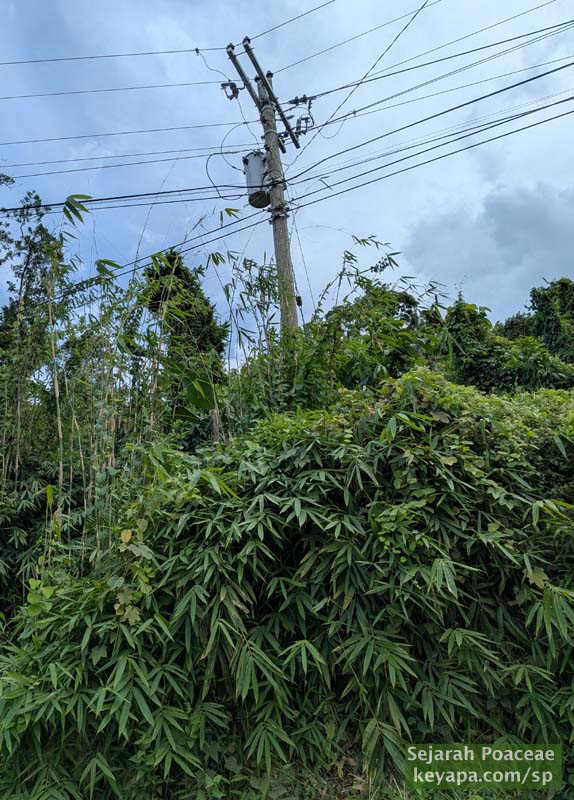
Some of their branches towered to the heights of the electrical poles, but most curved down and formed elegant draperies of fine leaves. However, the bamboos I will leave for a future post.


Leave a Reply