
In the ecological sciences, the worst adjective that can be attached to a plant species is the term “invasive”. In fact, I’ve even heard some people call these plants “evil”, and the hatred directed at them is sometimes all out of proportion to their effect on the environment.
The reality of course is that there is no such thing as an “evil” species, and nature is in no way or form as benign and full of altruism as some may think. All species compete to survive, and this goes for both the local native species and the imported ones that may have been accidentally or intentionally introduced by human activities.
But the stigma against those species that (through no fault of their own) have been released into foreign parts and dared to compete aggressively against the local flora is so bad that anyone daring to profess some liking for them might be looked upon with some suspicion by the more enlightened in society. This is unfortunate because there are some invasives that do engender feelings of admiration and sometimes even awe in people.
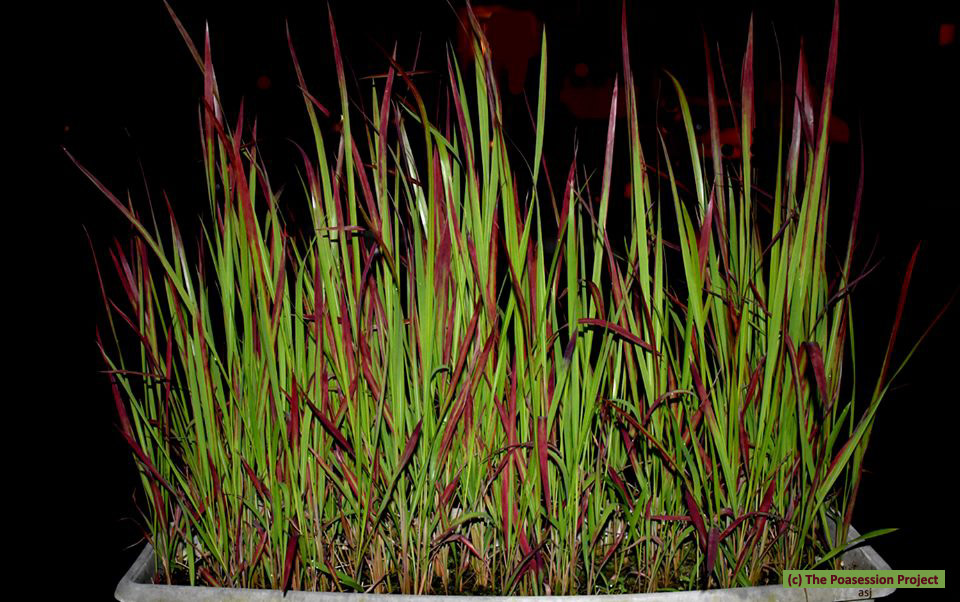
As an example, Imperata cylindrica (locally known as cogon grass) is invasive in many of the areas where it’s present, but its appearance can still be quite pretty. Indeed, there is a red ornamental variety of the species (e.g. Japanese Blood Grass) that is legally sold and even treasured by many gardeners and landscapers around the world.
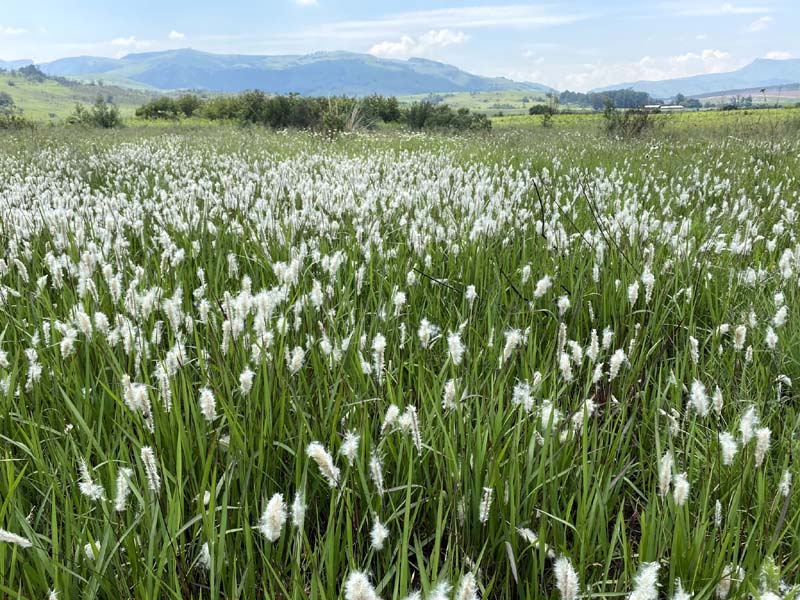
But even beyond that, in certain parts of the world, the wild type cogon grass is appreciated for its gorgeous white inflorescence. This is most prominent in East Asia, where the masses of white can create quite beautiful vistas for admiring viewers.
Here in the USA there is no such appreciation for the wild type cogon (although I have seen the red variety used in landscapes quite often). So it was very surprising to me when I came upon a stand of cogon in a gated suburban location, their serried ranks seemingly decorating a common lot. The stand was being watered and seemed to be taken care of by the landscapers, who might have mistaken the handsome cluster as a deliberately planted ornamental grass!
This is sorta funny, given that other clusters of the same species are periodically treated with herbicide and killed in nearby locations in the same gated community. It is doubly ironic because I. cylindrica is officially classified as a prohibited noxious weed in the state.

Personally, I’ve always been fascinated by I. cylindrica, although I had never hesitated to inform the authorities when I have found them in new localities (such as in Colorado). The species is without a doubt an invasive plant par excellence, but at the same time people have been able to make practical use of them (e.g. they can be used as roofing material in some parts of the world). To me it is not an “evil” species, but one that is simply doing what life has been doing for billions of years – trying to survive.
Leave a Reply