
Thanks to a reader who corrected my incomplete definition of the carpel!
What constitutes the family Poaceae? How do we delineate them from other plants? Do the members of this plant family have certain features that are unique to the group and are found nowhere else in the plant kingdom?
At first glance, many might simply point to the fact most grasses have simple, narrow, linear leaves with parallel veins in them, but there are many flowering plants that are “grass-like”, but are not in the family. Examples include the Juncaceae (rushes) and the Cyperaceae (sedges), as well as other plants such as the ornamental and very grass-like Liriope spp that one normally sees in plant gardens and stores, which are actually from the family Asparagaceae.
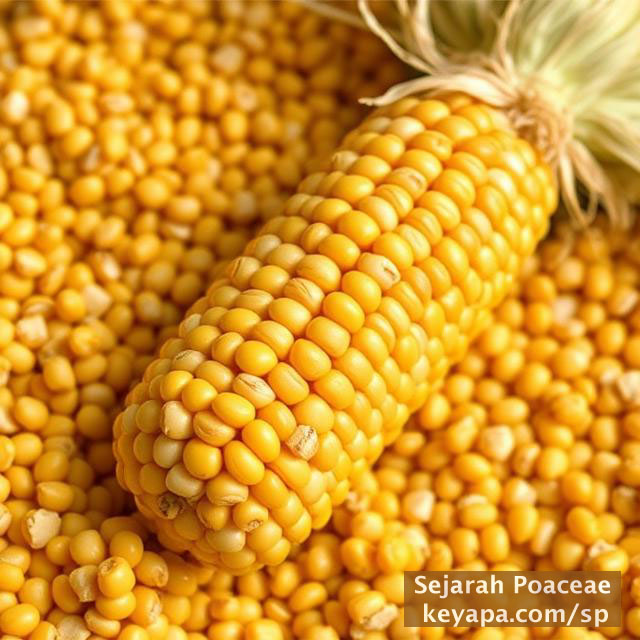
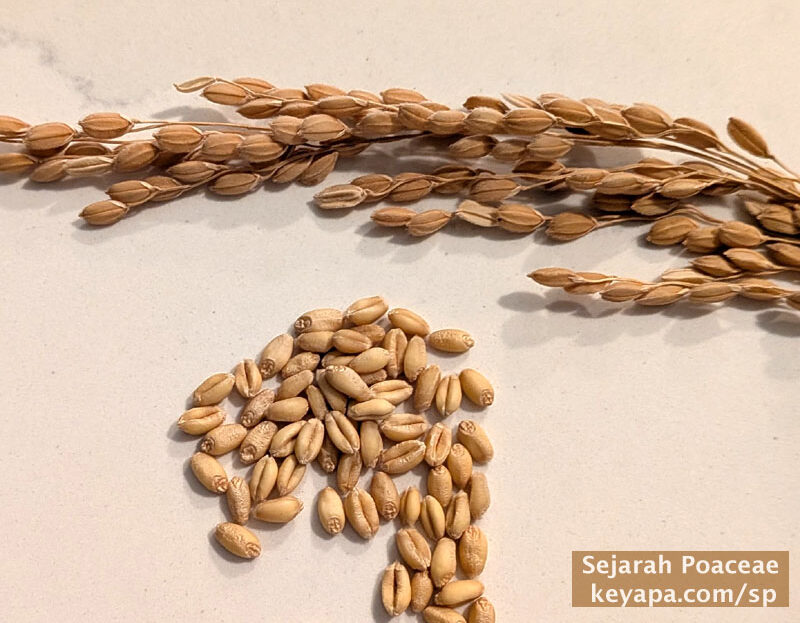
But amazingly enough, every time we eat a corn (maize) cob, or open a package of uncooked rice, we are just one step away from realizing one of the defining characteristics of grasses.
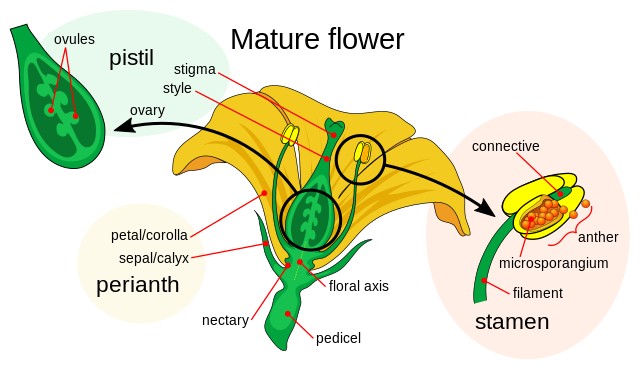
All angiosperms (flowering plants) produce fruit, such as the apples we eat or the ripened tomatoes we pluck from the vine. Fruits are formed from the matured ovary or ovaries of flower/s, within which fertilized ovules have become “seeds”.
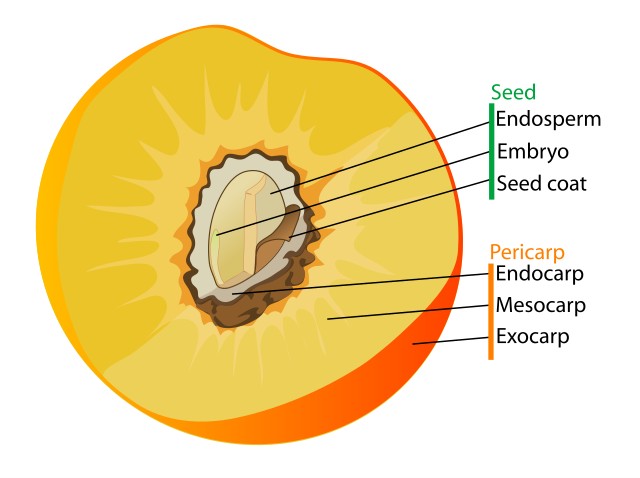
Grasses have fruits too, but the pericarp or fruit wall (which is derived from the wall of the ovary) is completely fused to the seed coat. This dry single seeded fruit of grasses comes from a single carpel (a style+stigma+ovary) and is called a caryopsis. It is a type of fruit that is only found in grasses.
When you look at a corn kernel, or a single grain of rice, you are looking at a caryopsis. If you imagine cutting this structure in half and peering inside, you’ll see something even more remarkable.
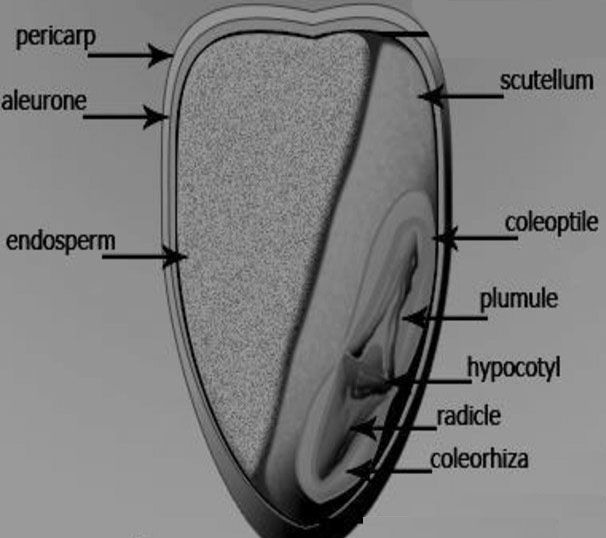
Like other seeds, the grass caryopsis has a starchy endosperm, which is used as the energy reserve for the germinating plant. But embedded to one side of the caryopsis is the grass embryo, which is also considered unique among all the plant families.
Grass embryos are unique because they are already highly differentiated and resemble seedlings, unlike the embryos of most other plants. They already have vascular tissue and clear shoot and root meristems. Protective sheaths called coleoptiles and coleorhiza also protect the plumule (rudimentary shoot) and radicle (rudimentary root) of the embryo, while a prominent and unique outgrowth called the scutellum is involved in absorbing nutrients from the endosperm and providing them to the embryo (Rahman et al, 2022; Rudall et al, 2005).
The positioning of the embryo in grasses is also seemingly unique in that it is located to one side of the seed axis (a lateral embryo – Baskin and Baskin, 2021), and this feature in grasses may be important. For example, recent research seems to indicate that specialized coleorhiza hairs are formed by the lateral embryo that can absorb atmospheric water vapor under high humidity conditions (Rahman e t al, 2022)!
In the end, the unique caryopsis and embryo in grasses that are discussed above may give a grass significant advantages during germination and seedling establishment, and contribute to the overall ecological success and dominance of the Poaceae. So the next time you are ready to cook some rice, or munch on a corn cob, take a few moments to contemplate how the grains that you hold in your hands are such remarkable and unique things.
References and Literature Cited
Baskin, Carol & Baskin, Jerry. (2021). Relationship of the lateral embryo (in grasses) to other monocot embryos: a status up-grade. Seed Science Research. 31. 199-210. 10.1017/S0960258521000209.
Rahman RB, Wona Ding, Jianhua Zhang (2022). The absorption of water from humid air by grass embryos during germination, Plant Physiology, Volume 189, Issue 3, July 2022, Pages 1435–1449, https://doi.org/10.1093/plphys/kiac179
Rudall, P.J., Stuppy, W., Cunniff, J., Kellogg, E.A. and Briggs, B.G. (2005), Evolution of reproductive structures in grasses (Poaceae) inferred by sister-group comparison with their putative closest living relatives, Ecdeiocoleaceae†. Am. J. Bot., 92: 1432-1443. https://doi.org/10.3732/ajb.92.9.1432
Swana Latha, Vipparthi & Lone, Ajaz & Ahmed, Zahoor. (2020). Maize Breeding Manual.


Leave a Reply to admin Cancel reply