
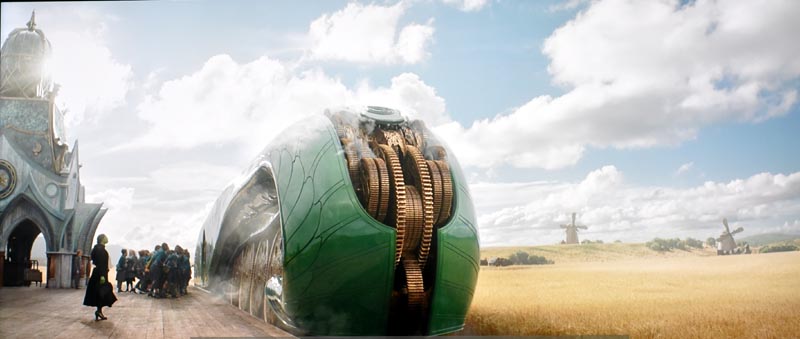
Images not marked by Sejarah Poaceae are screenshots from the film Wicked by Universal Pictures.
A vast open field of grass is frequently used as metaphor in cinema, whether it’s a field of wheat in Gladiator, a reed field in Marvel’s Moon Knight, or the corn fields in Interstellar.
During a recent trip to the Arctic Circle, I watched the film adaptation of Wicked from 2024, with Cynthia Erivo as the green witch Elphaba, and Ariana Grande as her opposite, Glinda. The film is of course a derivative of the broadway adaptation of a novel by Gregory Maguire, and in the film the director and his staff made extensive use of a vast field of barley (Hordeum vulgare) as a major setting.
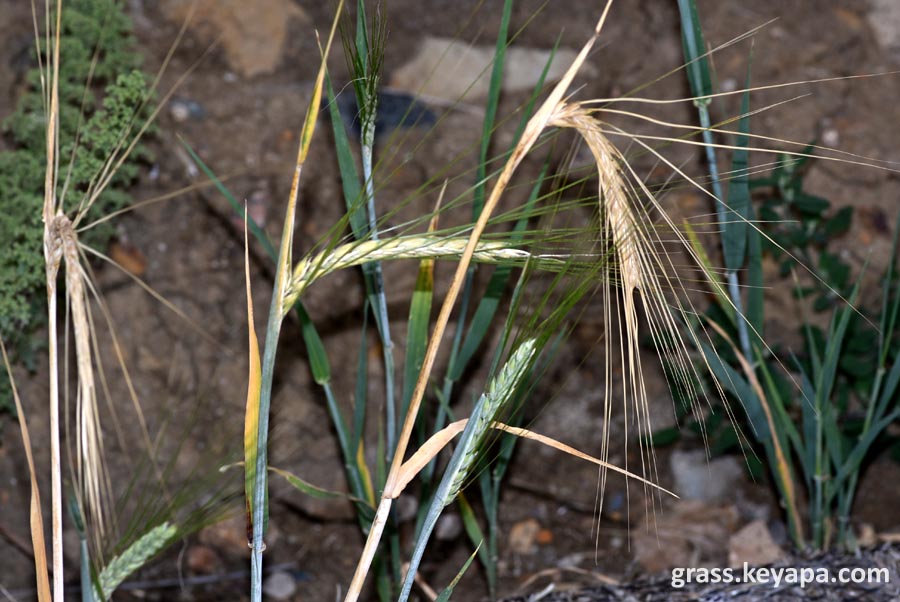
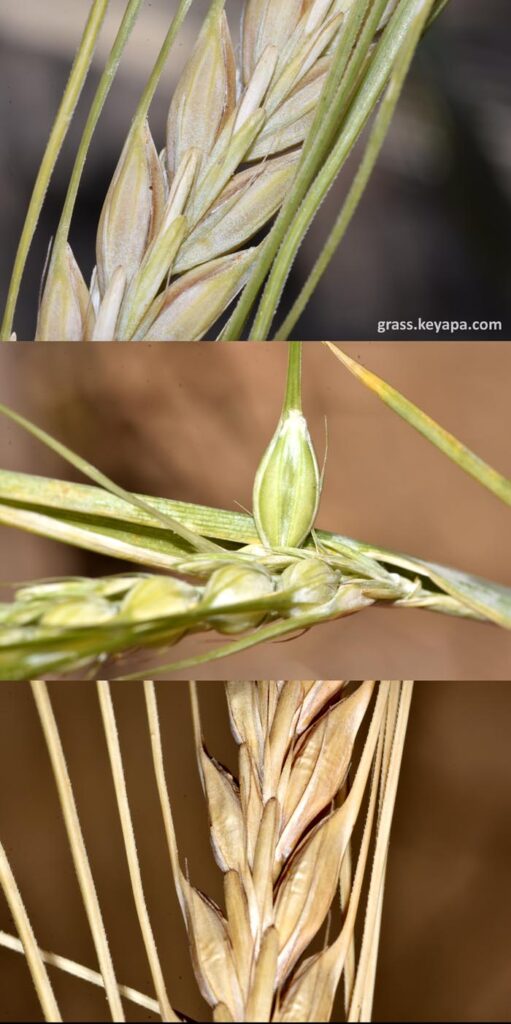
Hordeum vulgare is one of the major agricultural grains in the world, and is a member of the subfamily Pooideae. It was domesticated some 10,000 years ago in the Middle East, and today its production among the important grains is only behind rice, maize, and wheat. Most of the production is geared for animal feed, but around 30% is used for liquors and food (such as barley bread, and various soups and stews). In terms of its phylogeny, it is closely related to other domesticated grains, such as wheat (Triticum spp) and rye (Secale spp).
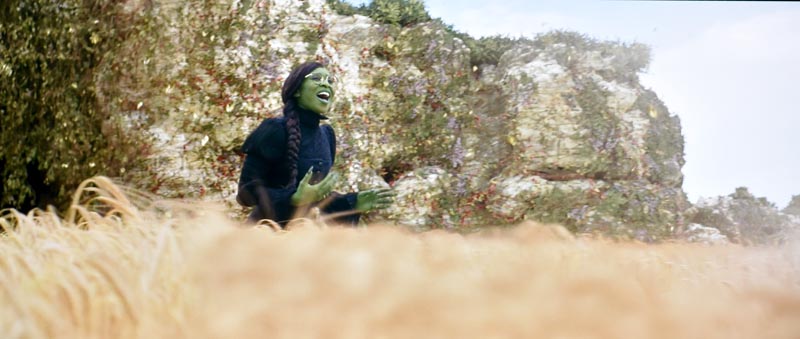
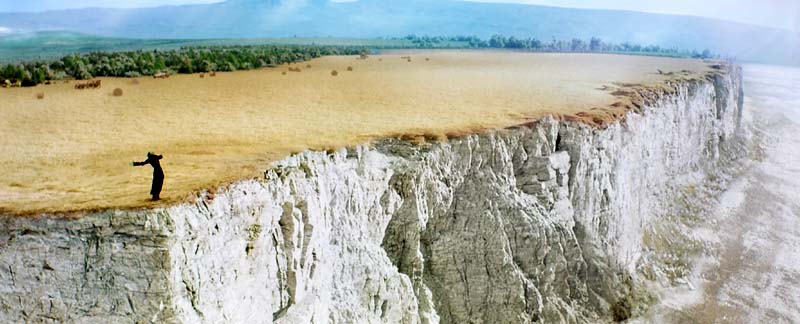
In the film, one of the major transition points occurs when Elphaba is taken under the wings of the sorceress Madame Morrible, and she is ecstatic about getting the chance in the future to meet the Wizard of Oz.
The director John M. Chu wanted to focus on this ascension, and the production designer Nathan Crowley and him decided to use a planted and harvested field of barley as the jumping point of this rise.
The use of barley was explained as being a nod to the story as an American fairy tale, with the Great Plains as the other tie-in. However, I have to admit that my own feeling is that the field is a metaphor for the opening of boundless opportunities for Elphaba.
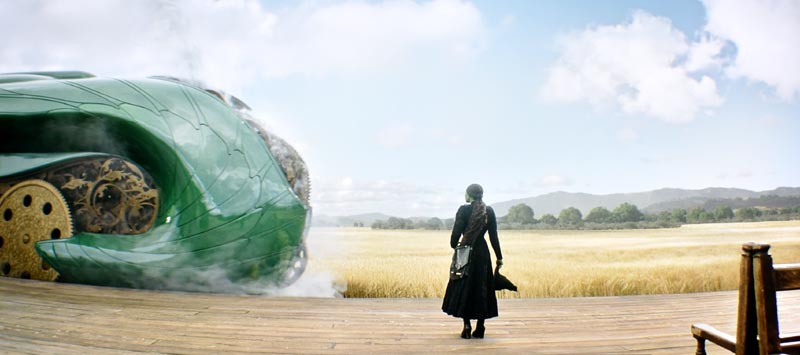
Indeed, the second time the field of barley is used is when Elphaba is finally getting ready to travel to Emerald City to meet the Wizard. Again, the theme of the coming of Elphaba’s golden opportunity is emphasized. The train that will take her there travels through this barley field to the station. After she and Glinda get in, the train then slowly makes its way towards the horizon amidst the golden fields.
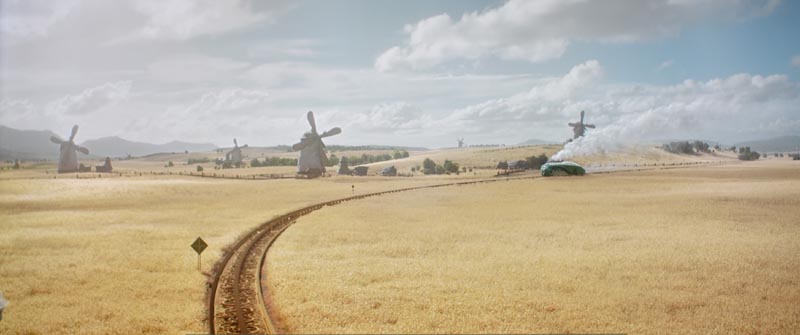
The use of vast fields of grass to signify openness and boundless opportunities is probably one that will be used again and again in cinema and other media in the arts. The sight of such vast fields I think resonates within us, a hold-over from the time when our primate ancestors first came down from the trees to walk amidst the vast and newly-formed savannas.
Finally, the movie itself surprised me. I was not really that interested in the film before I watched it, but the complexity of the storyline, the beautiful musical numbers, the gorgeous sets, and the sympathetic nature of the maligned Elphaba drew me in. Now I think it’s one of the best musicals (and films in general) I’ve ever watched. I bought the 4K blu-ray of the movie (as well as the original novel that started it all), and I highly recommend it to anyone.
Leave a Reply