

We visited Longhorn State Park in Texas last week, and after a great guided tour of the caverns beneath we decided to hike Inks Lake State Park, which was nearby.
I did not expect much from the place, as I am not a fan of lake hikes, but when we got there I was so surprised to find that the park held extremely interesting geological formations. Specifically, the park had so-called Valley Spring gneiss rocks, metamorphic rocks which were formed perhaps 1.25 billion years ago! These formations were probably originally produced from sedimentary (sand, silt, and mud) and igneous (likely granite) rocks, but intense heat and pressure applied to the original rocks over millions of years created the formations today. The gneiss islands that were created harbor fascinating microhabitats for various plants and animals.
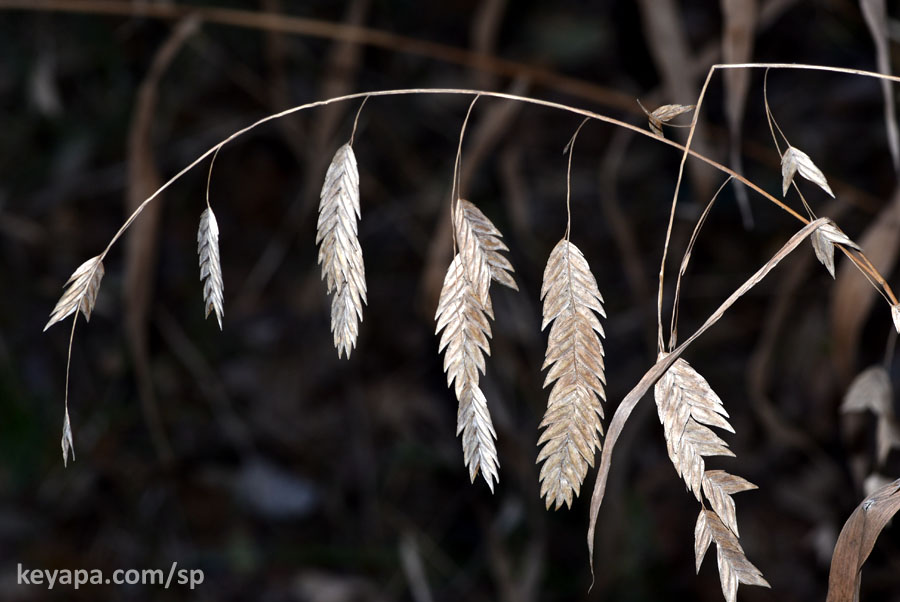
Scattered around the park were the dried remnants of grasses, as well as new growth coming up in anticipation of the warming spring. Some of these had traces of their former inflorescence, and I was quite content trying to identify the species from these remnants of the past winter as we hiked around and clambered over the various gneiss islands.
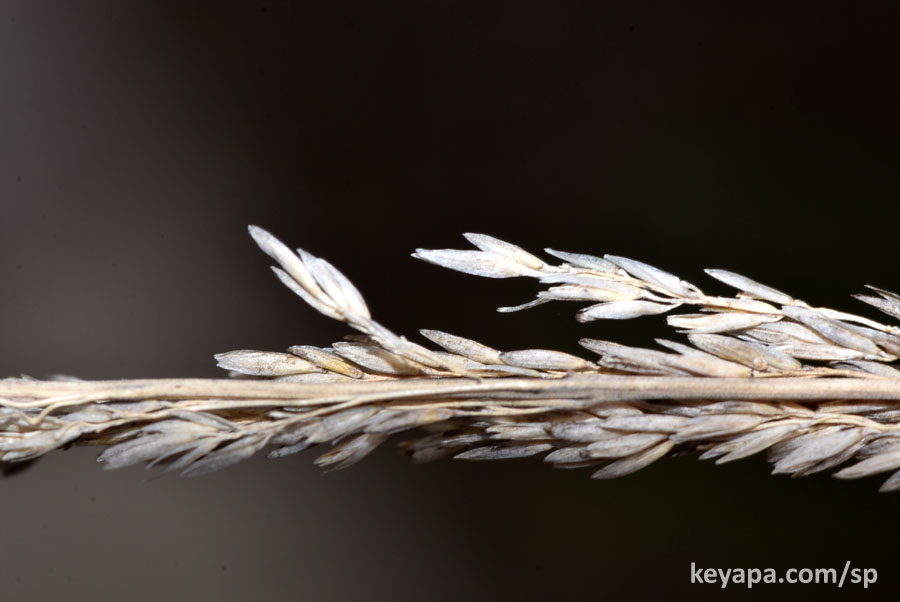
Perhaps the most endearing of the bunch were the flower spikes of Chasmanthium latifolium (Northern Sea Oats), which seemed to cluster near the lake in solid bunches. This grass is shade tolerant and a native, and is reputed to be salt tolerant as well. It is often used as an ornamental, due to the very pretty inflorescence.
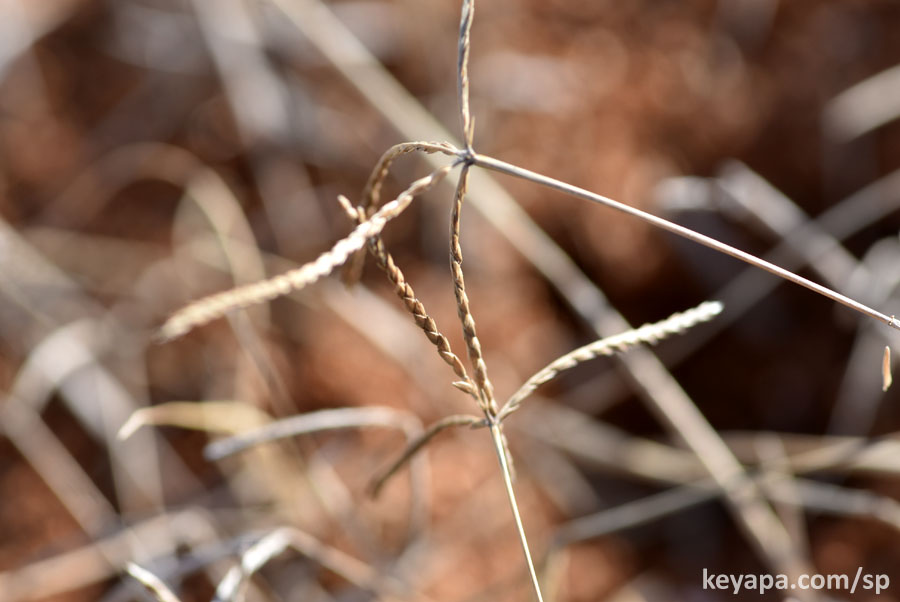
I also found what I took to be Elymus canadensis (Canada wild rye), a widespread native grass that was also in abundance when I visited Colorado in 2023. It is an allotetraploid and mainly self-pollinates, but is supposedly able to hybridize with other Elymus species. This species also seems widespread in Texas, and I have seen its remnants in other areas of the state.
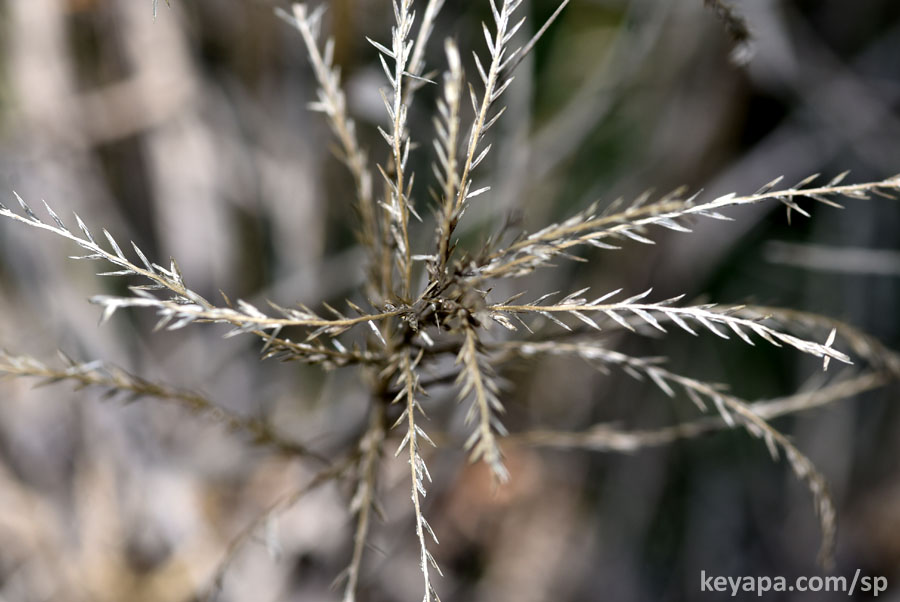
We also stumbled upon an intriguing flowerhead that seemed almost alien in its structure, with whirling wings branching out of the central spike. I figured it’s a Chloris sp, perhaps Chloris verticillata, although obviously I am always open to suggestions.
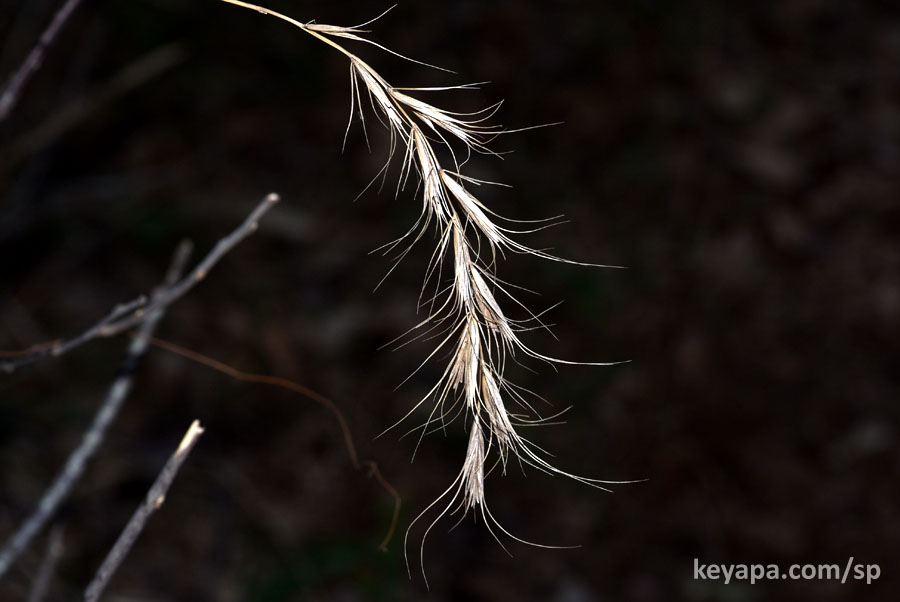
Farther away from the more natural areas, i saw the familiar tiny flowerheads of Cynodon dactylon (Bermuda grass), a globe-trotting species that I like, mainly because of its hardiness and “cute” appearance. I’ve seen this species pretty much all over, from Florida to the Caribbean, to Colorado and the Philippines. It is a familiar friend, and one that I always enjoy meeting.
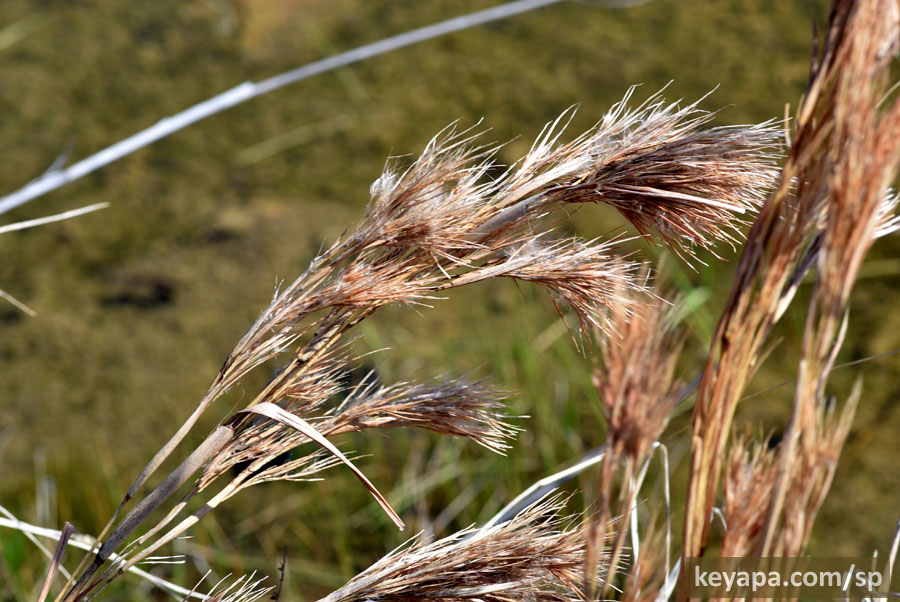
I was also surprised to find an Andropogon sp in the park, and identified it as possibly Andropogon tenuispatheus, a synonym of A. glomeratus var. pumilus. This is a species that also inhabits areas near my home, and as always the ability of grasses to be so widespread amazes me.
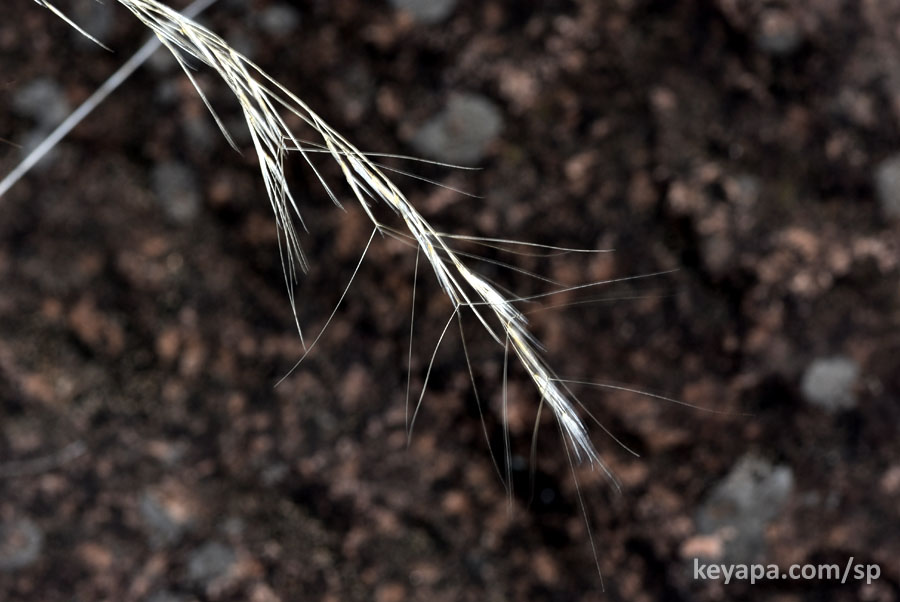
Finally, I discovered what looked like an Aristida sp. This is a genus that I became acquainted with in Florida, and the flowerheads are somewhat distinctive. In Florida, they form one of the main components of the Pine-Wiregrass savannas, along with longleaf pine. These grasses use C4 photosynthesis, and are adapted to flourishing in areas with occasional fires, which clear the landscape of debris and at the same time get rid of potential competitors, including the seedlings of large trees.
I have to admit that the pickings were somewhat slim when it came to botanizing for grasses at such an early part of the season, but because of their ubiquity, a hardy naturalist can almost always find some interesting Poaceae specimen to gawk over. So just because it’s early spring, or even winter, don’t despair over the perceived lack of life (or the remnants of life) around you!
Leave a Reply