
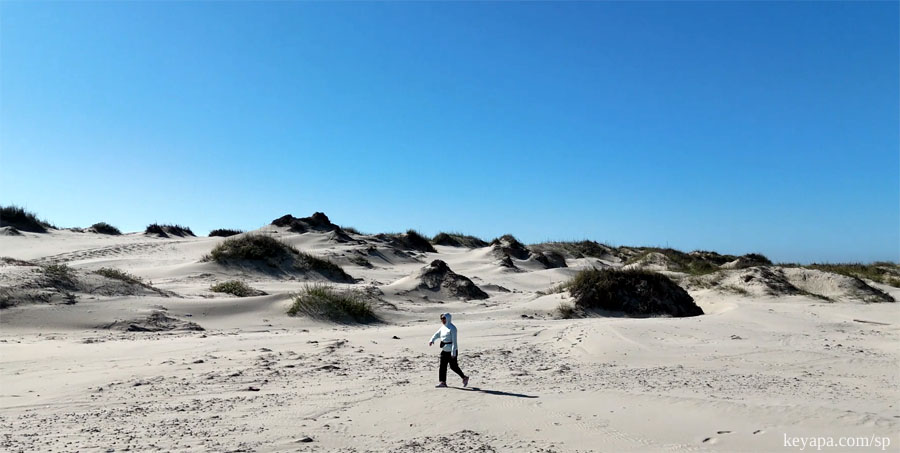
We are on a road trip from Florida to Texas, and one of the places we visited was South Padre Island at the very southern tip of the state.
The sand dunes in the beaches here are the result of the blowing of sand from the Gulf of Mexico, and the tenacity of the various sand-dwelling species that form the main components of the vegetation here, which include Panicum amarum and Uniola paniculata. Grasses such as U. paniculata and P. amarum act as large obstructions, and sand soon accumulates at their bases (whether gradually or rapidly during storms). In this way, these grasses slowly help in the formation of the huge sand dunes that line the beaches. These grasses then maintain the structure of the dunes due to their extensive fibrous root and rhizome system, which can hold the sand particles together.

If you travel north past the slew of condominiums and hotels that line State Park Road 100 on the way to Sea Shell Beach, you’ll soon encounter majestic sand dunes that tower over the vehicles that park to the sides of the sand covered road. Although remarkable because of their size, they still maintain the usual shape and form of dunes that I’ve encountered elsewhere.
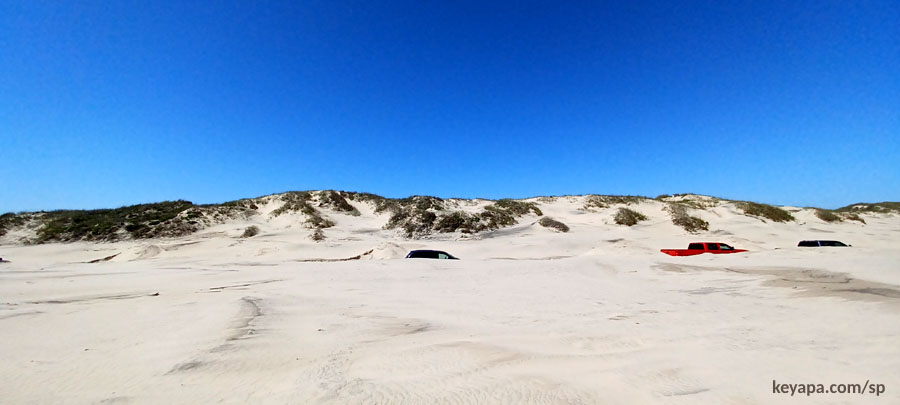
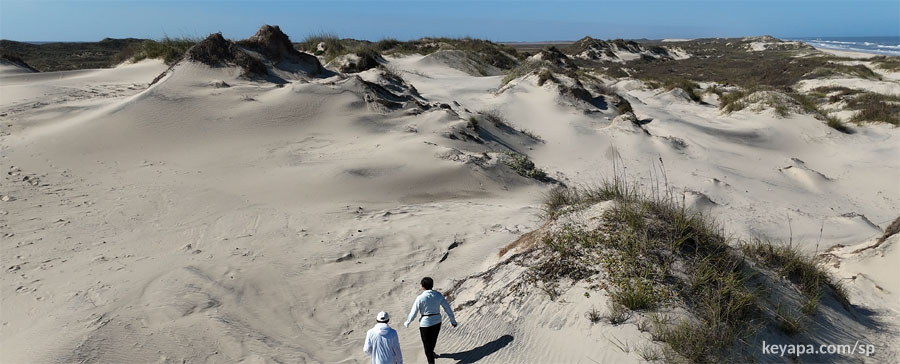
However, if you keep going north by foot (it is possible to drive past the end of State Park Road 100 in a 4WD vehicle, but only along the beach itself), you’ll soon encounter sand dunes that are almost otherworldly in their unusual forms and shapes.
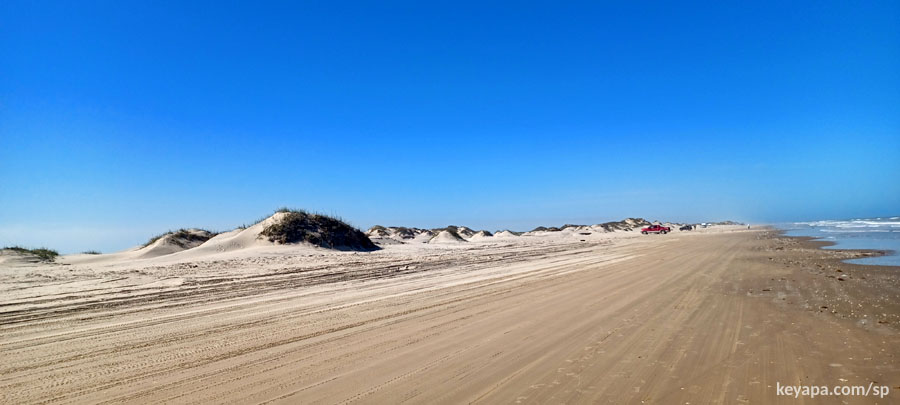
They form conical lumps coming out of the ground, with some rising 5 or more meters high. Vegetation, mostly U.paniculata and P. amarum, cover large parts of the surface, with a slight tendency for them to cluster on the beach facing side.
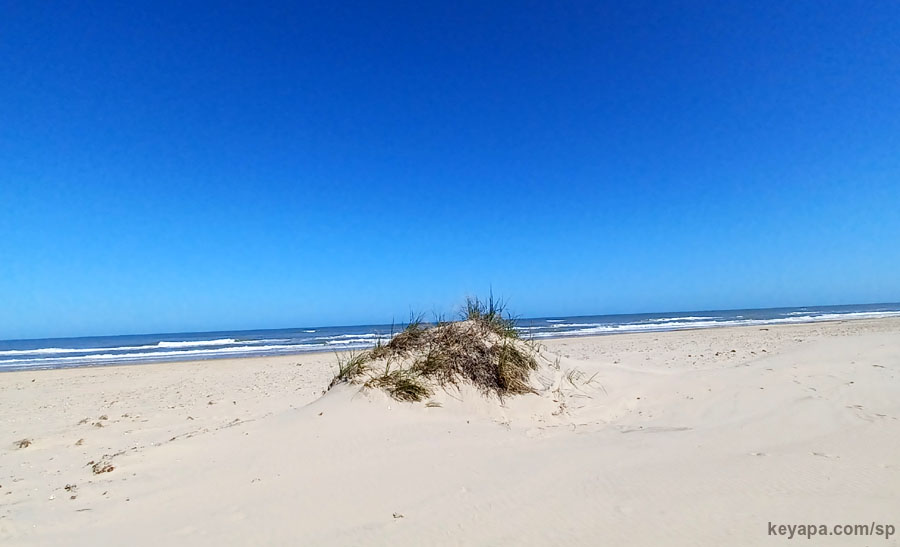
Along the outer edges of the cluster of conical hills, there were a few much smaller lumps that seemed to be the early precursors of future giants. Some were quite isolated, and it again made me wonder at how strong the rhizomes and roots of the grasses were, that they could hold the sand together against the overpowering force of the incoming waves at high tide.
In the end, the trip to South Padre Island was an amazing one, and I’ll forever love the sight of the grass-created sand dunes, which stand like defiant sentinels against the might of King Neptune.
Note: At some locations in the dune, we found evidence of human activity, including spent firewood and plastic detritus like empty soda bottles and food wrappings. Really people? Seriously? You make use of the land for your enjoyment and then treat it like garbage?


Leave a Reply to Jan Schulte Cancel reply