
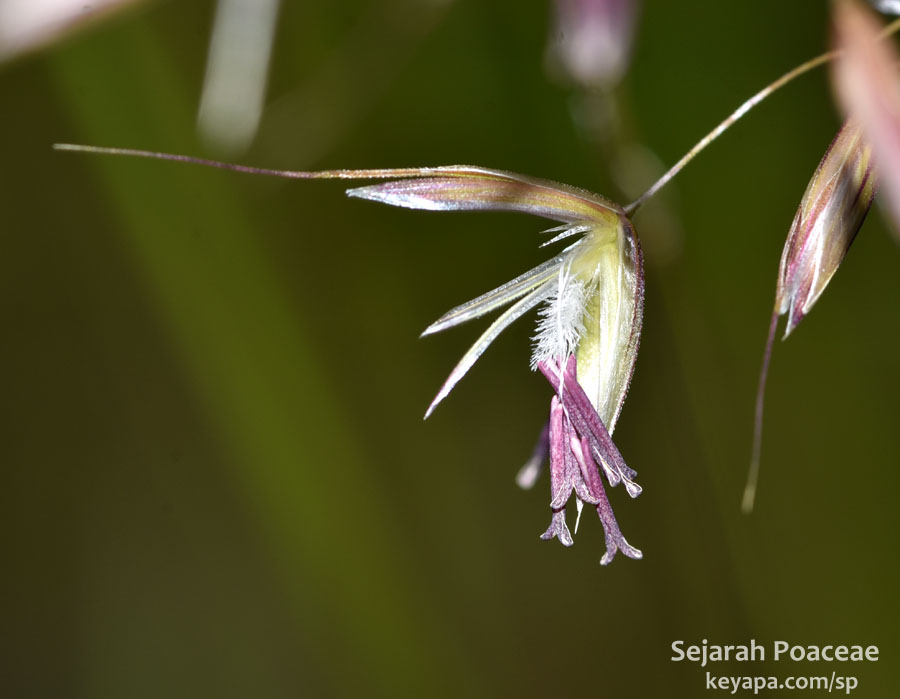
If one were in the habit of identifying grasses, then the presence of visible and distinctive structures on the spikelets would be one way to ease the pain of such an endeavor. Fortunately, many grasses have long projections from these reproductive structures that go a long way towards helping the observer. These so-called awns are long bristle-like projections on the floral bracts of grass spikelets that are structurally diverse and widespread. Although they are found in a few other plants, the Poaceae have the most diverse and abundant panoply of awns.
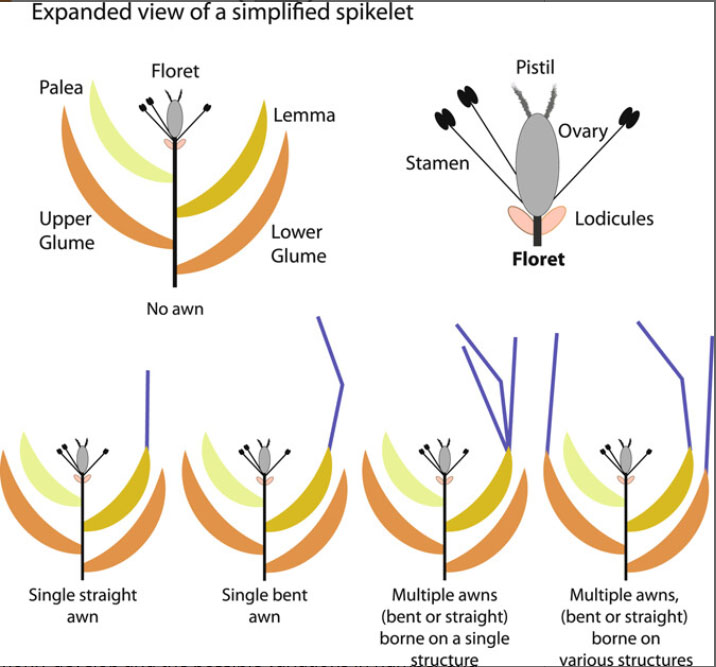
Most awns arise from the lemmas of a spikelet, usually from the mid-vein, but some originate from the glumes, and more rarely from the palea. Many are straight, others are geniculate (bent), and two other types are specific towards some taxa. The Aristida for example, have coiled awns, while the Streptochaeta have branched awns.
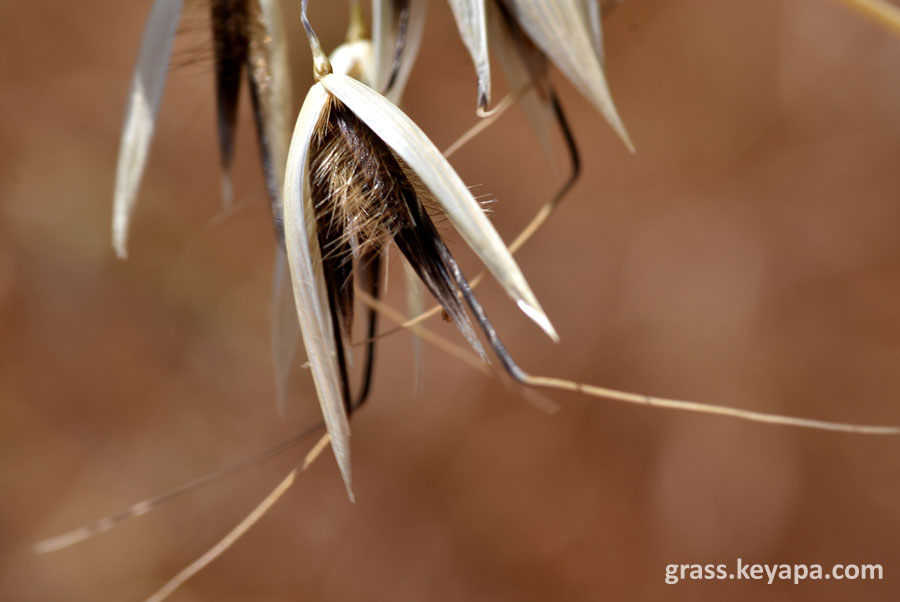
The function of awns has been studied but still presents some mysteries. The most obvious is that they are involved in reproduction. In the case of grasses, the awns might aid in dispersal of the diaspore (the dispersal unit of grasses). These can be grouped into three types.
(1) The awns aid in making sure seeds drop straight down to the ground, similar to how a parachute can stabilize a dropping package. This is important to grasses because having the base of the seeds (the callus) grounded increases germination.
(2) The awns may also allow attachment of the diaspore to passing animals, who then carry it far from the original location. One is easily reminded of this when wading through a field of grass and emerging with many grass seeds embedded in clothing, or bemoaning the sight of a pet dog dappled with sticky particles on their fur.
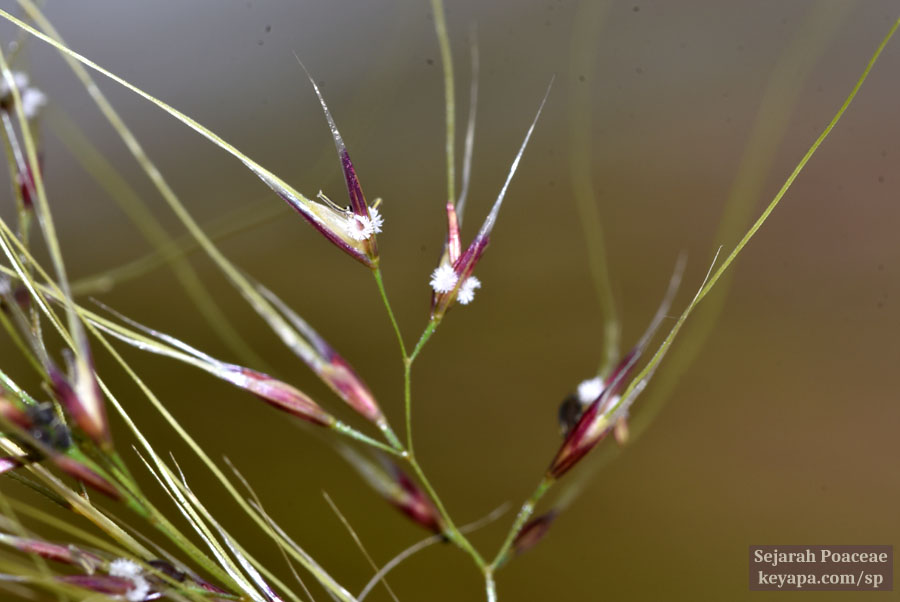
(3) The most dramatic way they aid in dispersal are in those seeds that have hygroscopic awns that twist and untwist in response to changes in moisture. The movement of the awns allow the seeds to either walk across the ground (see video below).
Just as remarkable, similar movements can enable these awned seeds to actively dig themselves deeper into the soil in order to increase their chances of germinating successfully!
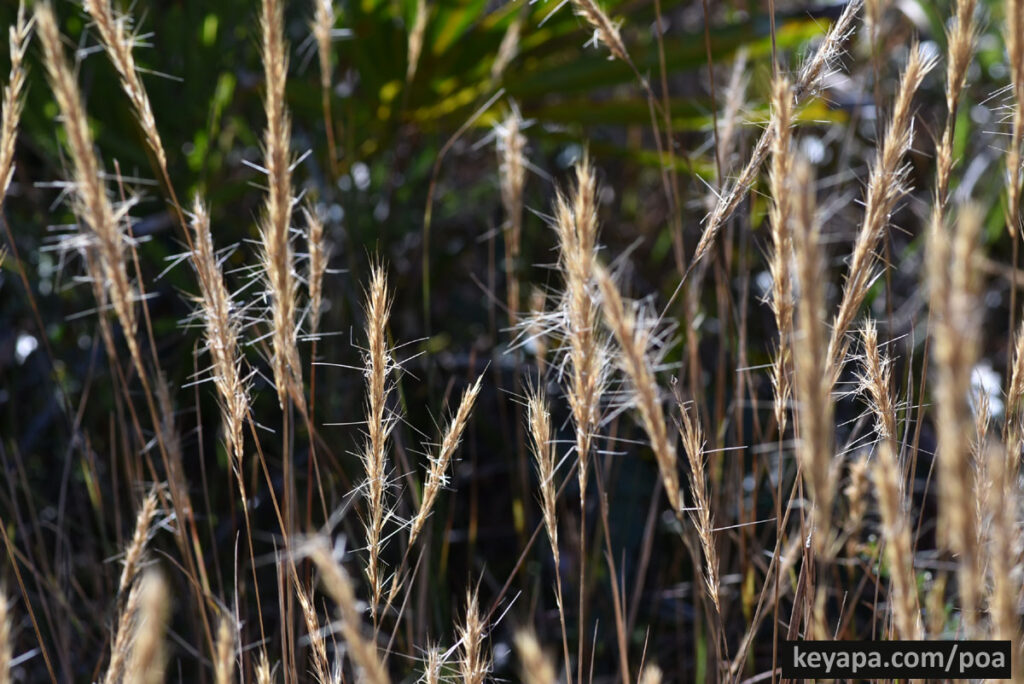
In addition to aiding in dispersal, awns can also protect the diaspores from predatory animals. The rigid and sharp structures not only deter larger animals from ingesting them, but they also increase handling time for smaller insects, who may opt for less troublesome seeds.
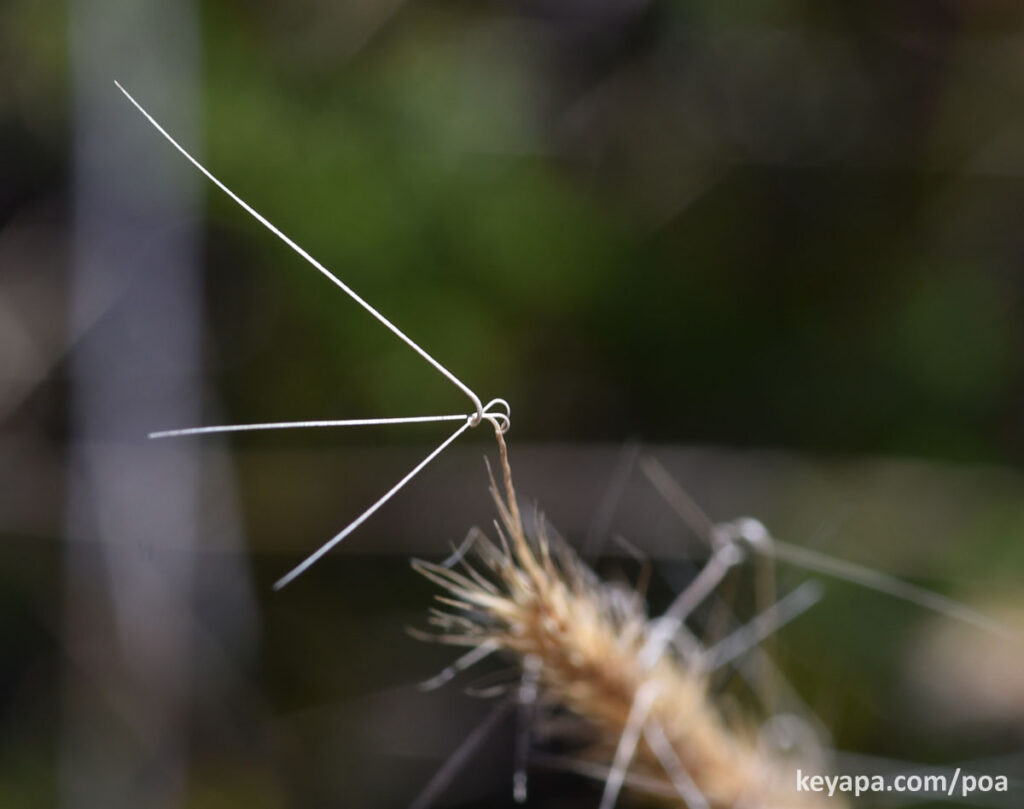
Another possible indirect function of the awns is to protect the diaspores from fire. This is particularly the case for hygroscopic awns that dig the seeds deep into the soil, where they are protected from the worst effects of surface fires.
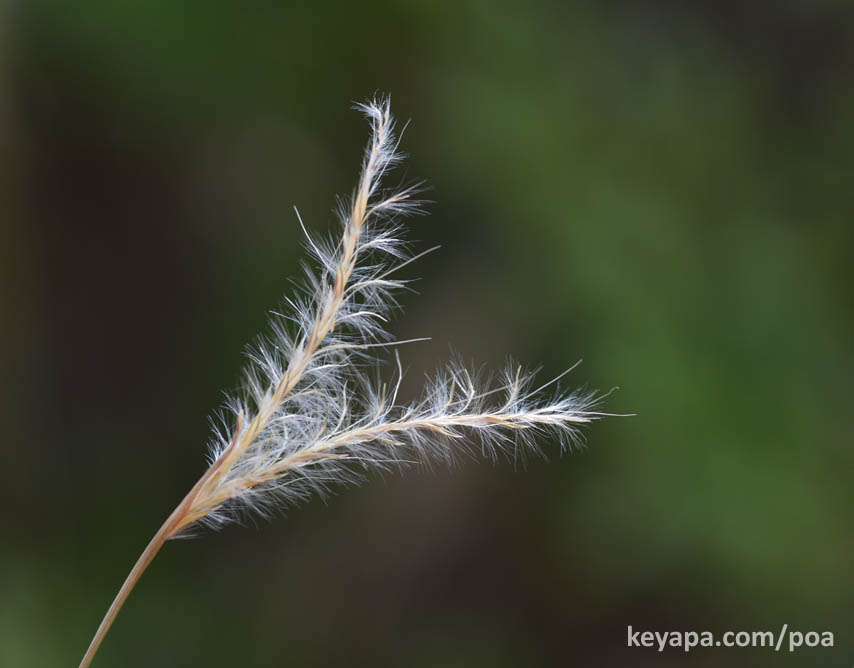
Finally, in some grass lineages like rice (Oryza spp) and wheat (Triticum spp) the awns actively photosynthesize and supply carbon to the developing seeds, although in many grasses like those in the Andropogoneae this function is done by a nearby sterile spikelet.
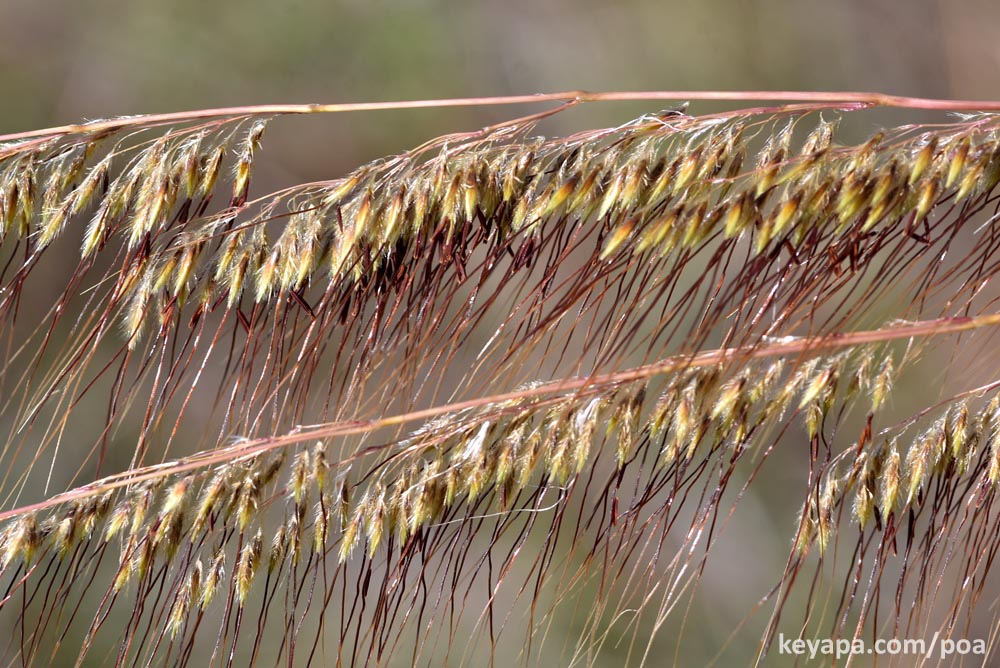
Awns in the Poaceae did not arise from the common ancestor of the family, but rather seemed to have been a result of convergent evolution, with awns evolving independently at least twelve times during the history of the group.
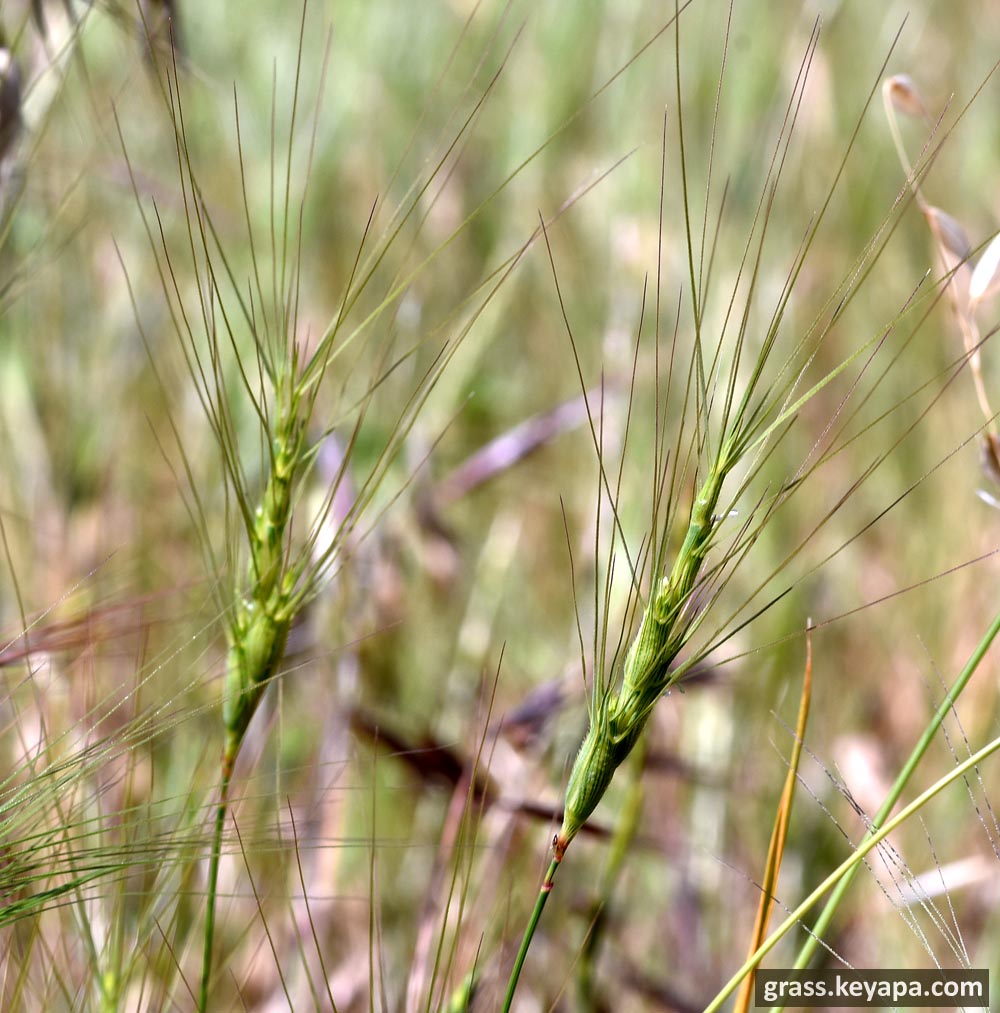
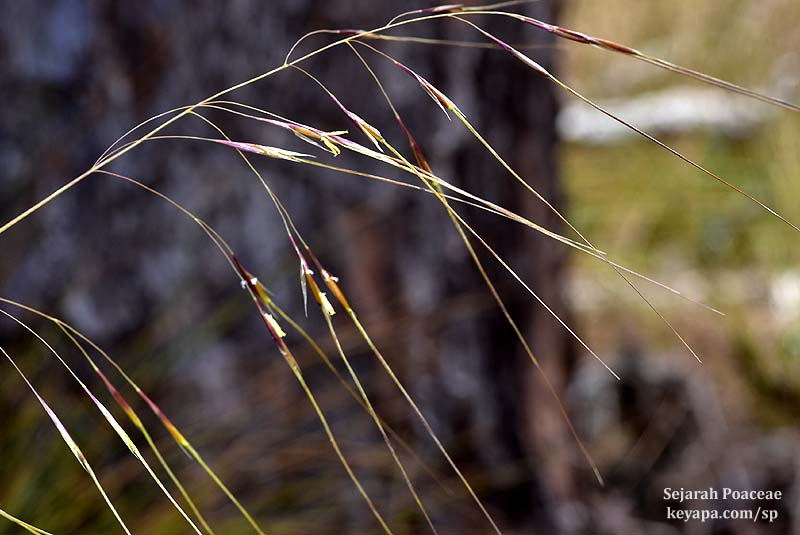
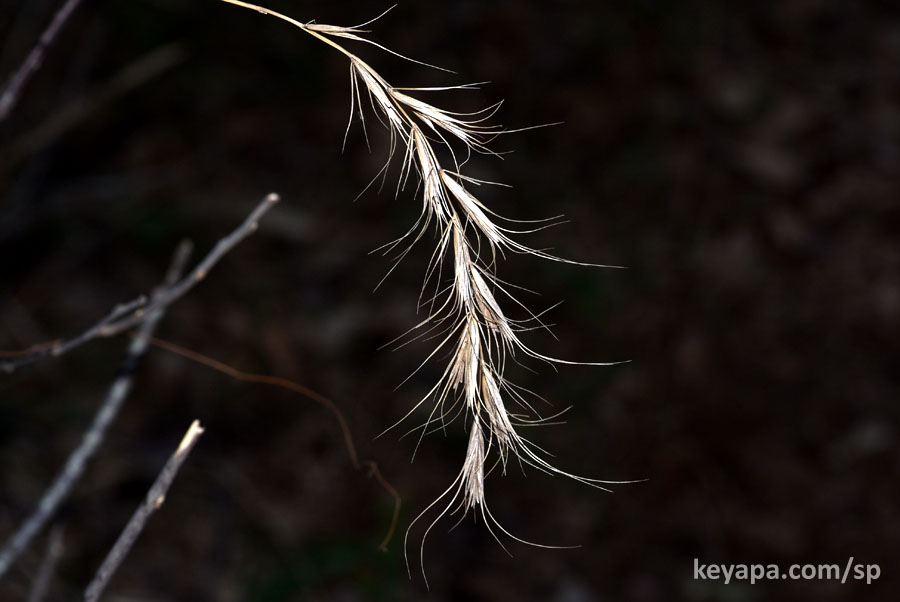
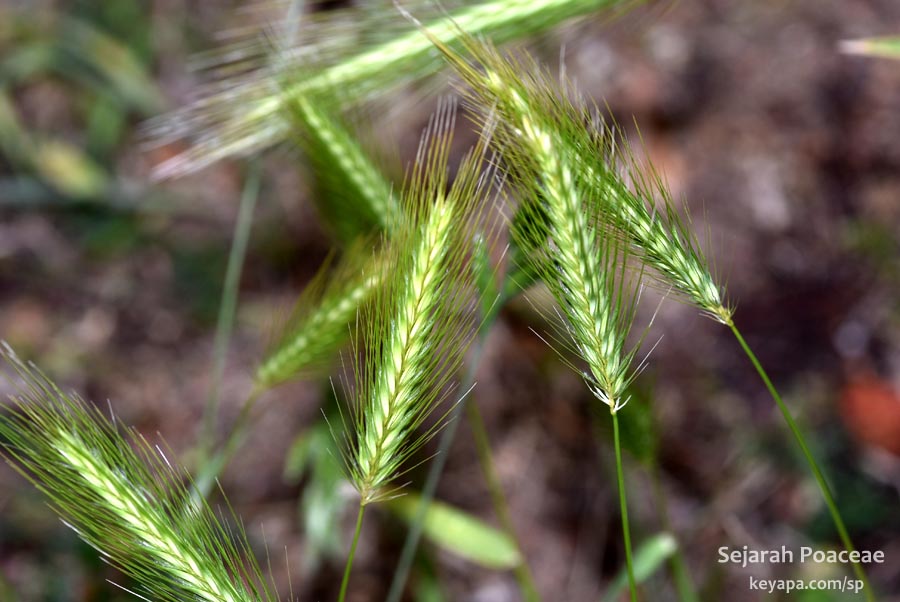
The next time you examine some grass inflorescence, take a closer look whether it has awns and see whether you can guess what their function it might have for that species. Below are some other images of awns in different species.
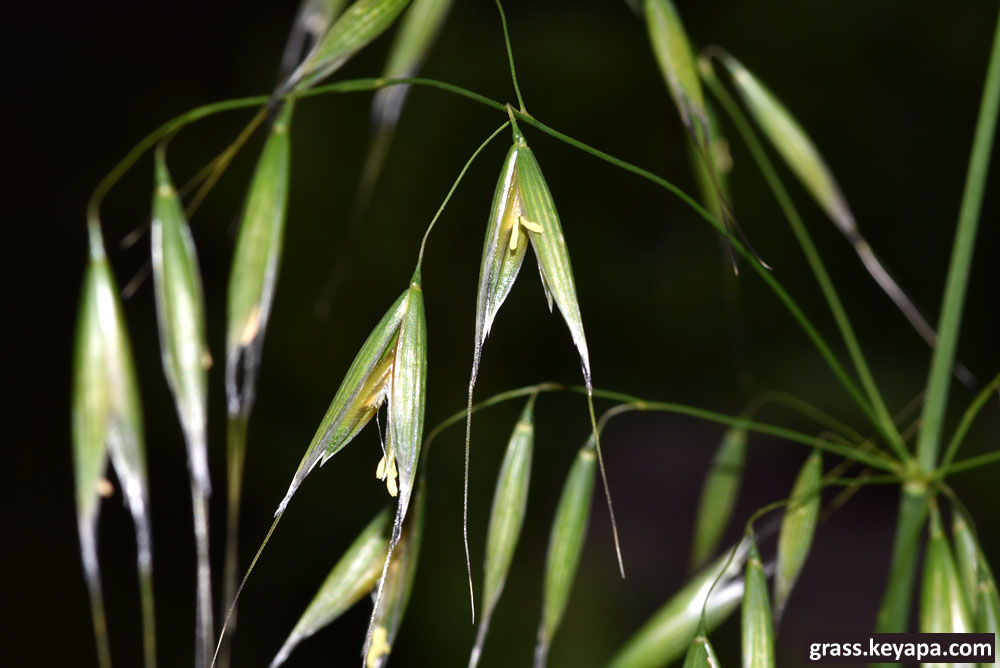
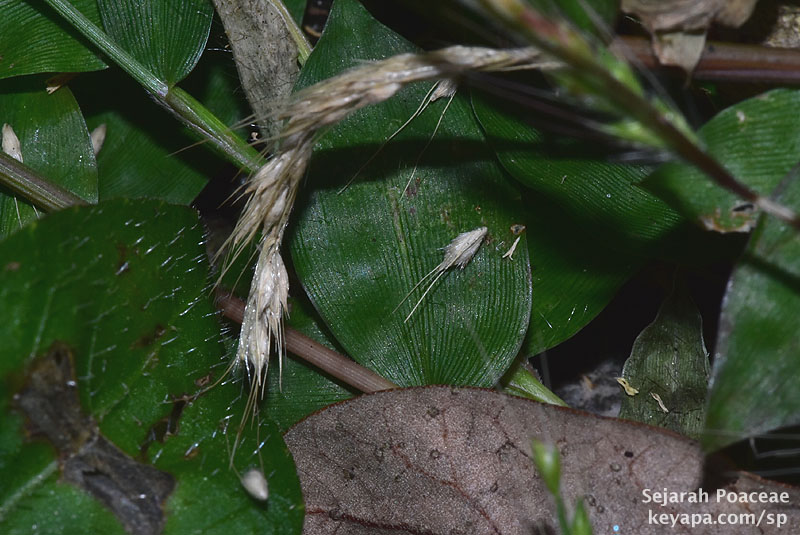
References:
Petersen, K. B., and E. A. Kellogg. 2022. Diverse ecological functions and the convergent evolution of grass awns. American Journal of Botany. 109(9): 1331–1345. https://doi.org/10.1002/ajb2.16060
Leave a Reply