
More than two years after I discovered and marveled over the legendary Bouteloua dactyloides (buffalo grass) that had escaped into the lawns of Rutgers University, I visited again in June 2026, and this time found them flowering.
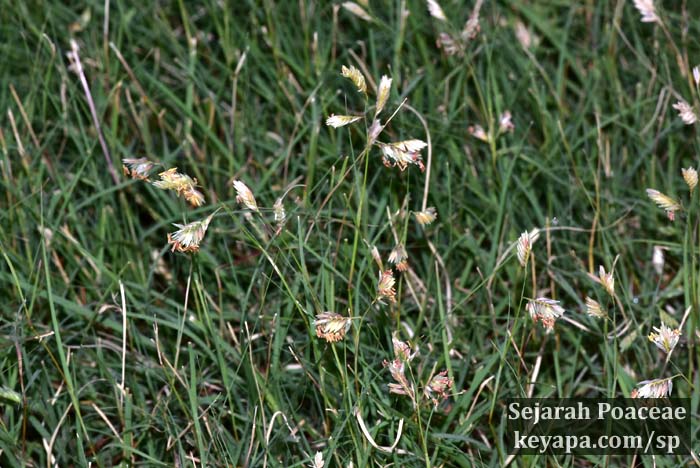
The last time I saw them, it was easy to tell them apart from the rest of the turf grasses, as it was later in the season and the B. dactyloides clusters had browned (note that this early browning of the grass is probably one reason why its use has not been more pronounced).
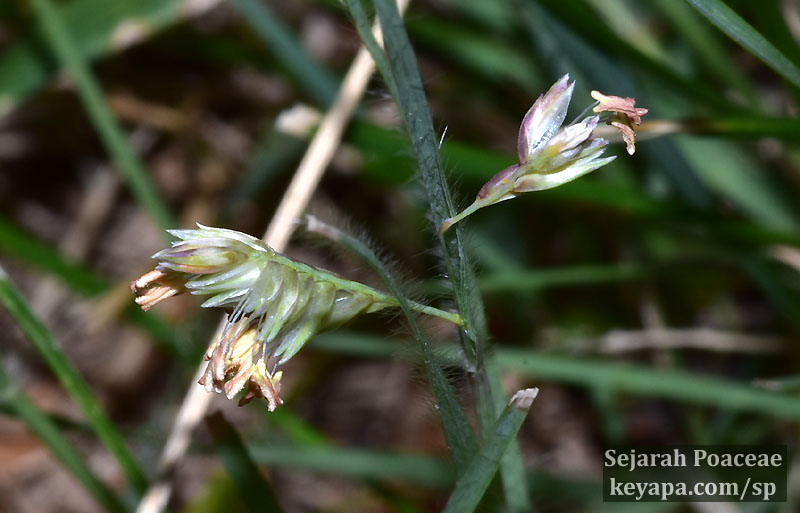
This time, the clusters of B. dactyloides were almost indistinguishable from the carpet of other grasses, except for the fact that they were flowering! This species is dioecious, which simply means that individuals produce unisexual flowers on separate plants. That is, some individuals carry male flowers high overhead, while some other individuals have female flowers tucked under the foliage.
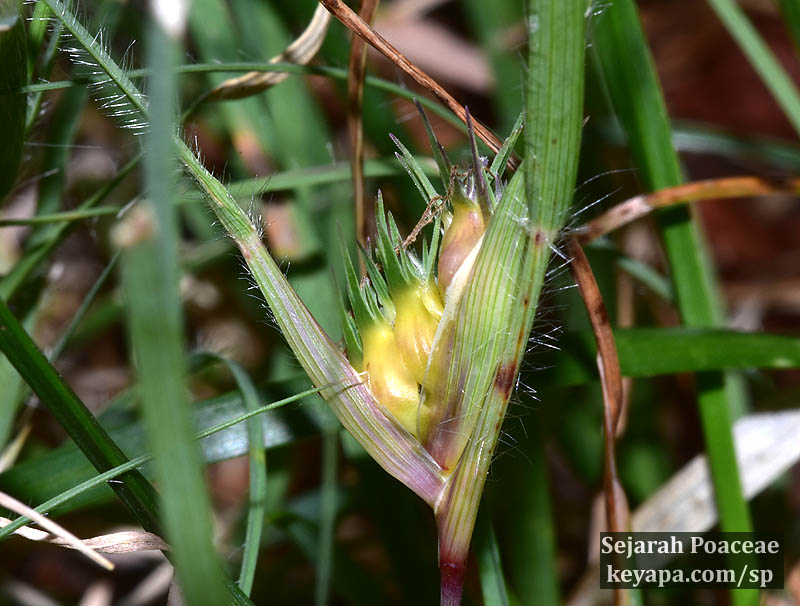
Interestingly enough, from what I could see (and this is obviously anecdotal as I did not measure comprehensively), the clusters with female flowers were spatially segregated from those individuals with male flowers. Thus, I was able to spot one area with lots of female flowers hidden in the foliage, and many other clusters separate from that with only male flowers.
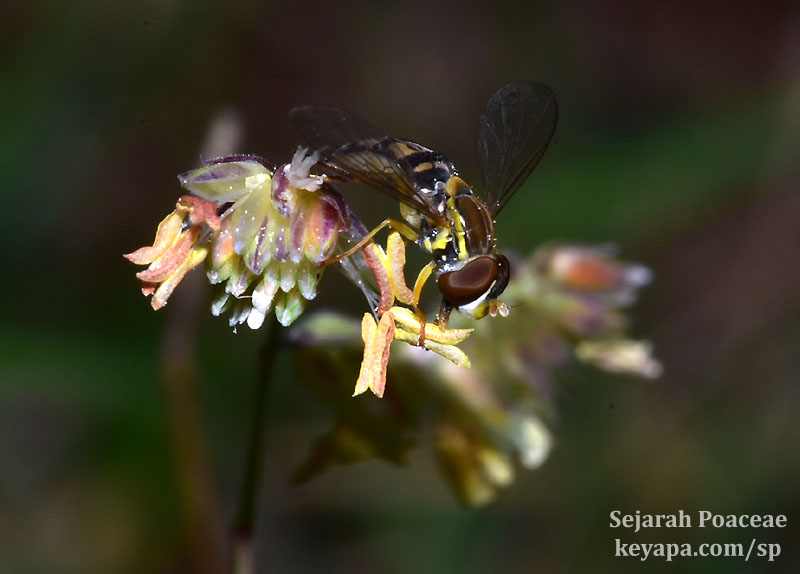
Another interesting observation was that some of the male flowers were being visited by hover flies. The insect flitted from flower to flower, and seemed to be lapping up the pollen from the anthers. In fact, some of the photos I took showed their proboscis seemingly caressing the grass structures. Perhaps this somehow helps in pollination, as there have been reports of animals pollinating grasses (zoophily).
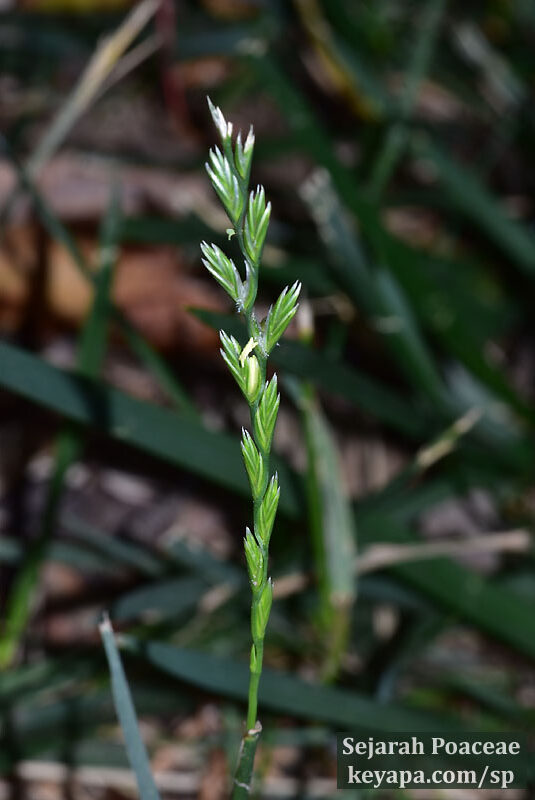
Finally, another turf grass had flowered, so I was able to note that rye grass (Lolium perenne?) was part of the lawn in that area, along with B. dactyloides.
Unfortunately, I did not carefully note down the extent of the B. dactyloides clusters, and whether or not they had expanded or contracted since I last visited almost three years ago, but that might be an interesting thing for someone to monitor over the long run.
Leave a Reply