
In my mind, a “sidewalk prairie” (or “sidewalk grassland”) refers to the one or two strips of grassy areas that border a sidewalk, with one being towards the street, and the other fronting some other landscaping, such as a wall or taller shrubs and trees.
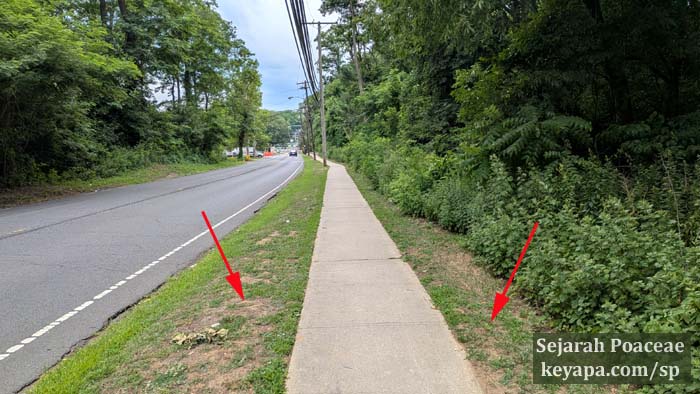
This was something I was thinking about during a morning walk yesterday in Middletown, NJ. I had never thought about it before, but now I wondered how the irregular strip of grass managed to survive between the paved sidewalk and the much taller shrubs and trees. It likely had to do with the periodic “grazing” that occurred when road crews rode their power mowers over the place.
The plants that thrived in the sidewalk prairies varied widely, with those in carefully-tended managed communities being mostly a monoculture of some turf grasses (Lolium spp, Poa spp, etc), while those in less maintained roadside areas being a combination of hardy turf grasses and some weedy grasses and forbs.
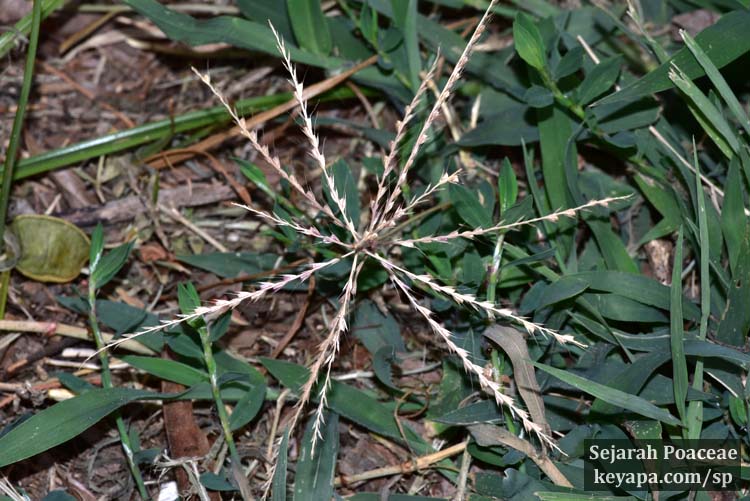
One of the more interesting grasses that I discovered during my morning walk was a specimen of Chloris verticillata, which is locally known as “Tumble Windmill Grass”. The spent inflorescence as viewed from the top was quite distinctive and perhaps even attractive.
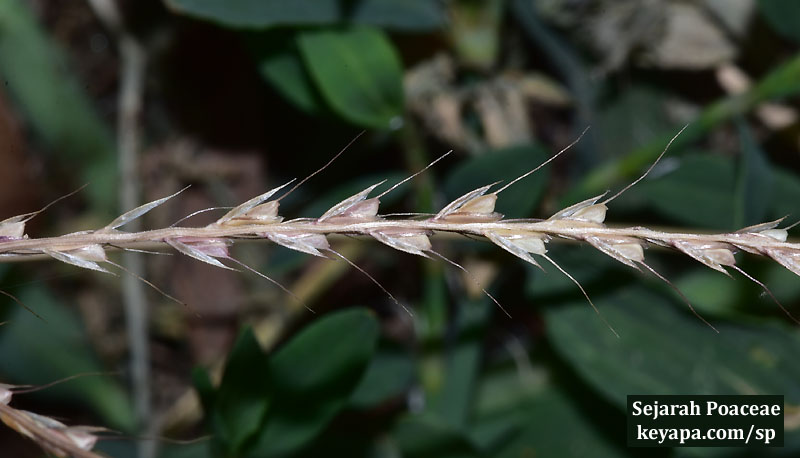
C. verticillata is a native perennial C4 bunchgrass in the subfamily Chloridoideae, and the seeds were arranged in symmetrical rows along the rachis. This specimen probably was never part of some planted turf in the past, but had instead managed to make a place for itself in the rough and tumble mini-prairie.
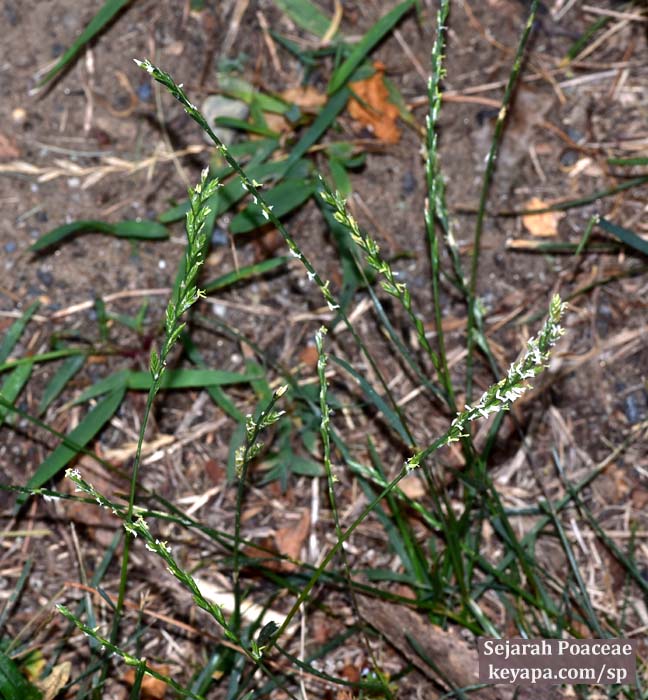
Another species that I encountered on one of the more weedy sidewalk prairies was a flowering specimen of Lolium perenne. This is a turf grass, and the specimen I found was either a survivor that managed to battle the weeds that moved in after more stringent measures such as weeding and herbicides had been abandoned, or it had escaped from some nearby lawn.
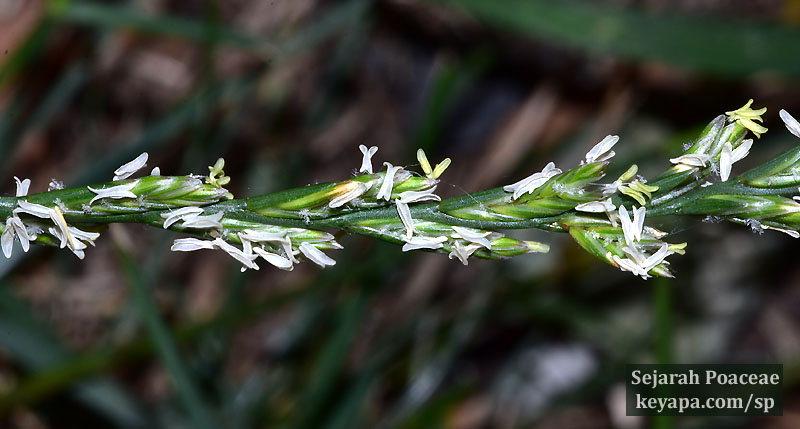
L. perenne is not a native, but it has been widely used as a turf and fodder grass around the world. Its most popular common name locally is “perennial ryegrass”, and its original distribution probably was in Europe, the Middle East, Asia, and Northern Africa. It is from the subfamily Pooideae, and uses the C3 type of photosynthesis.
I also encountered some flowering members of the genus Poa, likely Poa annua. I found these mostly in the more manicured sidewalk prairies.
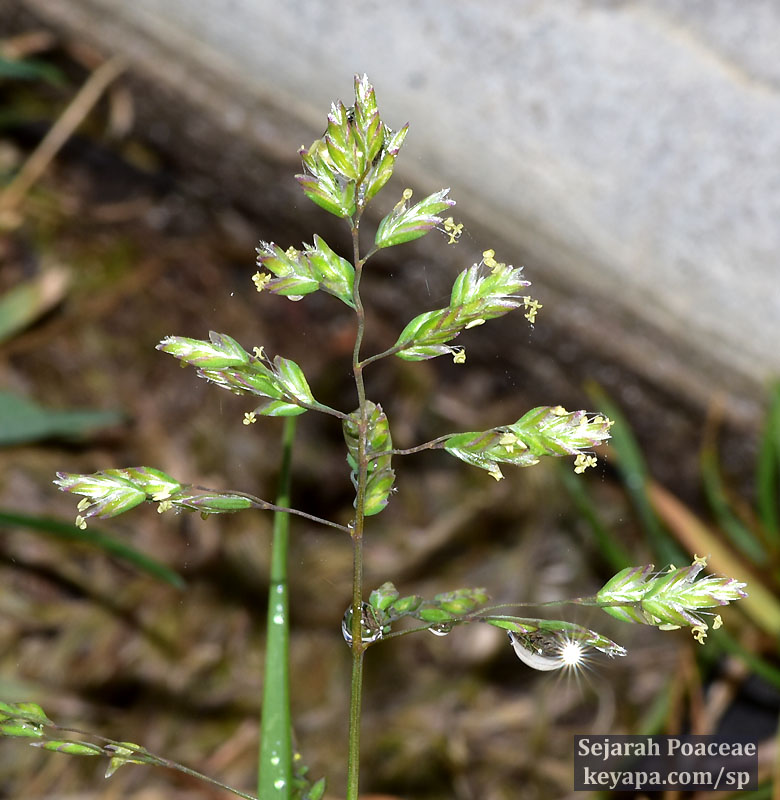
P. annua is typically an annual species, and is a hybrid between Poa supina and Poa infirma, both of which are not native to the Americas. This low growing species is notably an invasive in Antartica, where it is a threat to the native ecosystem. It is locally called “annual bluegrass” and is a C3 member of the subfamily Pooideae.
Finally, perhaps one of the more common inhabitants of these mini sidewalk prairies are the various species of Digitaria, which are known as the crab grasses locally. These bane of the lawn purists not only sprawl along the edges of the sidewalk prairies, but can happily survive between cracks in the pavement.
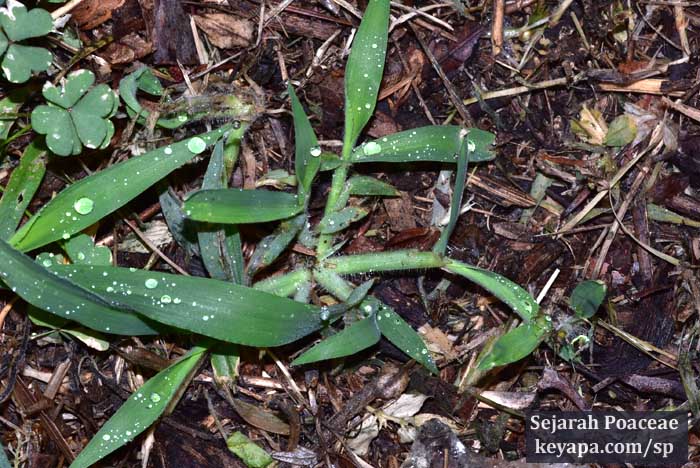
They are from the subfamily Panicoideae, and are C4 annuals. Less well-maintained sidewalk prairies are probably prime spots for colonization by these species, as their C4 feature and prodigious seed production allows them to outcompete other plants that require more moisture.
It was quite interesting to try to figure out the various species that clustered together in these sidewalk prairies in suburbia. Perhaps you don’t need wide expansive spaces to form stable and interesting plant communities, because life finds a way.


Leave a Reply