
Gracias al Dr. Aníbal Prina, Dr. Paúl Gonzáles y Dra. Ana Mireya Guerrero por su invaluable ayuda en la identificación.
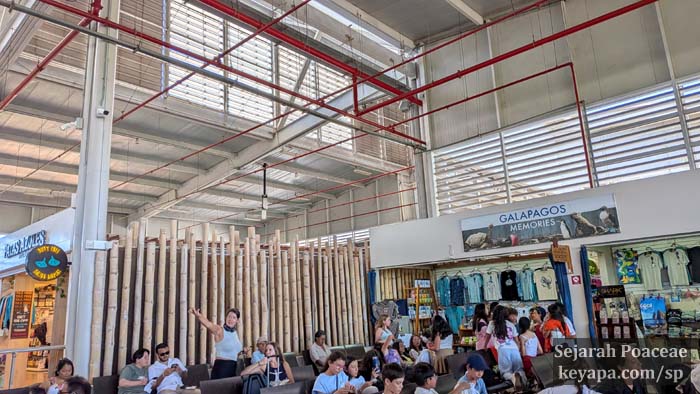
After almost two weeks going from island to island in the Galapagos, it was finally time to fly on to Quito, the capital of Ecuador. Although we flew into the Galapagos via the San Cristobal airport, we flew out of the islands using the much larger and main airport at Baltra island. The airport is officially named Galápagos Ecological Airport (GPS), although its unofficial moniker is Seymour Airport.
GPS is over a decade old, and is heralded as the world’s first (and likely only) ecological airport. It was built to be sustainable, and was awarded the LEED GOLD level certification by the U.S. Green Building Council, as well as a “Carbon Neutral” certificate granted by the Airports Council International (ACI).
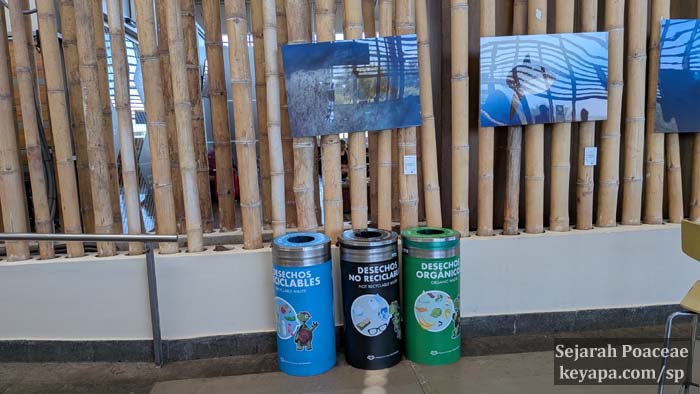
As befits its goal and the standards of the Galapagos, all trash locations in the airport had three bins. The blue bins were for recyclables, the black for non-recyclables, and the green bins were for organic waste. Interestingly for me, the airport made use of Guadua angustifolia bamboo columns as decorative fixtures.
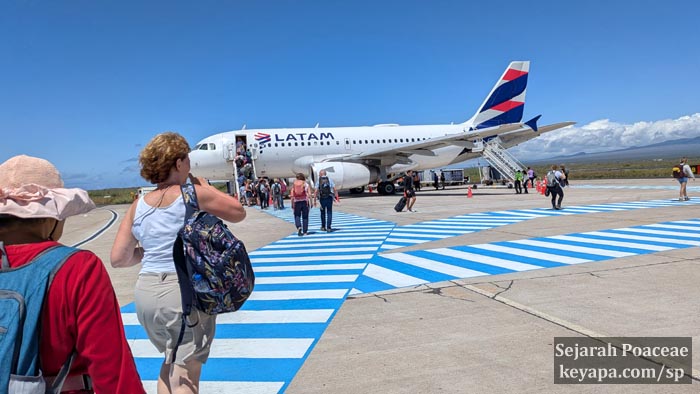
Like the San Cristobal airport, GPS did not have gates, and we all had to walk to the plane, which is always an unusual and interesting experience. The marked walkways were also notable, as they made sure people did not stray from the paths, something that occasionally happened when enthusiastic tourists started taking photos.
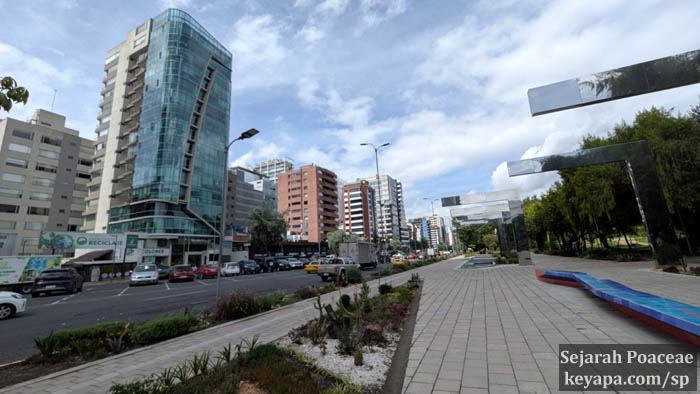
Quito itself lies at 2850 m above sea level, and is a modern very populated urban center. We stayed at the La Carolina area, which is considered to be one of the safest neighborhoods in the city, and is centered by the large central La Carolina urban park.
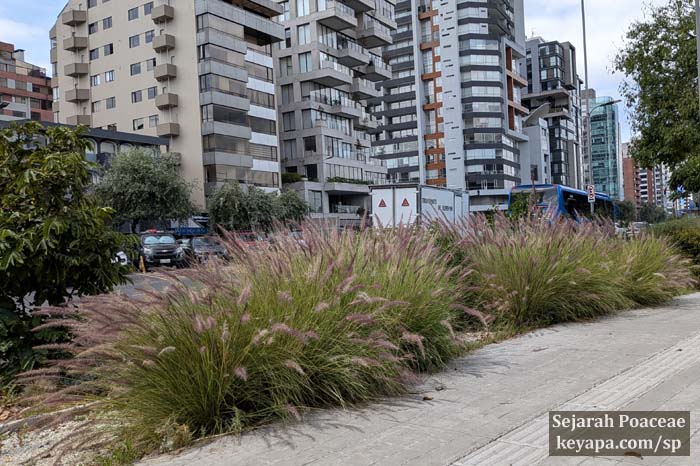
Urban horticulture seldom fails to disappoint, and this was no exception. Instead of using only native plants, the sidewalks sometimes featured rows of pretty (but exotic) Cenchrus setaceus ornamental grasses, something that aligns it with pretty much the entire civilized world.
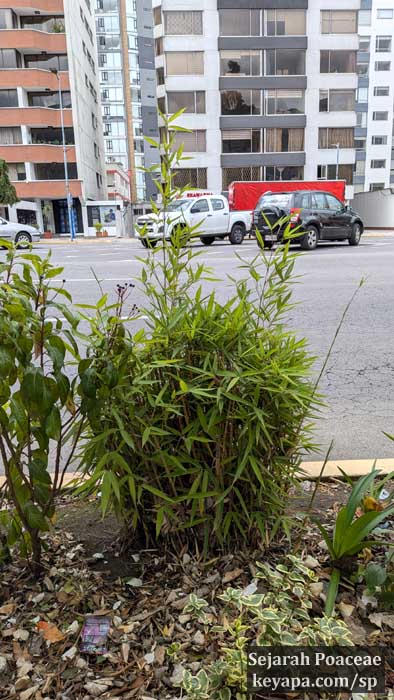
The area is also home to high altitude Chusquea bamboos, but all the ornamental and hedge bamboos I found during my walk seemed to be from exotic Phyllostachys spp. Imagine my excitement at finding the first bamboo along the sidewalk, only to discover that it was just another exotic!
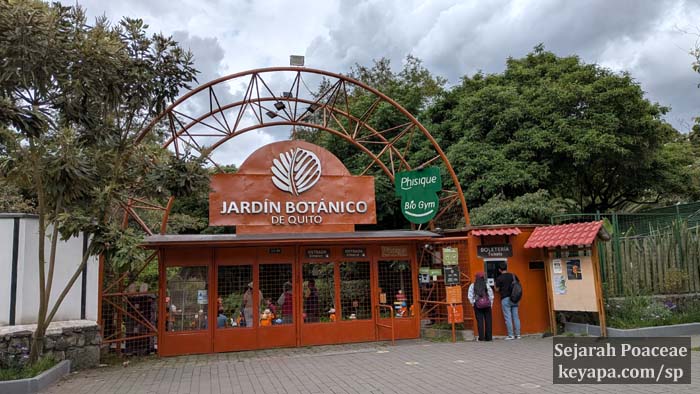
The center of the park hosted the Jardin Botanico Di Quito, but unfortunately I was not able to avail myself of its collections due to time constraints. At a cost of only USD $5 for each person it certainly would have been a good deal. But we had to spend some time touring the historical center of the city, and so we took the Metro (subway) from our station (Inaquito) to the San Francisco station.
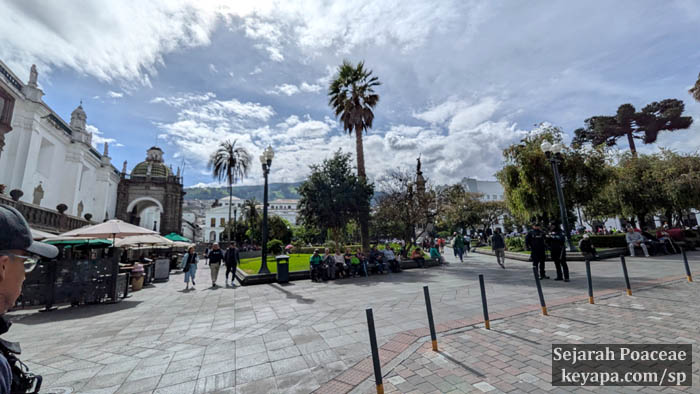
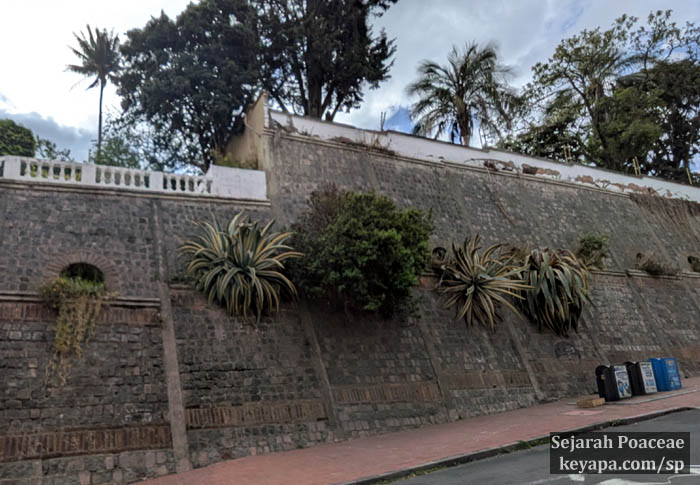
There we spent the afternoon marveling at the urban sights, and even saw some really interesting succulents protruding from the cannon holes of some old fort!
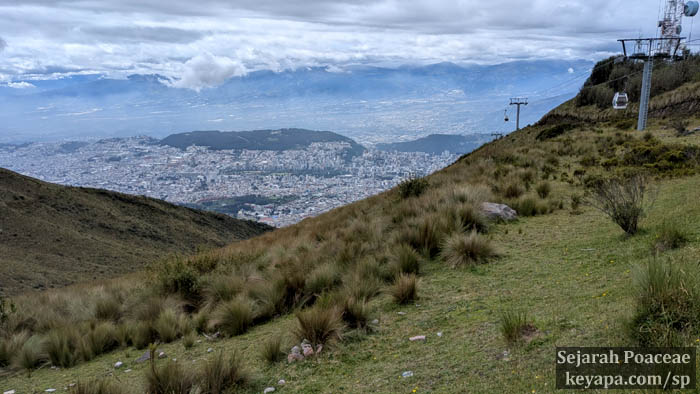
The next day, we decided we had acclimated enough, and that it was time to go hike up the extinct Rucu Pichincha volcano that loomed in the páramo (a high mountain neotropical grassland) above the city.
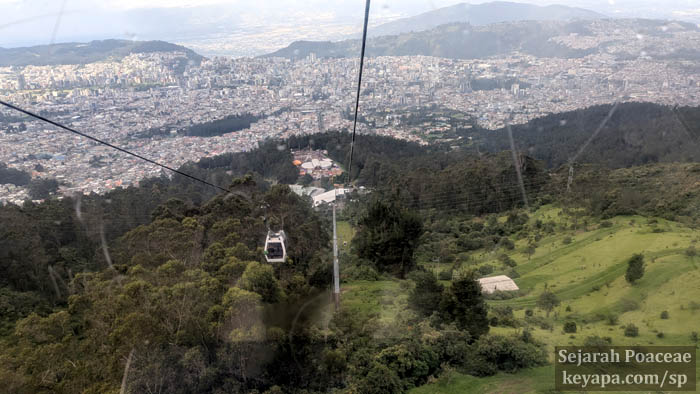
For USD $9 per person round trip, we took a cable car called El TelefériQo from 3100 m or so elevation at the base station in Quito to the upper station at around 3900 m, where we could see the city sprawled below us. It was a fantastic sight!
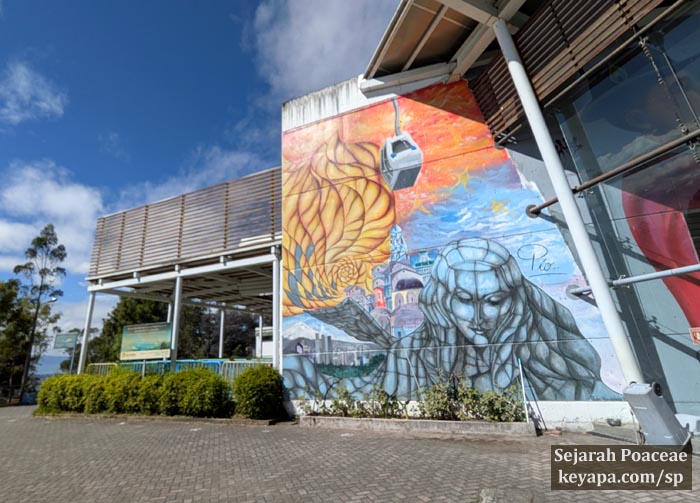
The base station itself made use of hedges of Phyllostachys bamboo, in keeping with the disappointing tendency to use exotics instead of native grasses.
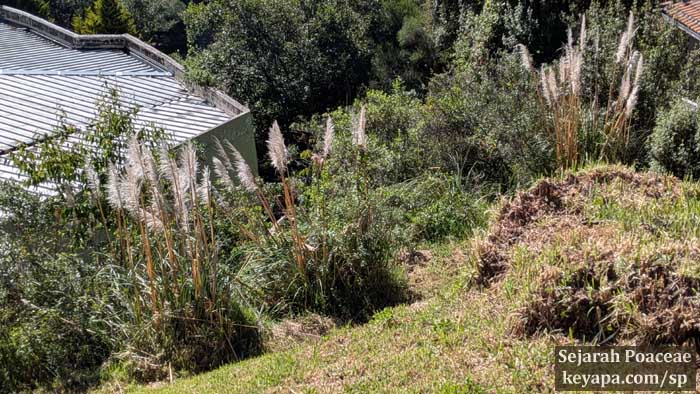
But as the cable car climbed up, clusters of native Cortaderia nitida pushed up from the steep slopes, their white plumes waving in the slight breeze. Also below us I knew were actual Chusquea spp (probably C. scandens), but alas, there would be no chance on this trip to savor the sight of these high mountain bamboos.
My disappointment about the Chusquea bamboos would be short lived however. Even the station above had lots of specimens of pretty grasses like Anthoxanthum odoratum. But the best was yet to come.
Once we hiked past the upper cable car station we entered a vast open grassland that led up to the extinct volcano summit. Large tussock grasses dominated the landscape, a sight so beautiful in the chilly air that it completely made up for the difficulty of hiking in the oxygen thin higher elevation.
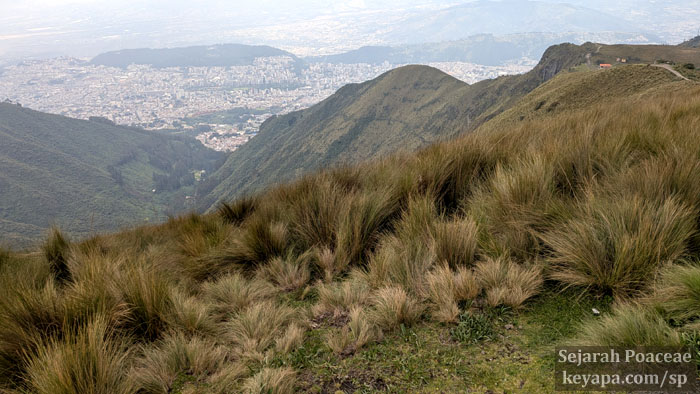
I have a strong liking for large tussock grasses. In my home, for example, I grow beautiful Muhlenbergia ornamentals that flower for months in the Fall season, and so the páramo did not disappoint at all.
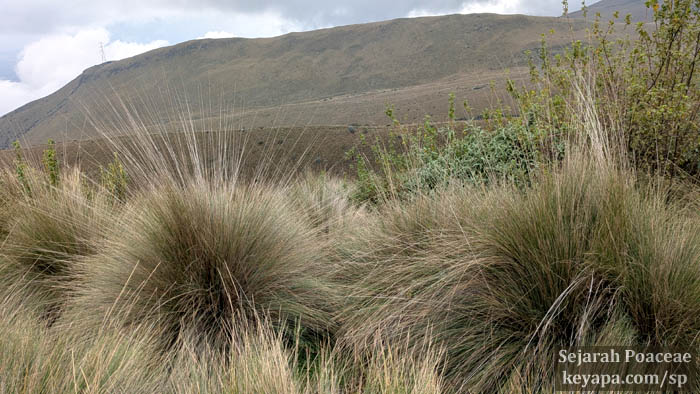
Cinnagrostis intermedia, Jarava ichu and other tussock grasses in the páramo above Quito.
I cannot emphasize enough how truly open and vast it was, and I could not help but take many photos as we trudged up the mountain, our breaths shallow and fast at times as the thin air took its toll.
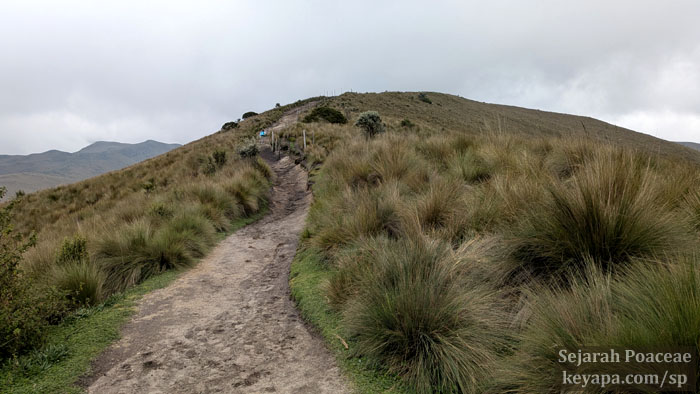
A few people on horseback passed us, but the majority of hikers opted to walk the trail, perhaps due to some sympathy for the toiling animals.
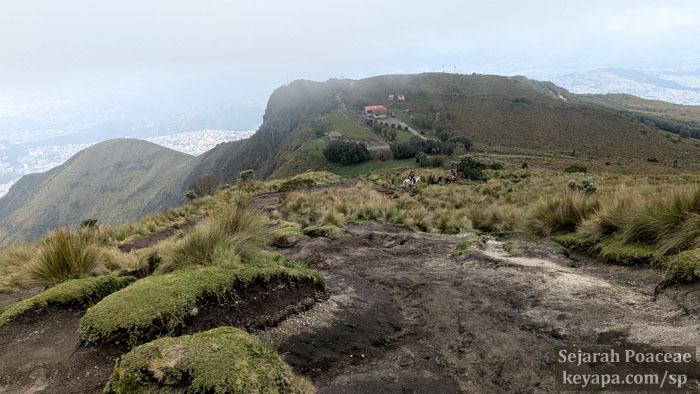
I knew from previous research that the grasses in the area included natives like Jarava ichu and Cinnagrostis intermedia, but we are but hostages to time, and unfortunately most of the specimens did not sport inflorescence during our hike.
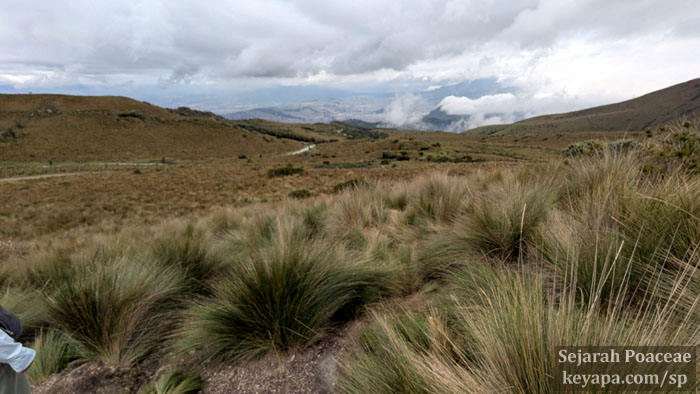
The few that did have dried flowerheads allowed determination of their identity as Cinnagrostis intermedia. This species, like Jarava ichu, can be used as forage by the llama and other animals that live in these montane areas.
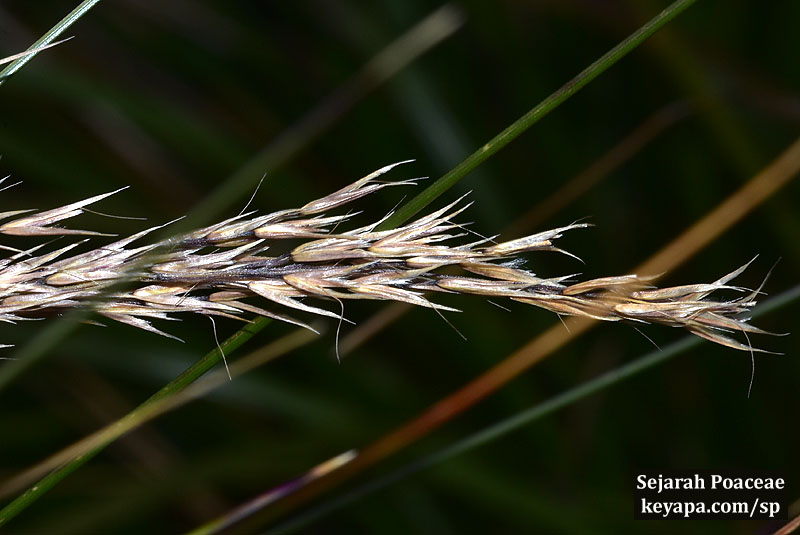
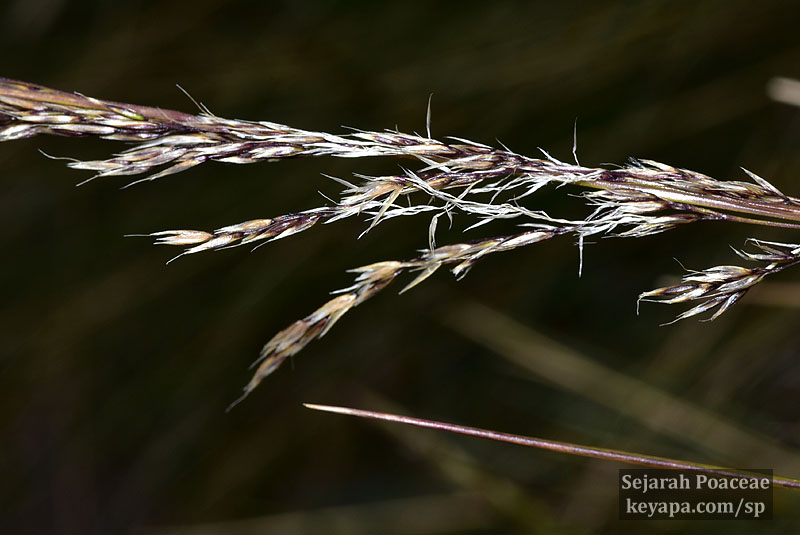
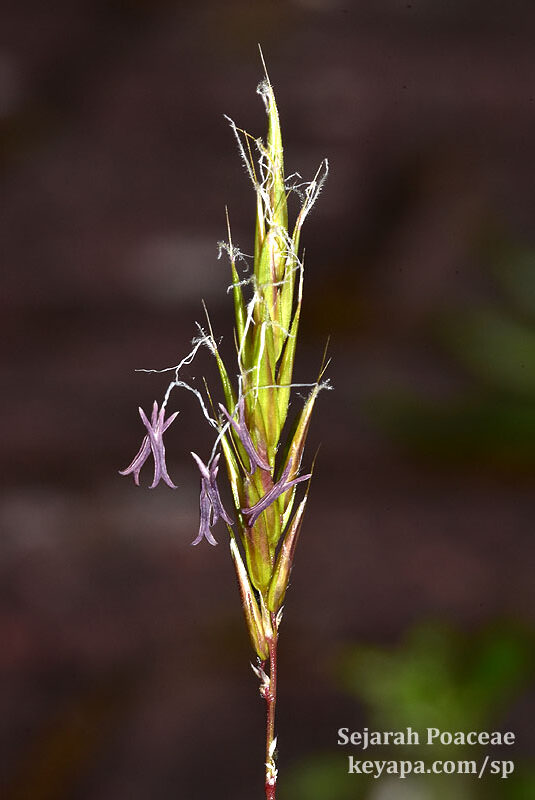
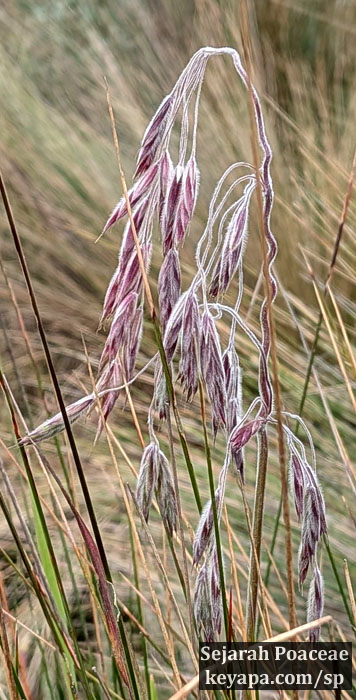
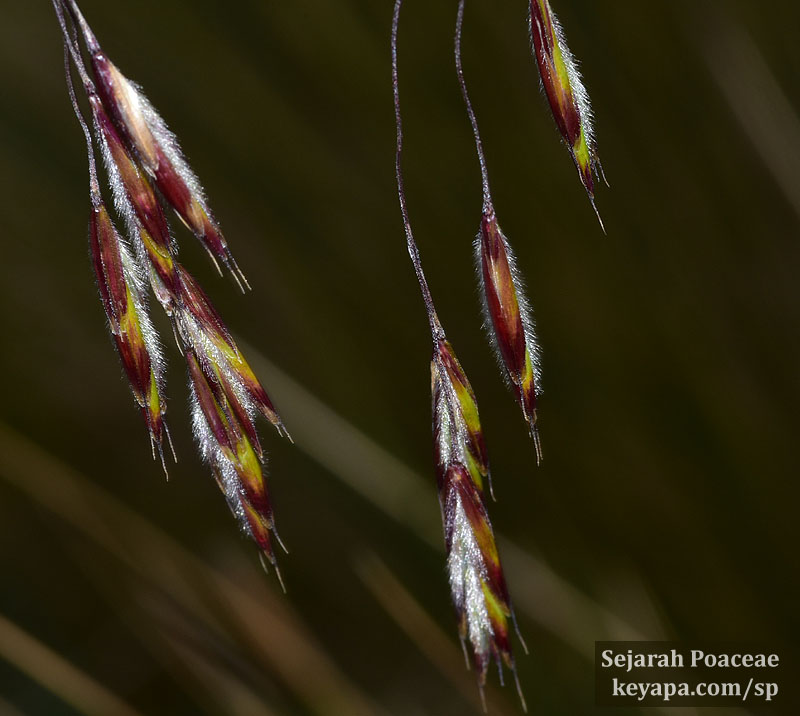
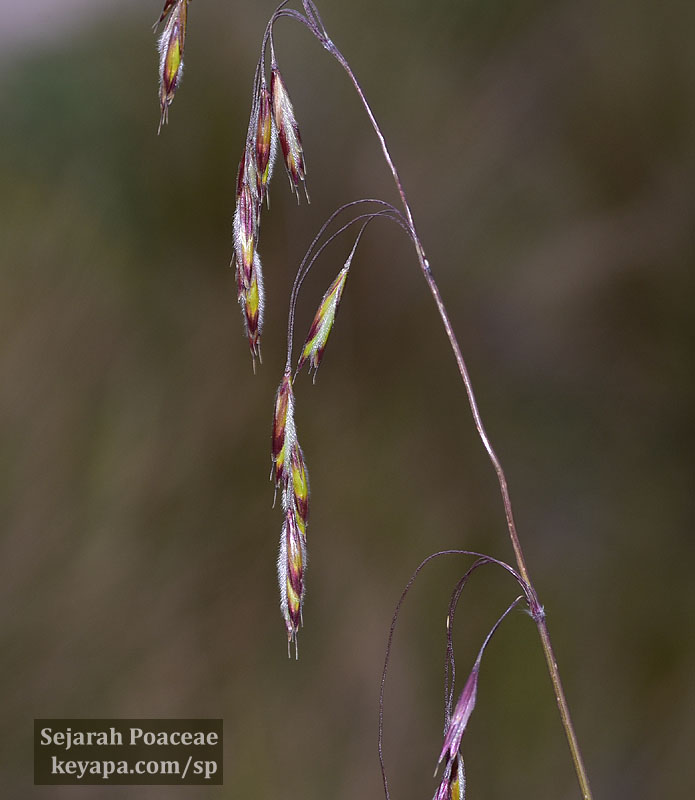
I also discovered an unusual grass with quite beautiful spikelets (see below). At first, it defied identification, although in my experience the general appearance seemed to be of some Bromus spp. Then one of the helpful identifiers at iNaturalist noted it might be Bromus lanatus, and a quick perusal of the images for that species confirmed the identification. It seemed to be a rather rare species, since there were only a total of 13 other observations in INat, with one being at “research” grade.
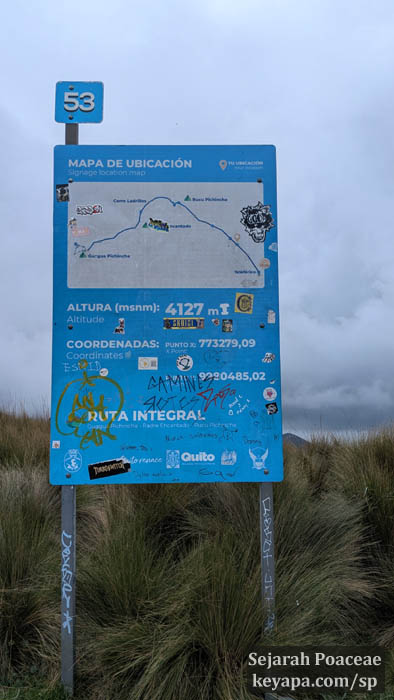
We hiked for around 4 hours, and made it to higher than 4127 m above sea level. The summit itself was at 4700 m, but there were storm clouds rolling in, and we never intended to get to the top due to acclimation issues.
In high spirits after the hike, we made our way back to the relatively lower elevations of Quito. It had been a whirlwind 2 day tour of the city, but we had done so much and it was time to return home.


Leave a Reply