
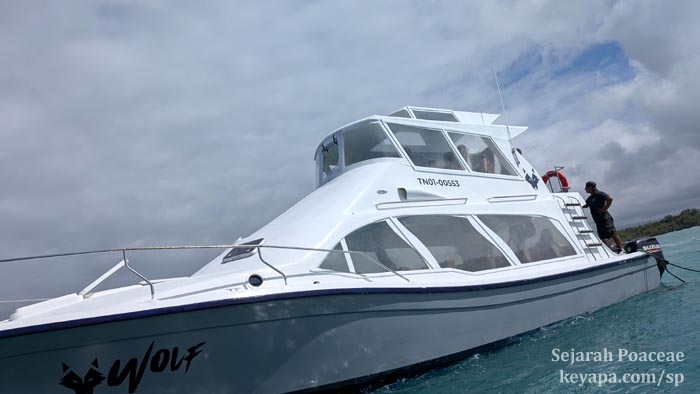
A fast two hour ferry ride got us from Isla Santa Cruz to Isla Isabela, and it was like going from a big city center to an idyllic deserted island.
Isla Isabela is the largest island in the Galapagos by land area, but with at most 3000 residents, it is the least populated by far in the Big Three land masses, and it shows.
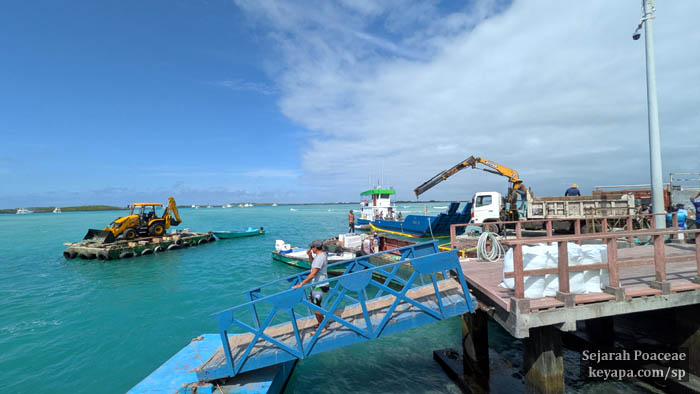
The ferry port in the town of Puerto Villamil had a single docking point, and the clean streets seemed almost deserted when we first arrived. No hawkers, no lines of tour shops and eateries. Just wide paved streets with minimal houses and buildings on either side.
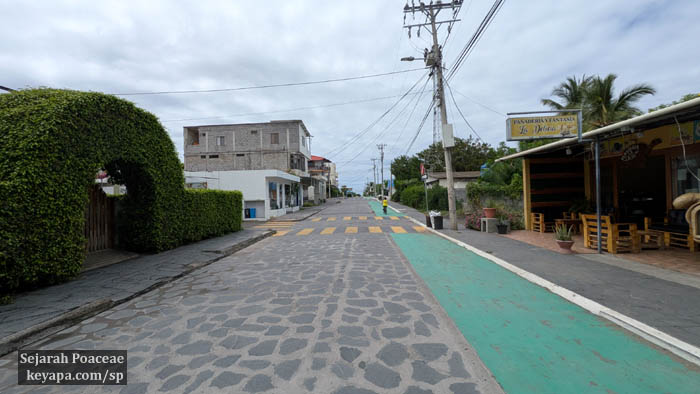
One notable feature of the roads was that each had a wide green bicycle lane, and we saw quite a few bicycles using them. This might at first seem strange to visitors, given the general lack of motorized vehicles within the town, but it seems to be in line with the goal of the Galapagos to provide as many ecologically friendly features as possible.
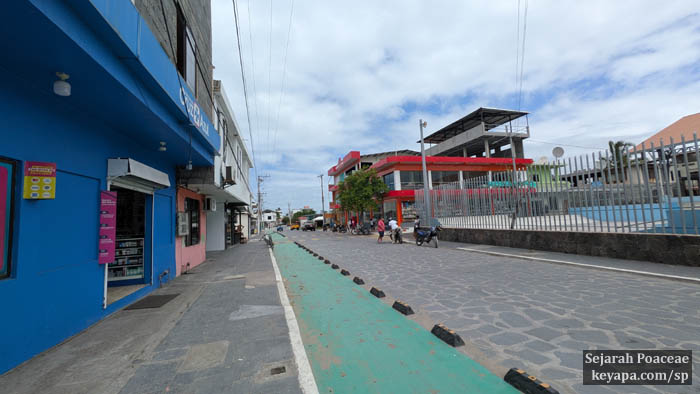
Like the other two other Galapagos islands we visited, the town had a remarkable number of mercado (“grocery stores”) within its limits. But Puerto Villamil also had a big red building that seemed to be more like a mall, with various stores selling multiple merchandise within it. This was a slight surprise to me, given that the town is so small that one could walk from end to end without breaking a sweat. Its widest span (if one walked along the beach) is at most barely above a km long!
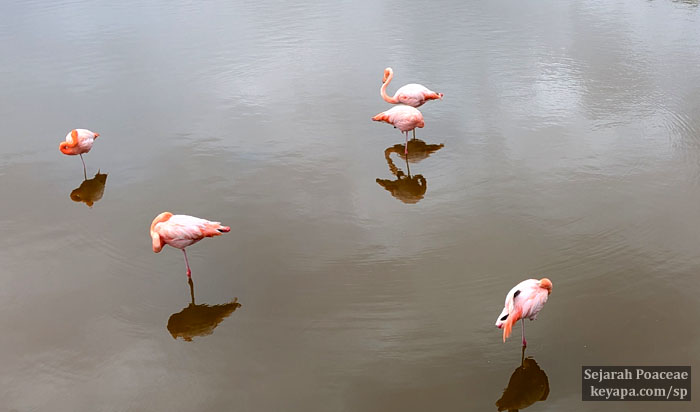
After setting up in our rather spare lodgings, I commenced to explore the streets of the town, and managed to find a boardwalk that overlooked a lake with actual live flamingo. After marveling at the beautiful birds, I continued on my way and ultimately ended up in the town malecon, which had a few scattered restaurants along the beach (a far cry from the multitudes of eateries and businesses in Puerto Ayora, Isla Santa Cruz).
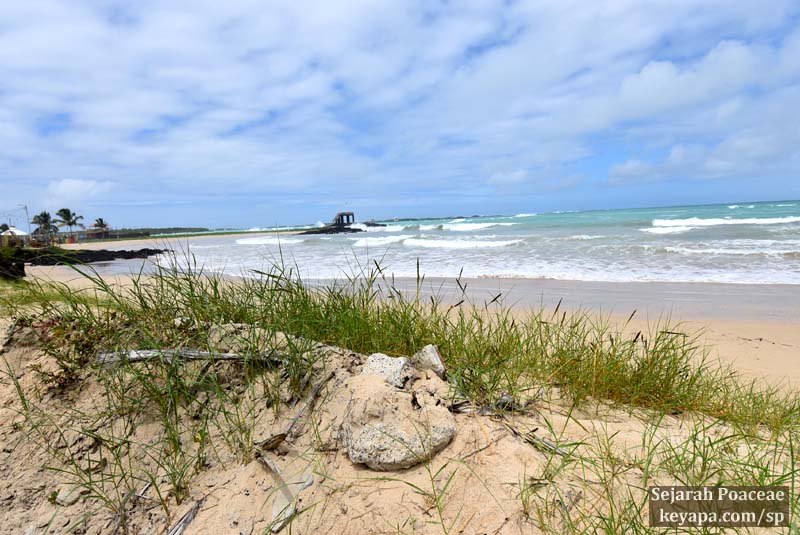
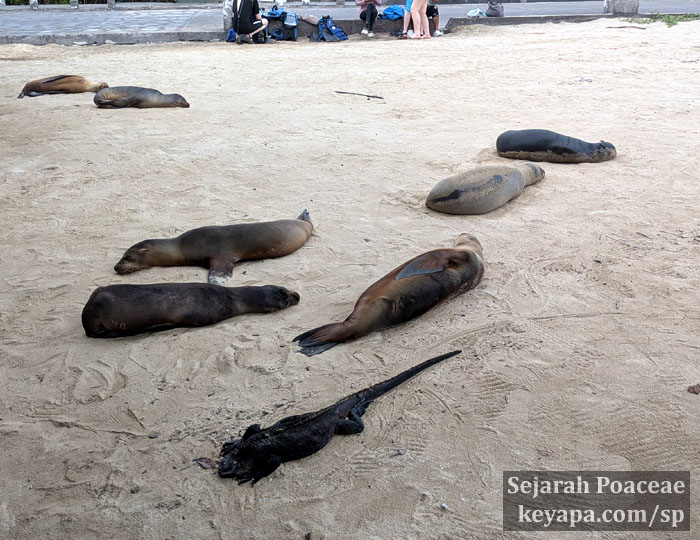
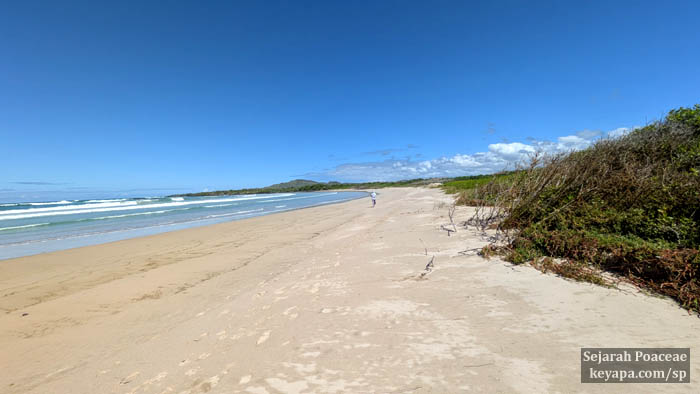
The relative paucity of eating facilities was complemented by the gorgeous beach that faced it, and I found clusters of Sporobolus virginicus hugging some of the dunes. Later, we also came upon many sea lions and a few marine iguanas sunning themselves. They ignored the surrounding people, a behavior that mimics those of animals in the two other islands we visited.
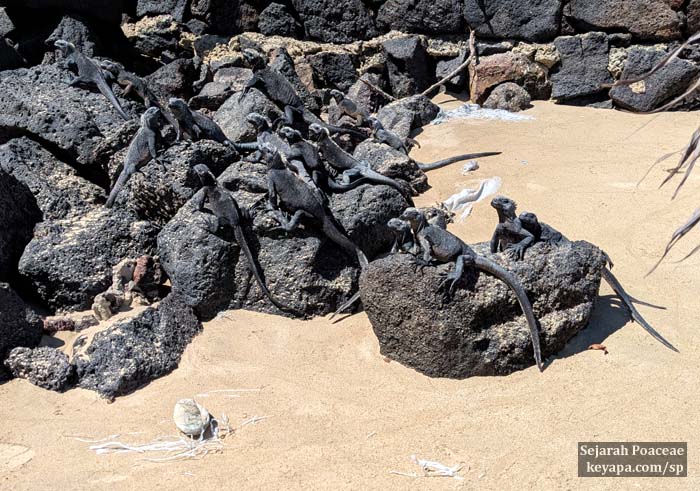
We also encountered large groups of perhaps juvenile marine iguanas in the rocks off the beach, near one of the eating establishments. These were a bit more skittish, although some of them they hastily moved away when I crept in closer for a photograph.
Beyond the town were long stretches of absolutely beautiful pristine beaches, and we spent some time hiking the area on the way to rather isolated points, such as the mangrove trails of El Estero.
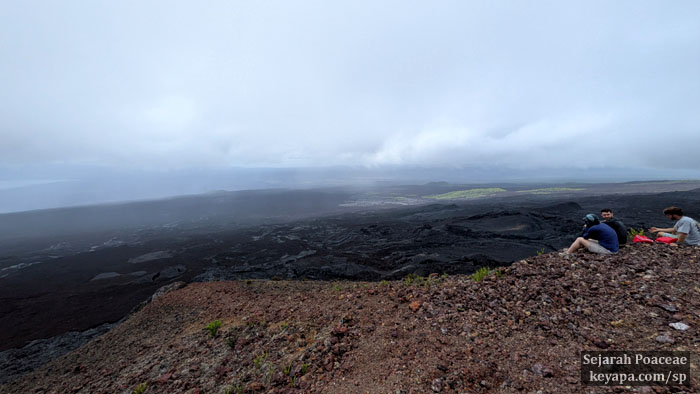
Farther inland in the sparsely-populated island lay various semi-active volcanoes, and it was to one of these geologic phenomena that we hiked the next day.
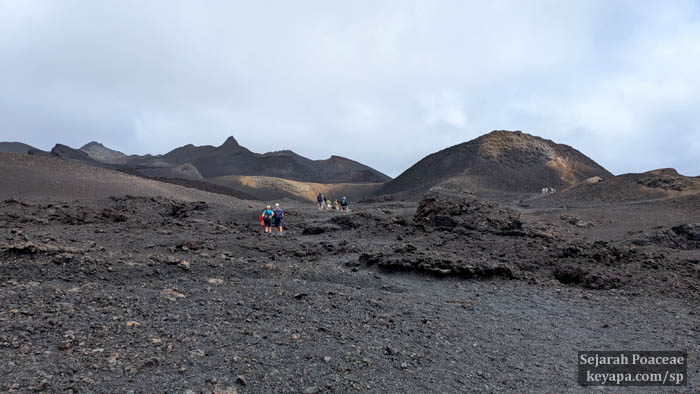
The Sierra Negra volcano is the world’s second largest caldera, and sports a massive 10 km crater. It has erupted six times since 1948, with the most recent eruptions being in 2005 and 2018, both from an area called “Volcán Chico.”
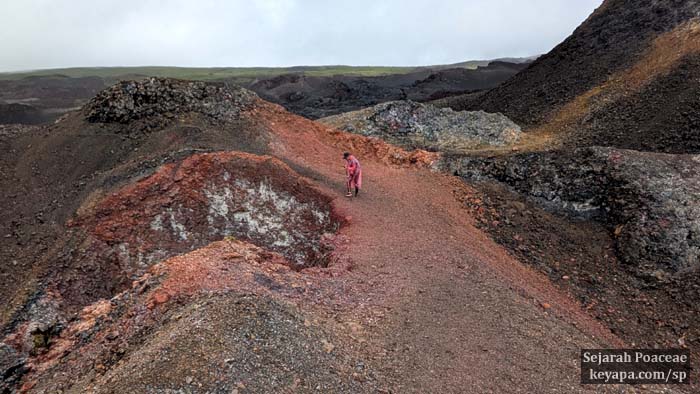
The 16 km out and back hike began along muddy trails, but soon transformed into a surreal exploration of a volcanic landscape. Fissures rent the earth, and at times there were barely any living things in evidence, although ferns seemed to have been particularly adept at colonizing the new land.
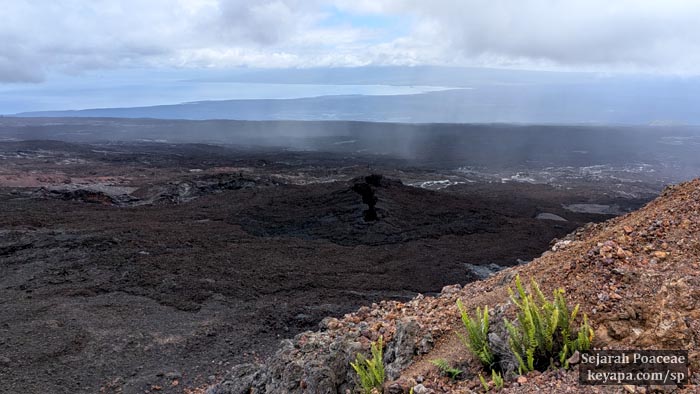
Grasses were mostly not in evidence during the latter phases of the hike, but everywhere else during the long trek I found the usual cosmopolitan species, such as Eleucine indica and Stenotaphrum secundatum. Thankfully, I did not see any of the larger species that have been rapidly spreading in the more populous islands. Neither Cenchrus purpureus, nor Megathyrsus maximus seemed to be present.
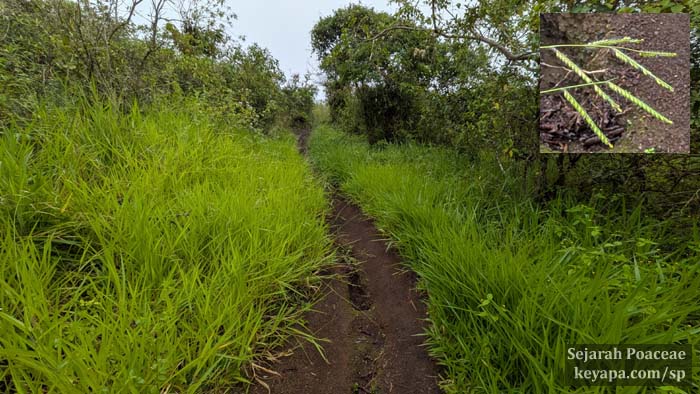
The long hike to the volcano did alert me to the presence of a medium sized grass that was mainly 1 meter or so in height. It was a Urochloa sp (Urochloa eminii?), and it sometimes formed dense monocultures along the trail, or erupted from the tops of shrubs.
The other species in the town were on the whole rather unremarkable. As noted in an earlier note, the Galapagos islands are rife with exotic grass species, whether deliberately introduced or not.
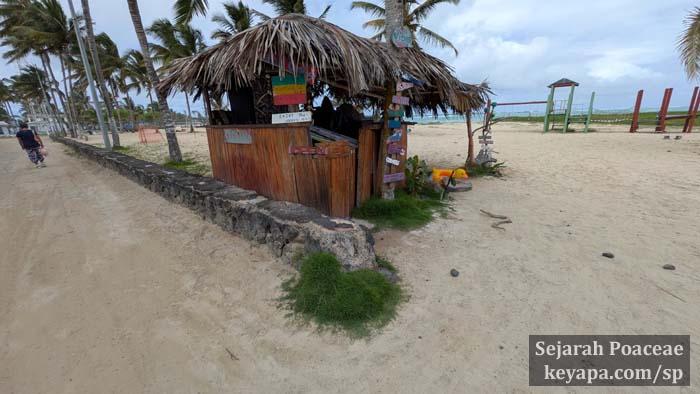
Zoysia matrella formed clumps along the beach. It is an exotic, but one that was deliberately introduced and first recorded in 1995, probably as use for turf. The roundish clumps that it formed on the stone walls of the malecon and on the edges of the huts that dotted the beach were distinctive and quite attractive.
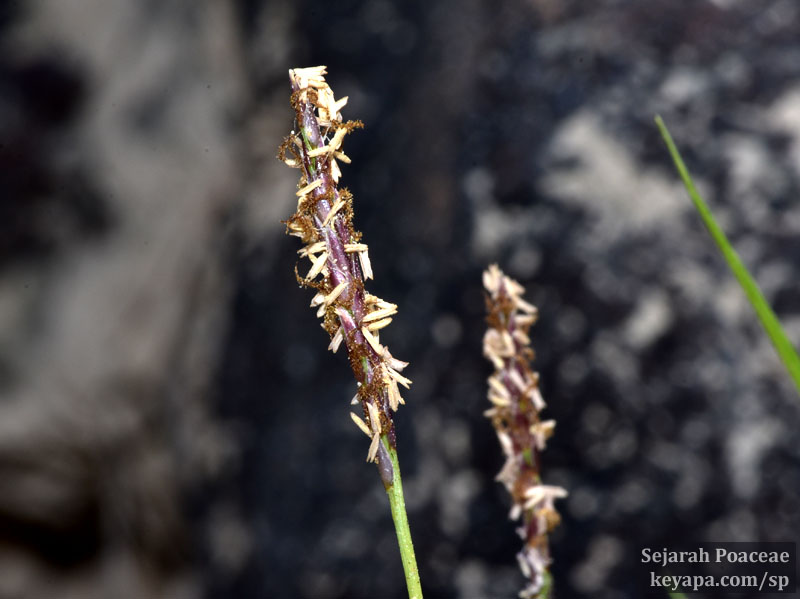
Its local name is “césped chino”, whereas in many other places its common name is manila grass. 1
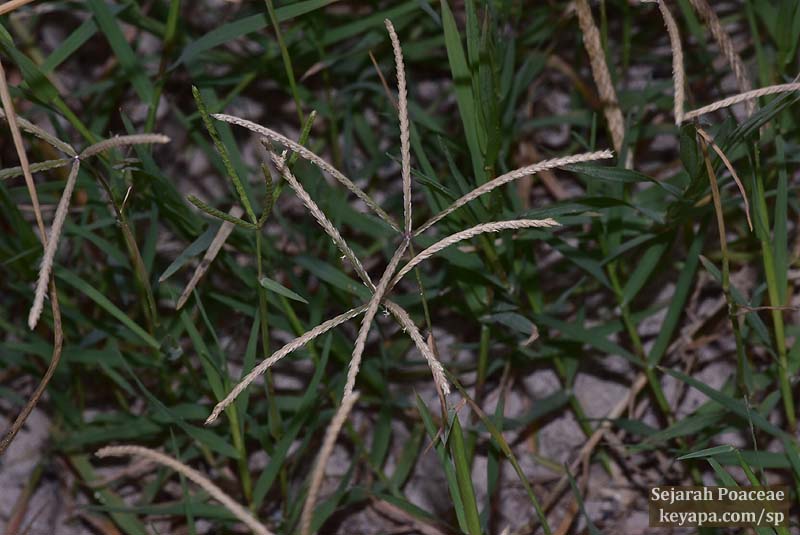
Cynodon dactylon was also in evidence in the streets, growing from cracks and other fissures in the sidewalks. This cosmopolitan species has a long list of local names, including “grama”, “zacata bermuda”, “pasto diente de perro”, and “pata de perdiz.” It is another low-growing grazer specialist that was deliberately introduced (probably as turf grass) and first recorded in 1964. 2
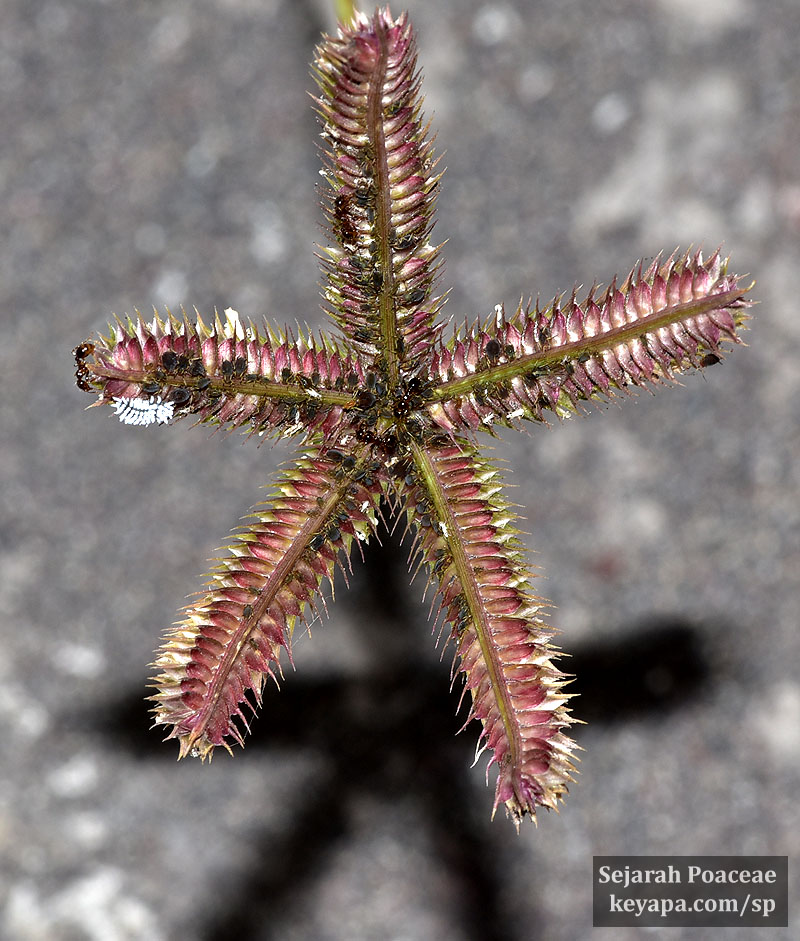
A third grass species was not deliberately introduced, but came in as a contaminant a long time ago, being first recorded in the islands in 1891.3 I found Dactyloctenium aegypticum clusters within the town of Puerto Villamil, and the interesting thing about this otherwise common species was that at least one of the inflorescence had fire ants on it. They were tending to aphids, and I only saw them after viewing the image on my laptop!
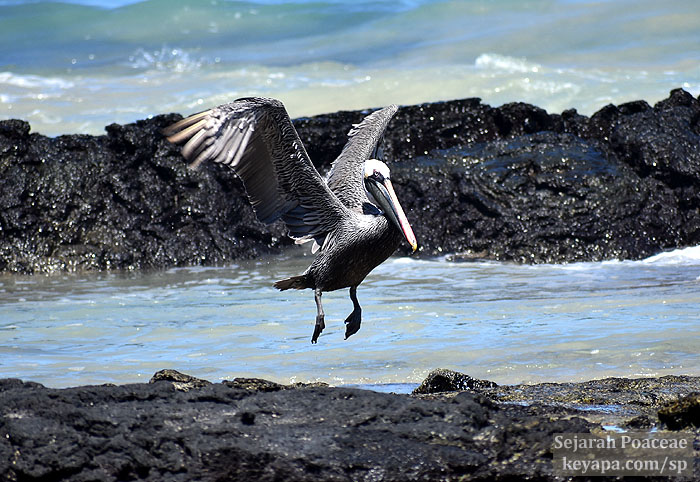
During our last day in the island, I tried in vain to find a blue-footed booby along the beaches and the trails towards El Estero, but succeeded only in tracking down and photographing various birds that seemed like pelicans. Nevertheless, we only stayed in Isla Isabela for two full days, but the beauty of the island will forever be remembered by us.
Although it was significantly more isolated than Santa Cruz or San Cristobal, and did not even boast a real hospital, it more than made up for it with its plentiful animals, wide pristine beaches, and surreal volcanic landscapes.
Now it was back to the town of Puerto Ayora and Santa Cruz island for the last leg of our Galapagos journey!
Literature Cited:
- “Galapagos Species Database, Zoysia matrella var. pacifica“, dataZone. Charles Darwin Foundation, https://datazone.darwinfoundation.org/en/checklist/?species=1726. Accessed 7 June 2026.
- “Galapagos Species Database, Cynodon dactylon“, dataZone. Charles Darwin Foundation, https://datazone.darwinfoundation.org/en/checklist/?species=932. Accessed 7 June 2026.
- “Galapagos Species Database, Dactyloctenium aegypticum“, dataZone. Charles Darwin Foundation, https://datazone.darwinfoundation.org/en/checklist/?species=933. Accessed 7 June 2026.
Leave a Reply