
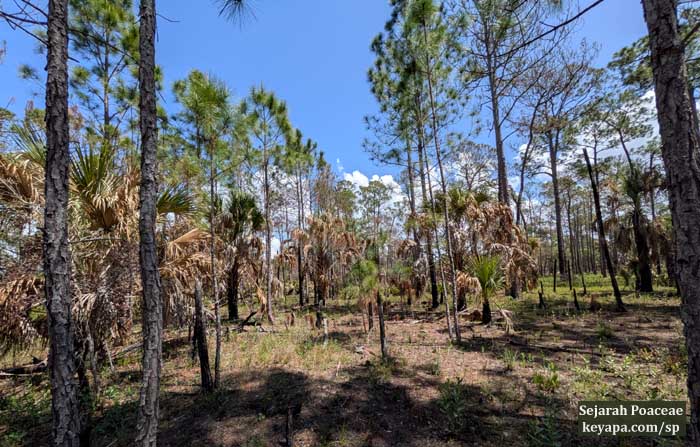
We did a quick day hike at Lake Kissimmee State Park yesterday.
It’s about an hour or so away from Orlando, and the first thing I noticed during the hike along one of the trails is the fact that many of the vegetation bore marks of fire. The lower parts of the pine were blackish, and so were lots of the Serenoa repens specimens that littered the ground and were sprouting new growth.
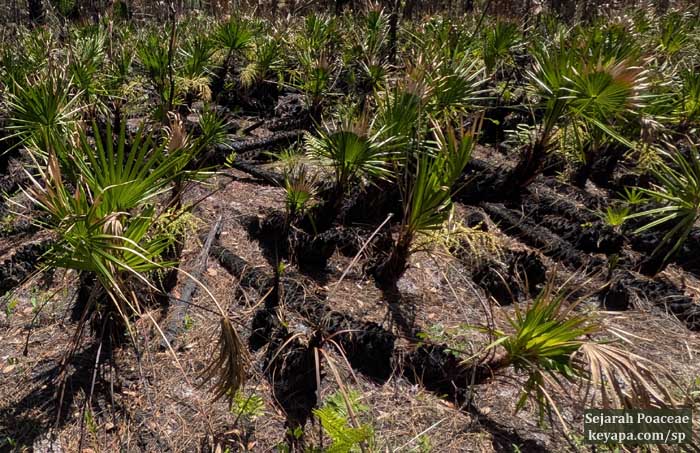
The park uses managed burns to maintain the habitat, which hosts long leaf pine, scrubby oaks, and many types of grasses. Without these managed burns, the landscape might slowly close up, choking many of the unique species that make these open habitats their home.
At this time of the year, the remnants of the past year’s growth is the defining feature of the grasses. It is still too early for many grasses to have the inflorescence that enables easy identification.
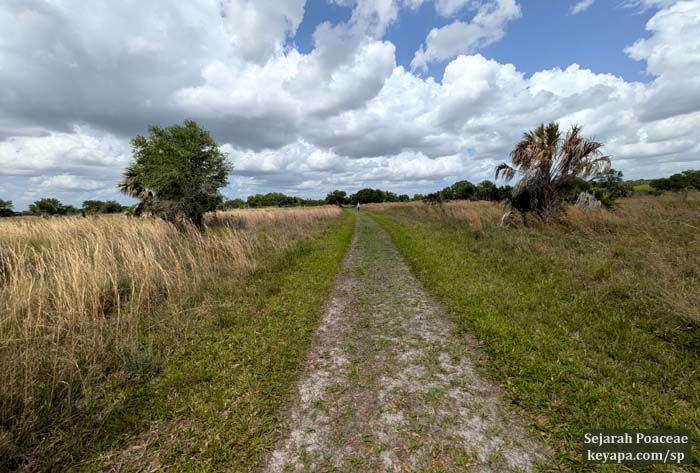
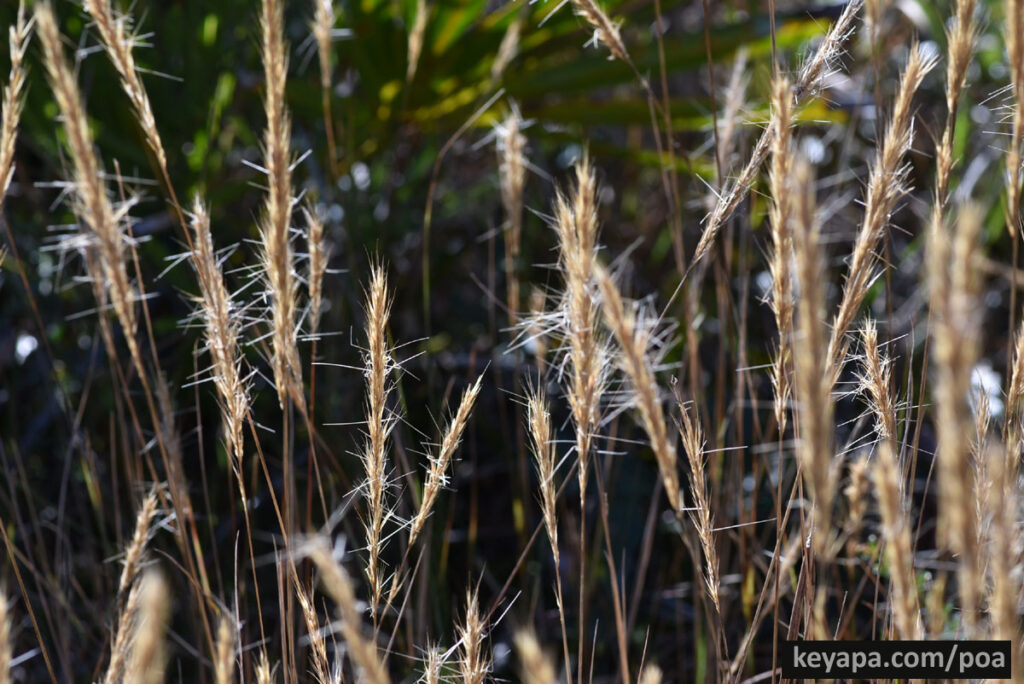
Anatherum spp ( called Andropogon in years past) formed vast clusters that dominated the landscape. These are members of the subfamily Panicoideae and are C4 species. I did not take the time to identify them to species due to the speed of the hike, but visits to other parks during autumn usually reveals a large number of species from the genus as typical inhabitants of the grasslands of Central Florida.
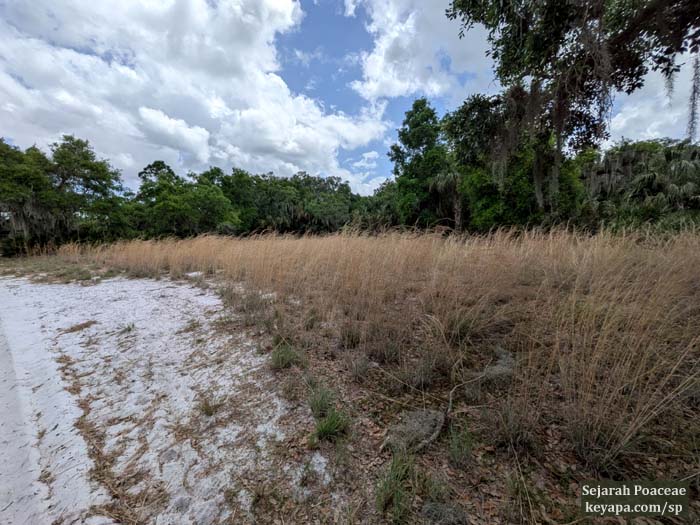
I also spied a few instances of wiregrass (Aristida spp) along the hiking route, identifiable mainly by their distinctive inflorescence. The lemmas of the members of this genus have 3 distinctive awns. Without those, these grasses of the subfamily Aristidoideae are relatively hard to distinguish in passing this early in the season.
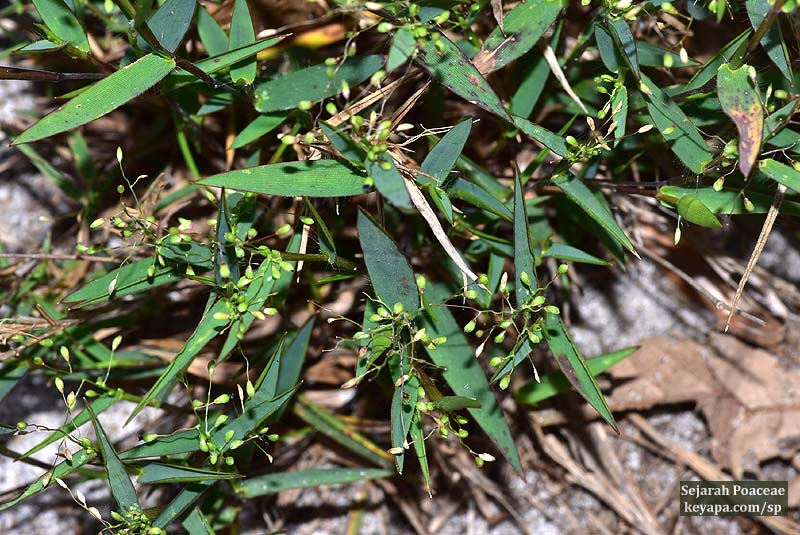
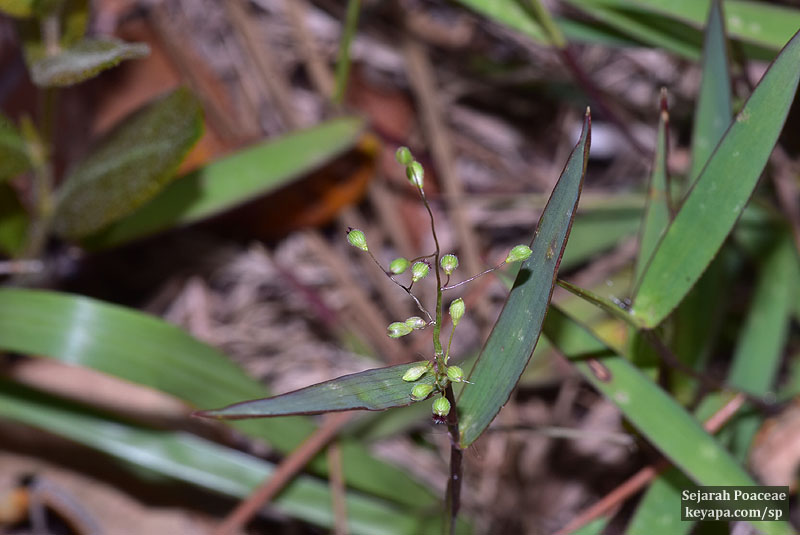
Perhaps the cutest among the inhabitants are the Dichanthelium grasses that hid under the shadows of taller shrubs and trees. These grasses are another member of the subfamily Panicoideae and are a common feature of more shaded areas, although I also found specimens luxuriating under the hot open sun during the walk. Unlike the grasses above, they use C3 photosynthesis, and the genus is a favorite of mine due to the elegance of the leaves and the cuteness factor of many of the species.
I also kept my eyes open for any members of the Bambusoideae, but did not find any bamboos along the trails. Bamboos are typically grasses of the shade, and the relatively open grasslands as one goes farther south and into the interior of the state seems to be inimical to the native Arundinaria spp.
I did not find any instances of Imperata cylindrica (cogon grass) during the hike, although it likely is lurking beyond the well-traversed trails. This is a similar situation to that in the Nature Conservancy’s Disney Wilderness Preserve, where this C4 member of the Panicoideae surrounds the area but is actively controlled within the park. Cogon grass is a well known threat to pine habitats. It is able to create fires that can harm mature trees, and its clusters can strangle vegetation in the undergrowth, creating a fire-maintained monoculture.
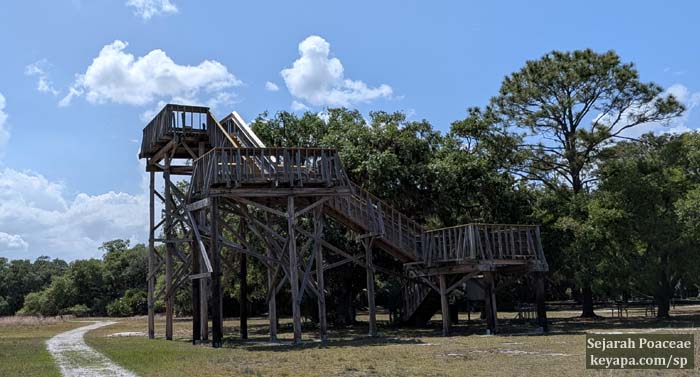
The park also has a 10 meter high observation tower near one of the parking lots. We climbed the tower and had to marvel at the scenery before us. It was a panoramic landscape of grasslands pockmarked with tall pines and oaks – the entire scenery back ended by Lake Kissimmee itself.
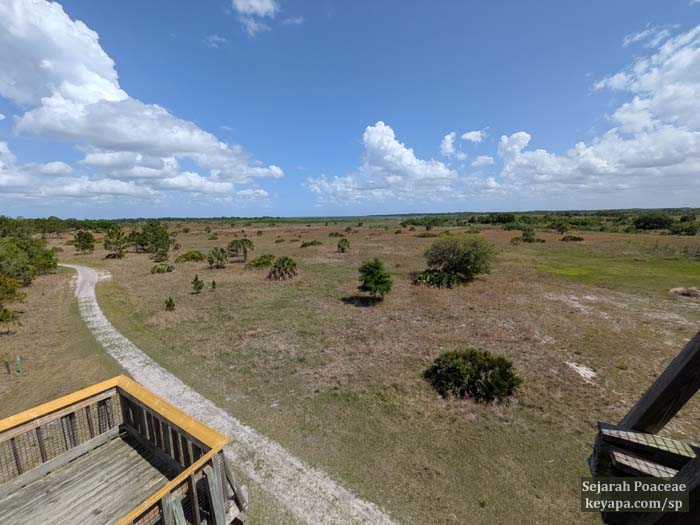
I enjoyed the short three or so hour hike, although as always in Florida there were quite some stretches with no shade from the blazing sun. We didn’t encounter gopher tortoises, nor snakes, and we made sure not to stay too long close to the lake itself, as gators abound. It’ll be interesting to come back here during autumn or late summer to see how the taller grasses have developed and enveloped the land.
Leave a Reply