
About two hours away by car from my place of lodging, in the beautiful province of Laguna in the Philippines, sits the Makiling Botanical Garden and the Makiling Forest Reserve. Surrounded and maintained by the University of the Philippines at Los Banos, it is probably the premier botanical garden in the country, and I had gone there early in the morning with a specific purpose in mind.
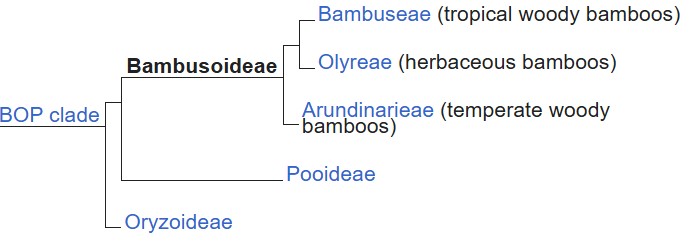
Most people think of bamboo as these erect woody tree-like plants with straight beautiful culms and delicate leaves. But the subfamily Bambusoideae features many species with other radically different lifestyles, including herbaceous species in the tribe Olyreae and scrambling and climbing bamboo that seem to stretch the definition of what it means to be part of the subfamily. I had gone to the MBG in search of these latter bamboo species, my curiosity heightened after I learned of other scrambling bamboos in the Amazon that carved out territory by physically damaging surrounding trees.
I arrived some minutes before 8 am, and the gates had not even opened yet. In fact, I was the only visitor to the place at such an early hour, and I felt the day stretch invitingly before me in my eagerness to get inside. Not only was I intent on exploring for hidden bamboos, but I had read from various news articles that the garden hosted a so-called Bambusetum, which featured many different bamboo species from local areas and around the world.
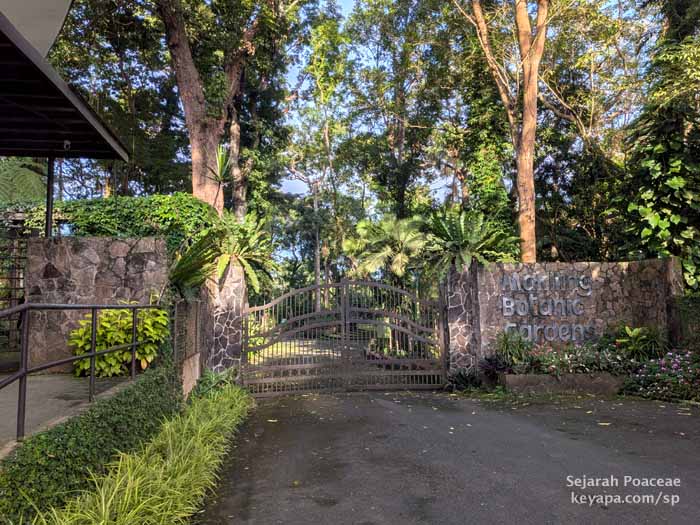
When the guard finally arrived, I eagerly paid the 60 peso entrance fee and entered a world of unsurpassed tropical beauty. Hardwood Dipterocarp trees towered over me, and palms and other tropical plants adorned the main walkway that wound its way deep into the garden and deeper still into the forest reserve.
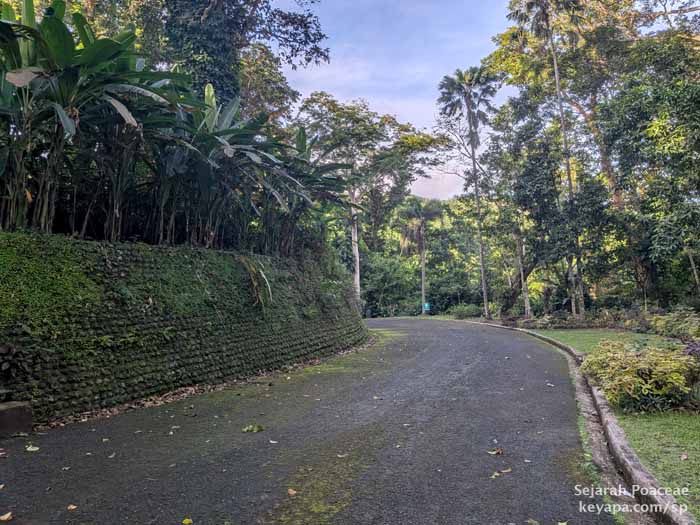
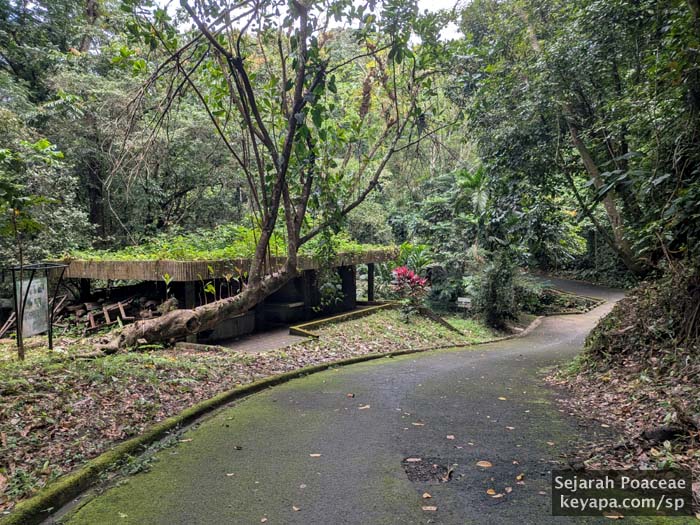
A quick look at the area map showed that the place had been arranged so that a main paved road passed through the entire garden, with various trails branching off to specific collections.
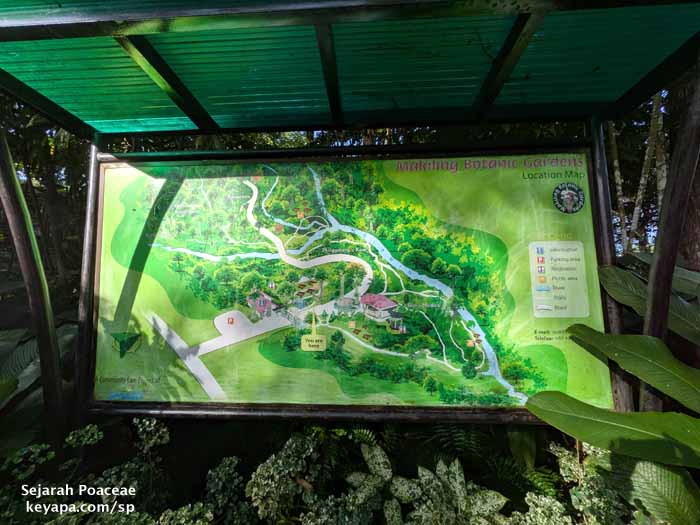
The main collections were the Dipterocarps (the hardwood trees that are the foundation of tropical rainforests in southeast asia), the palms, and the bamboos, and I came to a fork in the road where I turned left to journey on to the Bambusetum. My anticipation was building and I was eager to finally view the collection of bamboos in the midst of such beautiful natural surroundings.
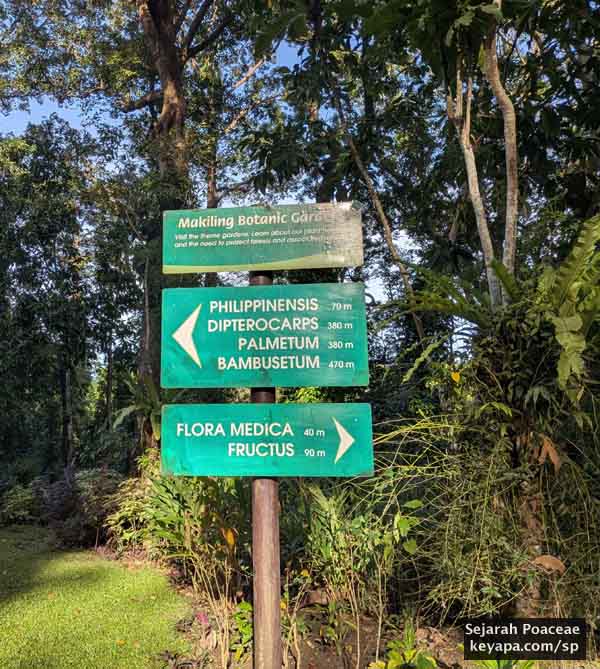
So imagine my surprise and disappointment when a staff member I met told me that the Bambusetum was unreachable, mainly due to overgrowth of the surrounding vegetation and the threat of snakes. Not only that, but they had seemingly also removed traces of the signage towards the collection.
The deep disappointment I felt was however, ameliorated when I left the main road and dove headlong into the path towards the dipterocarp and other collections. This was because it wasn’t long before I found myself staring in disbelief at the first climbing bamboo I had ever seen.
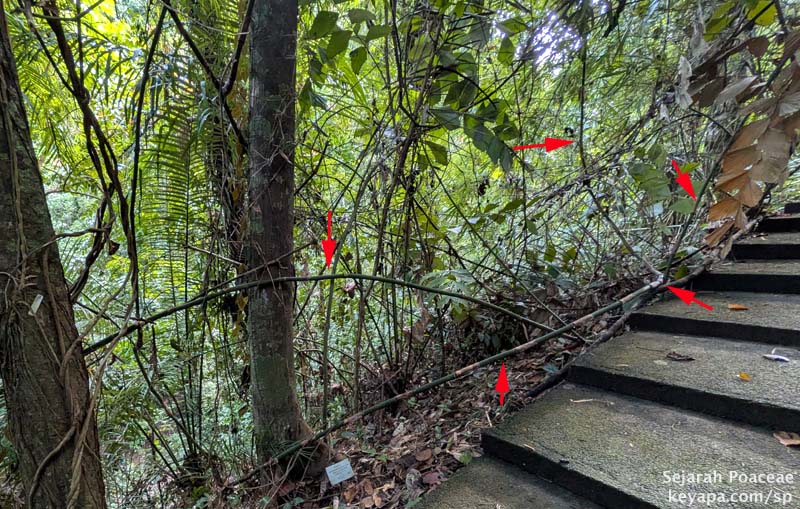
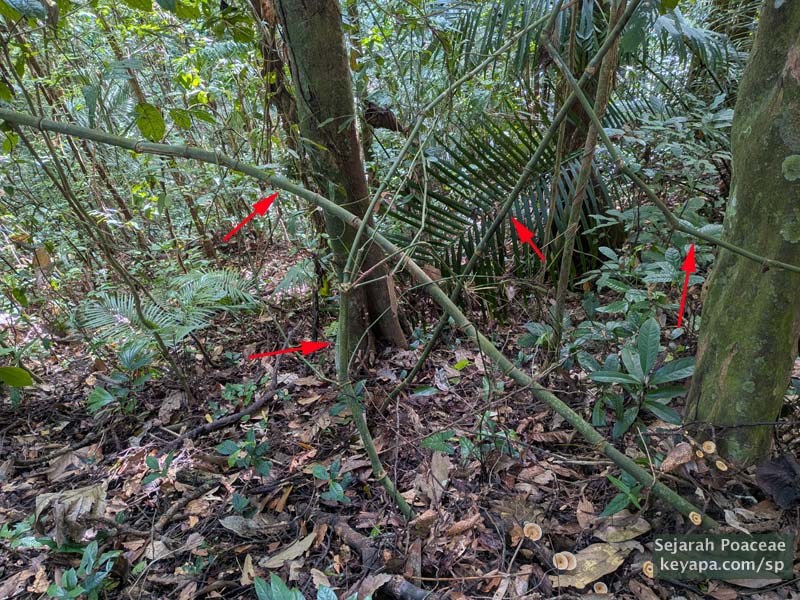
The thick culm lay parallel to the pathway, and around it other culms zigged and zagged around the undergrowth. I could even see parts that did 90 degree turns, and I gasped and started muttering in wonder at this plant that looked so unlike the usual bamboo, but which was indeed a member of the Bambusoideae.
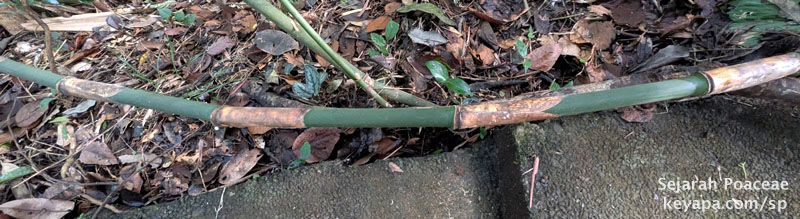
Climbing bamboos make up 32% of all bamboos in the Philippines, and include members in the genera Dinochloa, Cyrtochloa, and Cephalostachyum (Bondad et al, 2023), although species in the last genus start out erect, before leaning onto surrounding vegetation.
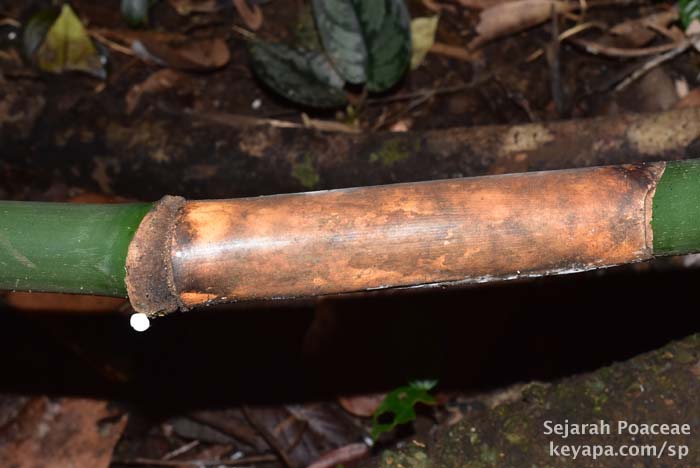
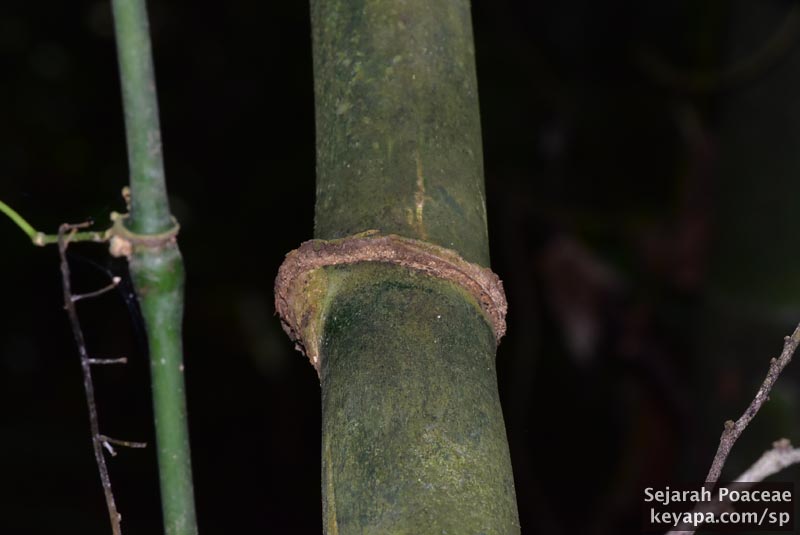
I looked closely at the nodes in the culms, and they were quite rough looking and thick. As noted in another article, grasses have not evolved specialized gripping structures for climbing, but the rough nodes might be an adaptation towards holding onto the branches of supporting structures (ie. surrounding trees).
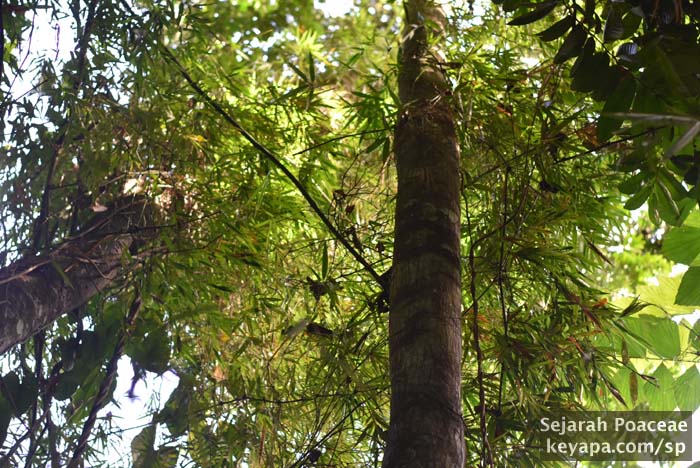
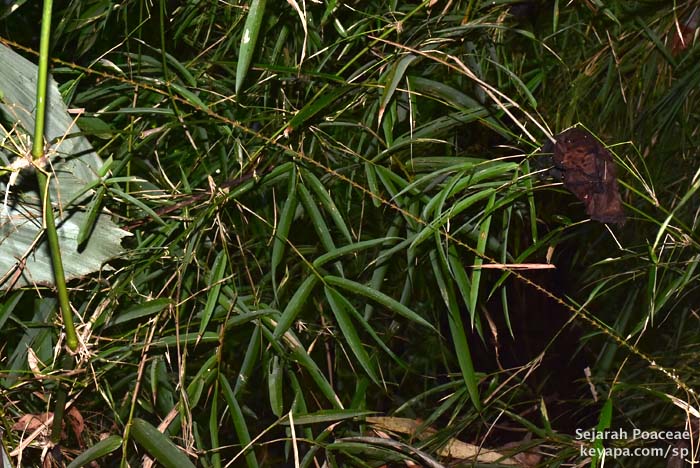
Although the culms I found all lingered at ground level, when I looked up towards the canopy, I saw a proliferation of bamboo leaves. It made me think that It was too bad that I could not fly my drone up, as it would have been interesting to trace the climb of the bamboo up towards where the light. Sighing, I continued my trek up the path, and I soon discovered an even more interesting specimen.
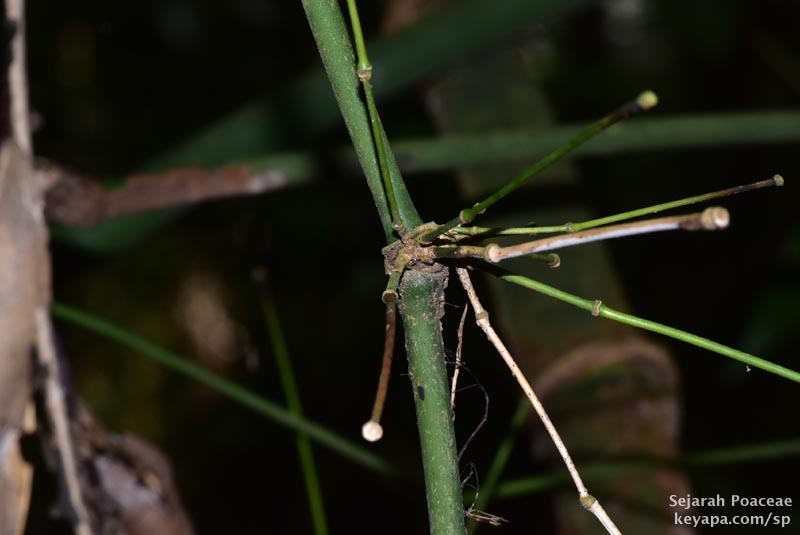
This time I found the growing tip of another bamboo reaching up from the ground on its way up towards the light. The clearing created by the hiking path represented a veritable fountain of light for the bamboo I assume, and the bamboo was taking advantage of it.
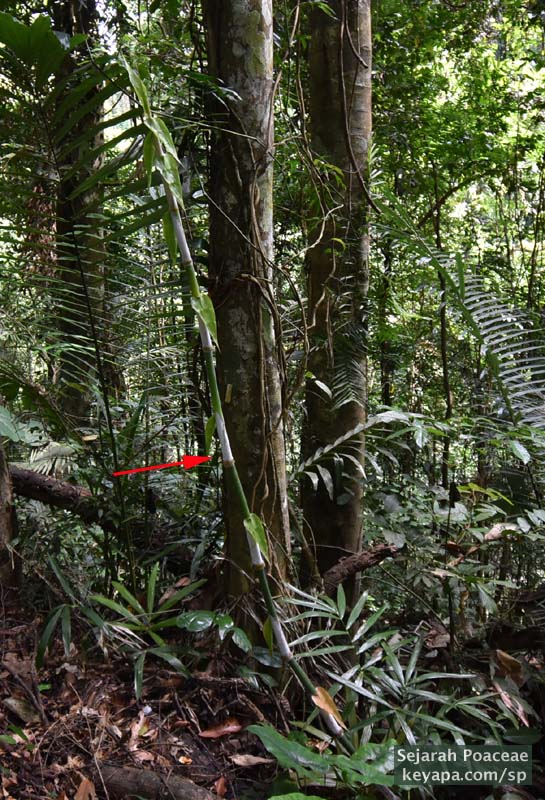
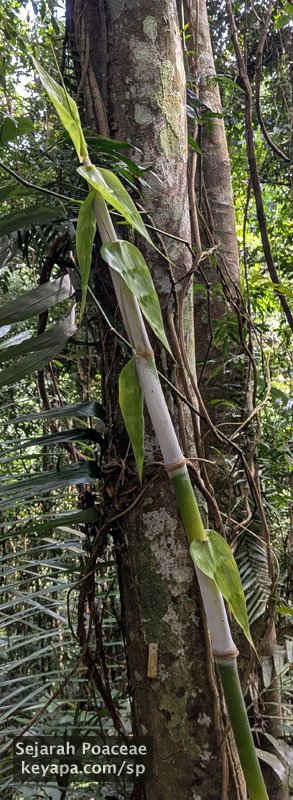
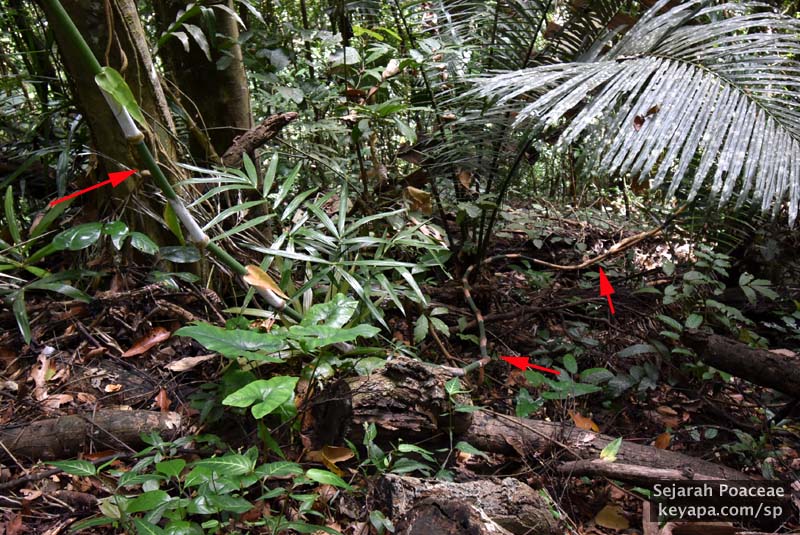
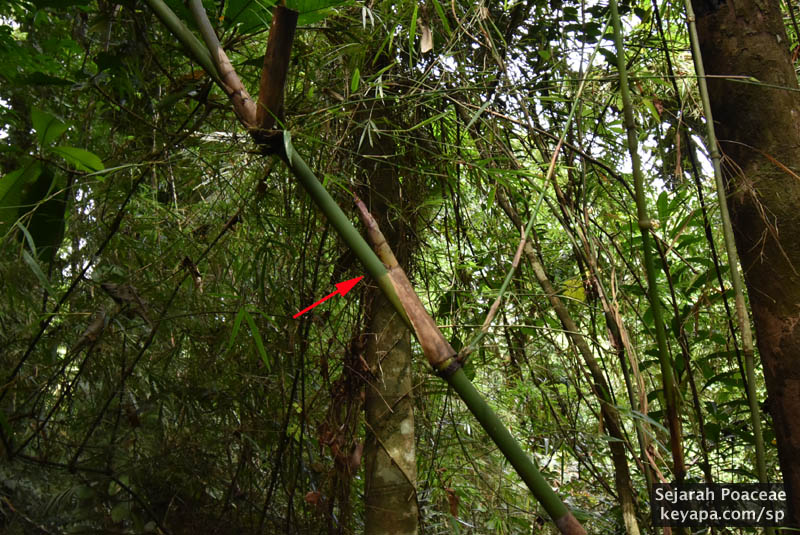
Even more amazing, I traced the culm and found that it had been winding its way along the ground like some bi-colored snake before rising up to a vertical orientation near the path (see photo below)! Seriously cool!
The internodes on this specimen had whitish powdery substances around it, and when I touched it I felt a downy layer of hair coating the surface.

The node itself was covered in longer hairs and seemed to be sticky, with the bodies of insects scattered around the surface. The seemingly trapped insects made me wonder whether this was a natural defensive mechanism or the first attempts at predation on the interlopers.
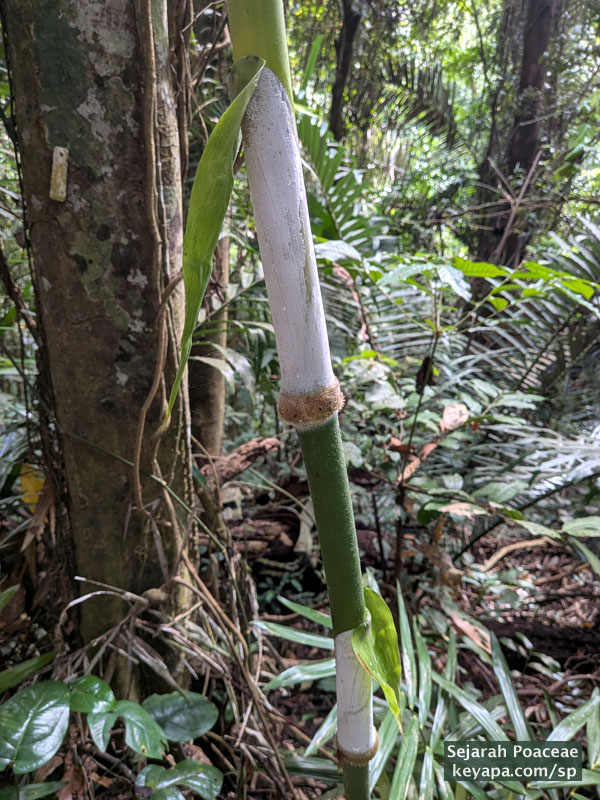
As the culm matured, the green culm sheaths turned brown and later seemed to fall off.
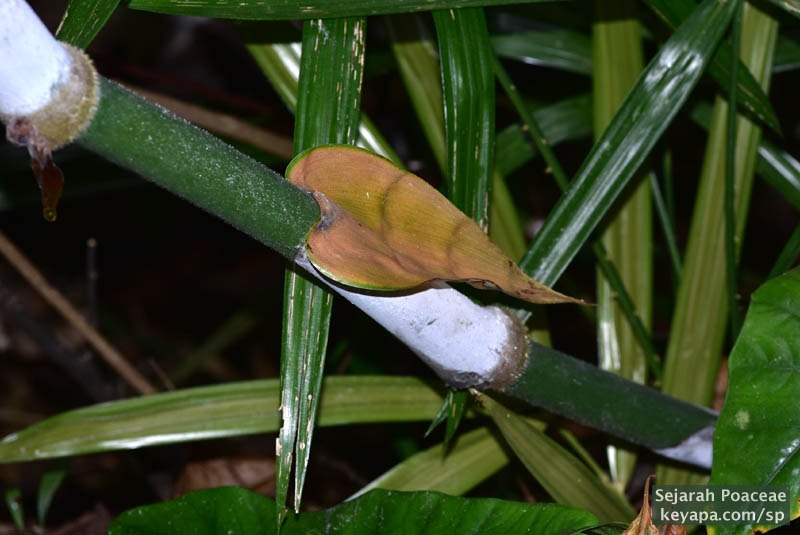
At the same time, the whitish internode seemed to darken in color, as can be seen in the cropped photo below.
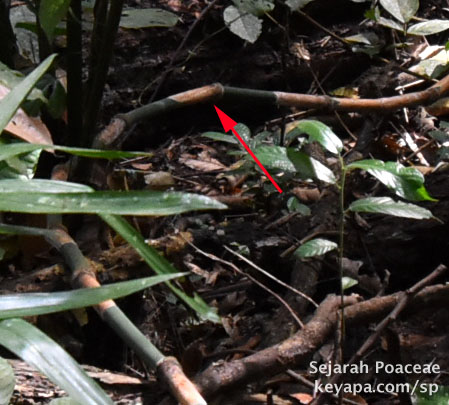
Based on all the evidence, I decided this might be a species from the genus Cyrtochloa or from another scrambling genus called Melocalamus. However, the latter has not been seen in the Philippines, so I finally tagged it as a Cyrtochloa sp.
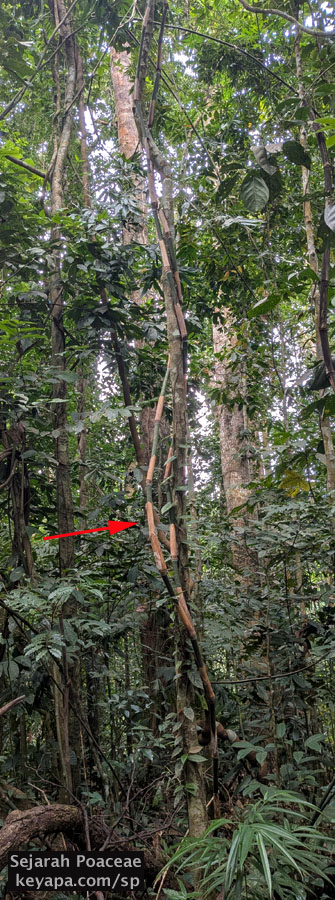
I encountered other climbing bamboo specimens as I continued on my way, and many formed fantastical shapes as the culms wrapped around support or did mysterious spirals and turns. The fact that the culms were bi-colored due to the attached sheaths added to the overall attractiveness.
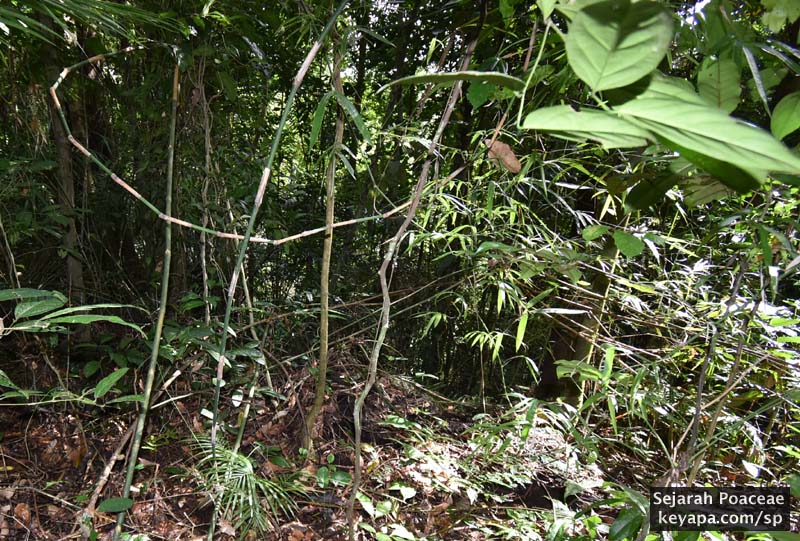
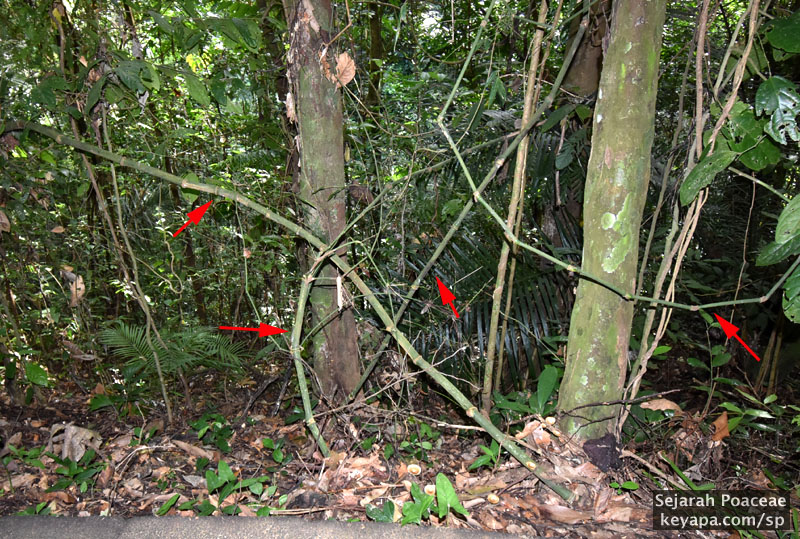
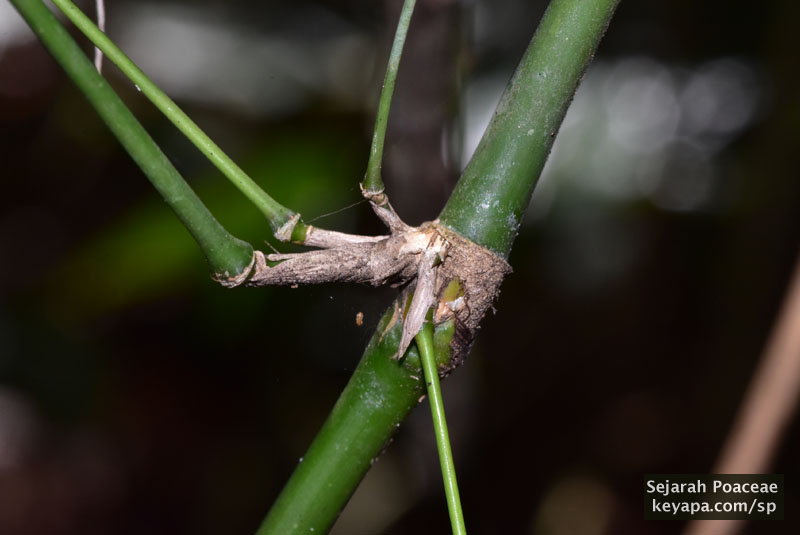
Probably the main complaint I had was that it was a bit more difficult to get photos of the bamboo leaves. This was because most were held high up towards the light, so I had to wait for instances where there was some opening in the canopy and the bamboo had sprouted leaves lower down and within reach of my camera.
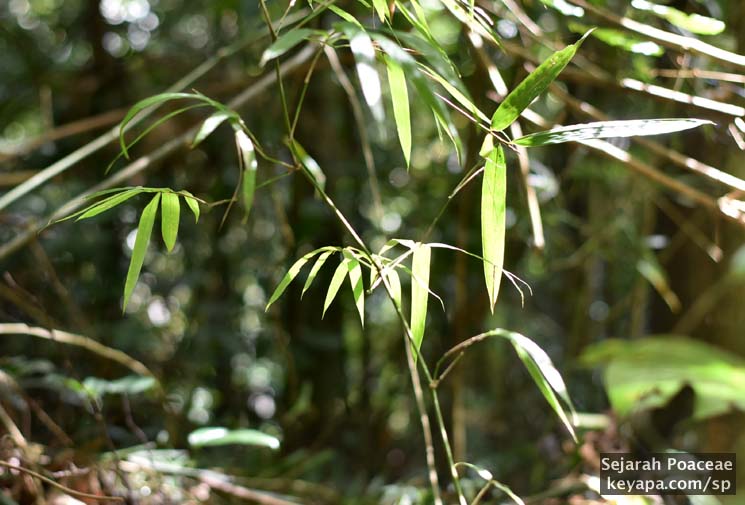
I should note that the bamboo were not the only grasses I encountered during my trip to Makiling Botanical Garden and Forest Reserve.
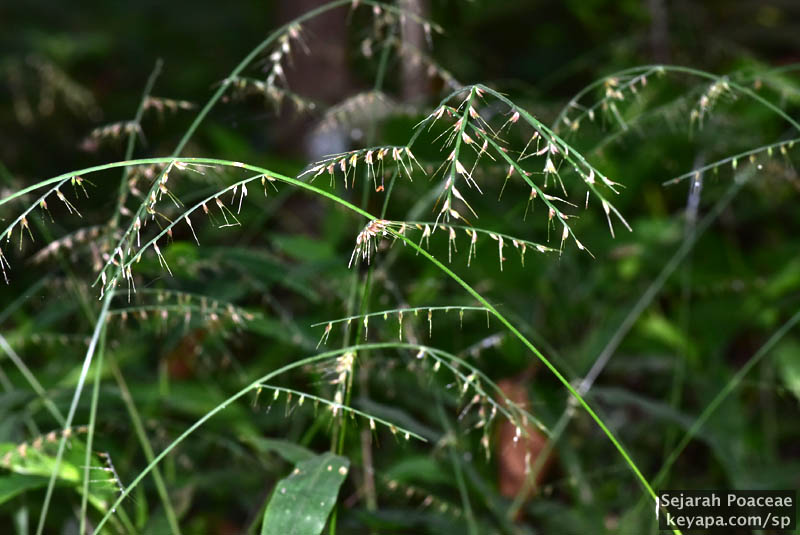
Some of the shade-adapted grasses were also in evidence by the paths. For example, I found a particularly large cluster of flowering Oplismenus sp deep into the journey, and I was entranced by the beautiful flowers of this very photogenic species.
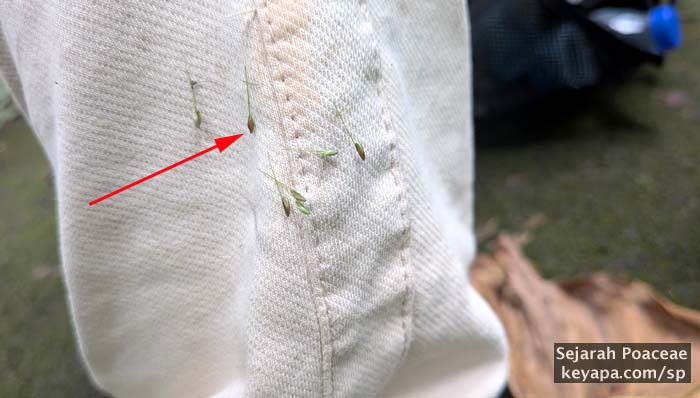
In fact, i was so entranced that I was not paying much attention to where I stood when I was taking photographs, and I found out later some of the sticky diaspores of the grass had attached to my pants legs!
Although I stayed looking for the climbing bamboos for 4 hours, I still left unwillingly because I had to prepare for my plane trip back home. Nevertheless, I thought my adventure in search of climbing bamboos was a success, and I left the wonderful Makiling Botanical Garden and Forest Reserve content, my satisfaction only tempered by my deep disappointment that the organization had seemingly abandoned the Bambusetum to disrepair when not being used for events.
Literature Cited
Bondad EO, Oliver S. Marasigan, Marina A. Alipon, and Shereyl A. Daguinod (2023). Potential Utilization of 12 Climbing Bamboo Species Found in Luzon Island, Philippines. Philippine Journal of Science 152 (1): 191-204


Leave a Reply