
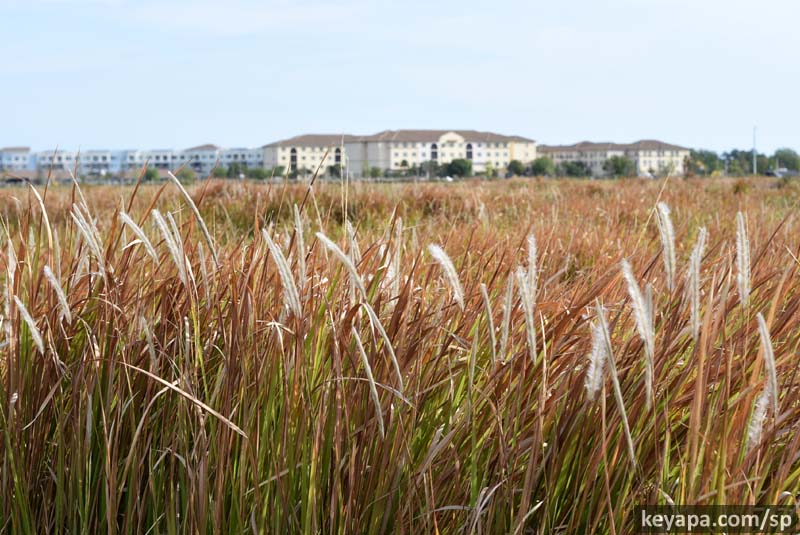
I’ve been doing a long running observation on a stand of Imperata cylindrica (Cogon grass) in Florida since 2021, with the cogon grass rapidly overwhelming its competitors as it spread laterally along a roadside.
For a history of this series of observations (oldest to most recent):
April 2021
Rapid expansion of an invasive grass as viewed using Google StreetView
December 2021
Update on the rapid expansion of an invasive grass
September 2023
Second Update on the rapid expansion of an invasive grass in Florida
November 2024
An irresistible force meets an immovable object?
The last observation was made about a year ago, when a large tree seemed to have blocked the lateral movement of the invasive species for most of the year. The cogon had some ramets approaching the central trunk of the tree by September 2023, under the shade, but the rate of movement was significantly slower than earlier. In fact, from a fast clip of 0.6-0.7 meters per month, it had dropped to 0.45 meters per month, and had NO significant lateral movement for 11 months after that (September 2023 to November 2024).
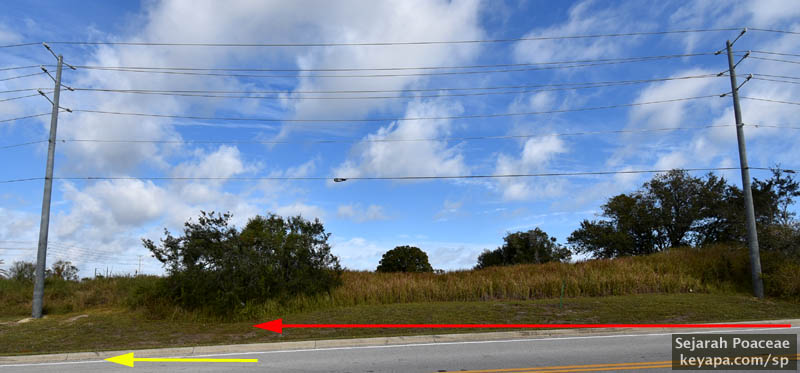
I made another visit today, and I was not surprised to discover that the cogon grass had finally broken through the blockade. A more or less solid wall of cogon stood like fort walls along the edge of the tree canopy, and I could see ramets as well deep under its shade. However, I could not observe the back of the tree, and so I could not be sure whether the cogon had also made its way around from that side.
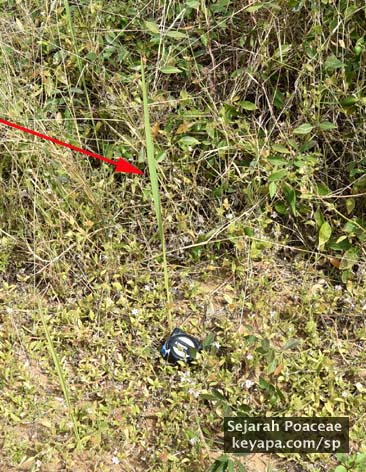
I scoured the grounds to the left of the tree and found isolated single blades of cogon poking out from the surrounding grasses and forbs – advance scouts for a ravenous horde that had finally broken free of its shackles. The farthest ramet was around 6.3 meters from the central trunk, and only 2.9 meters away from the next pole.

This breakthrough was a long time in coming (at least from the viewpoint of fast-living animals like ourselves), but now that the cogon has managed to go around the tree and found strong daylight again, I expect that its movement laterally towards the next pole will accelerate by next year.
Leave a Reply